
Choosing the Right Helper for Newborn and Infant Care in SG
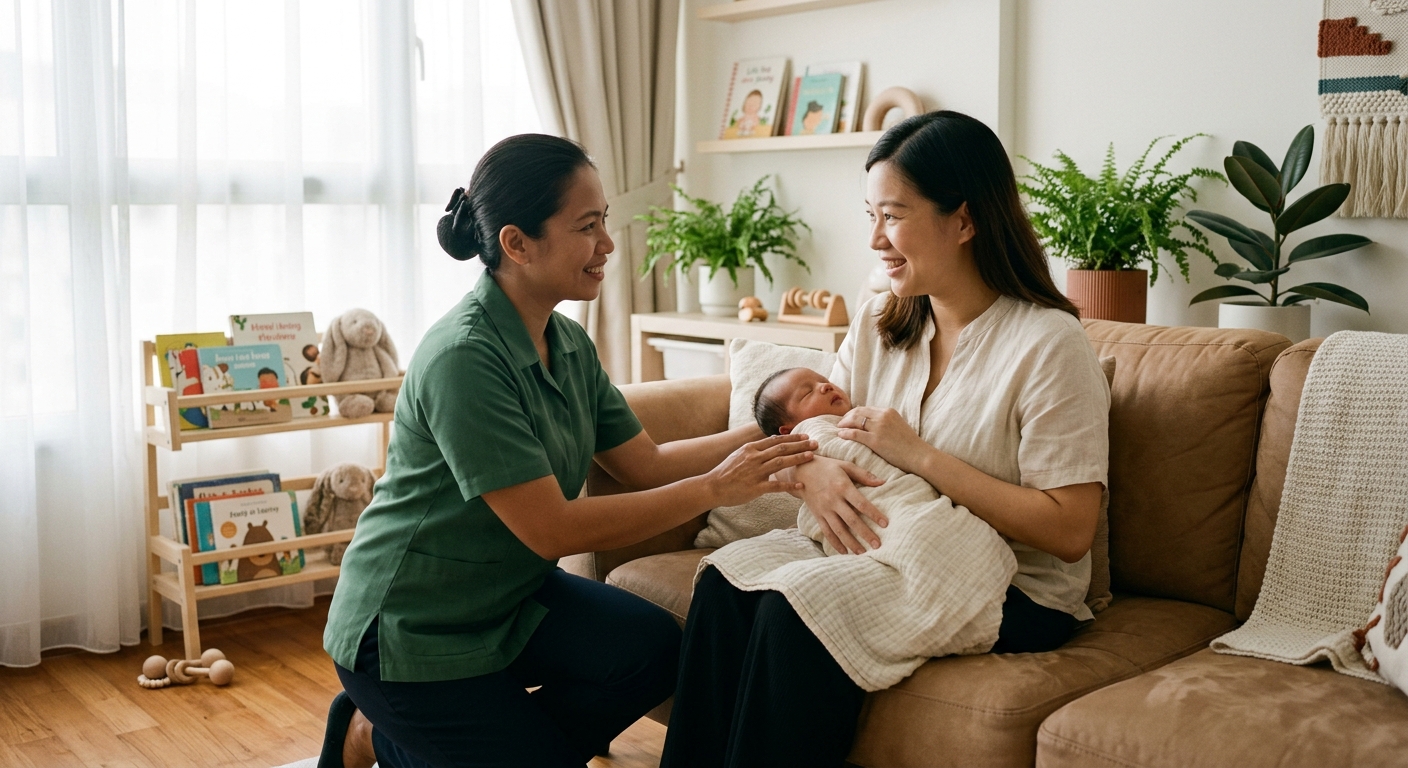
Choosing the right helper for newborn and infant care is one of the most important decisions a Singapore family makes after delivery—because the "right" helper is not just experienced, but also safe, coachable, and aligned with how your household wants to care for baby.
Many parents come to us feeling torn: you want someone confident with newborn handling, but you also worry about outdated practices, overconfidence, or a mismatch in expectations. The good news is that with a clear hiring plan, practical interview questions, and proper onboarding, you can find a Filipino domestic helper who supports your baby’s routines while respecting your family’s boundaries.
This guide walks through what to look for (and what to avoid), how to structure the first month, and how Singapore’s MOM requirements fit into the process. If you’d like to browse profiles while reading, you can start with our helper directory.
What "newborn and infant care" really involves
When families say they need a helper for newborn care, it usually includes much more than feeding and diaper changes. Clarifying the true scope helps you hire correctly and set expectations early.
Typical responsibilities (depending on your arrangement) may include:
- Safe handling and settling: lifting, burping, swaddling (if you practise it), soothing, and putting baby down safely
- Bottle hygiene: sterilising bottles/parts, preparing formula correctly if needed, tracking expiry and storage
- Breastfeeding support (indirect): washing pump parts, storing expressed milk safely, helping mum stay hydrated and rested
- Sleep and routine support: following parent-led schedule, logging feeds/diapers, keeping a calm environment
- Hygiene and laundry: baby laundry, keeping changing areas clean, sanitising high-touch surfaces
- Basic health awareness: recognising common warning signs and escalating quickly
- Household support: simple meals, light housekeeping—often reduced in the first weeks to prioritise baby
Newborn vs infant: the skills shift quickly
In the first 6–8 weeks, you need extra confidence with fragile handling and hygiene. From 3–12 months, priorities expand to developmental play, safe weaning practices, and stronger supervision (rolling/crawling, choking risks).
When choosing the right helper for newborn and infant care, hire for both phases: someone careful enough for newborn days and energetic and attentive enough for later months.
The non-negotiables: safety, judgement, and teachability
Experience matters, but it’s not the only predictor of safe care. Some first-time baby caregivers can perform very well if they are attentive, calm, and willing to learn your system.
Here are the non-negotiables we advise families to focus on:
- Safety-first mindset: follows instructions, does not take "shortcuts" with baby handling, understands that convenience never beats safety
- Good judgement under pressure: can stay steady when baby cries for long periods, when routines change, or when grandparents give conflicting advice
- Clear communication: comfortable reporting concerns early (fever, reduced feeding, unusual stool), not hiding mistakes
- Coachability: accepts feedback without arguing; willing to learn your preferred methods
- Hygiene discipline: consistent handwashing, clean work habits, understands cross-contamination risks
Red flags to notice early
During interviews and reference checks, watch for:
- Overconfidence: "I know already, no need teach" (newborn care changes quickly; every household differs)
- Unsafe myths presented as fact (for example, giving water to young babies or using inappropriate sleep practices)
- Vague answers about past baby-care tasks (may indicate limited hands-on involvement)
- Resistance to tracking feeds/diapers or following parent-led routines
If you’re unsure how to evaluate these areas, it helps to work with a team that screens beyond basic biodata. You can read about our services to see how we approach matching.
What to screen for when choosing the right helper for newborn and infant care
A practical screening checklist makes interviews much more effective. Instead of asking only "Have you taken care of a baby?", ask for specifics and observe how she thinks.
1) Hands-on newborn experience (and what "experience" means)
Not all "newborn experience" is equal. Clarify:
- Baby’s age when she started caring (newborn from day 1? or from 6 months?)
- Whether she handled nights, or only daytime support
- Whether she did bottle sterilisation, milk storage, and baby laundry
- Whether she managed multiple children at the same time
Good sign: she can describe a typical day, including hygiene steps and how she escalated concerns.
2) Understanding of safe sleep and supervision
Ask scenario questions:
- "If baby falls asleep after feeding, where will you put baby?" (Look for safe, firm, flat sleep space and no unsafe props.)
- "If baby keeps crying and you feel overwhelmed, what do you do?" (Look for placing baby safely in a cot and calling parents, not shaking or risky soothing.)
Even if you plan to handle nights yourselves, you want a helper who practises safe supervision during the day.
3) Feeding support and weaning readiness
Your helper doesn’t need to replace you, but she should support your plan.
Ask:
- Formula preparation steps and measurements (if relevant)
- How she checks temperature safely
- How she cleans and stores bottle parts
- For older infants: awareness of choking risks and safe feeding posture
4) Hygiene routines and infection control
Newborns can get sick easily. Ask for detailed steps:
- Handwashing times (before handling baby, after toileting, after cleaning)
- How she separates baby laundry
- How she cleans changing areas
5) Emotional maturity and respectful boundaries
In many Singapore households, there are multiple caregivers—parents, grandparents, and sometimes confinement nannies. Your helper must navigate respectfully.
Ask:
- "If Ah Ma asks you to do something different from what I told you, what will you do?"
Look for a balanced answer: respect elders, but confirm with parents for baby-related decisions.
If you want help structuring your screening, you can contact our consultants for practical interview templates.
Interview questions that reveal real capability (not just "yes")
When choosing the right helper for newborn and infant care, the best interviews use scenarios. Here are questions many Singapore families find useful.
Newborn handling and soothing
- "Show me (describe) how you support a newborn’s head when carrying."
- "What do you do after feeding?"
- "How do you settle a baby who refuses to sleep?"
Hygiene and milk management
- "Walk me through how you sterilise bottles."
- "If we use expressed milk, how will you label and store it?"
- "What will you do if the milk has been outside too long?"
Safety and emergency awareness
- "If baby has a fever, what do you do first?"
- "If baby coughs while drinking, what do you do?"
- "If baby falls from a low bed, what do you do immediately?"
(You are not testing medical knowledge; you’re testing calmness, judgement, and whether she escalates promptly.)
Working style and boundaries
- "Are you comfortable writing a simple log for feeds/diapers/sleep?"
- "What feedback style helps you improve?"
- "What do you find stressful when caring for a baby?"
Tip: watch how she answers, not only what she answers
A capable caregiver asks clarifying questions. If she checks your preferred routine and confirms details, that’s often a stronger sign than someone who gives fast, rehearsed answers.
Matching your family’s care model: day support, night support, and shared caregiving
Every household runs differently. Being honest about your intended setup helps you avoid frustration for both sides.
Common newborn-care arrangements in Singapore:
- Parents handle nights; helper supports daytime (meals, laundry, sterilising, baby care while parents rest)
- Helper assists at night occasionally (only if agreed, and within reasonable rest expectations)
- Confinement nanny first, helper later (handover planning becomes key)
If you also have a confinement nanny
Confinement support is common, especially among Chinese families, and can overlap with a helper’s role. If both are present:
- Decide who leads baby care decisions (usually parents)
- Clarify who does what (sterilising, laundry, meals)
- Establish a single "source of truth" for routines
A smooth handover matters. Ask your helper if she is comfortable learning during the confinement month and taking over gradually.
If grandparents are involved
When multiple adults give instructions, helpers can get confused or anxious. Tell your helper clearly:
- Who to check with for baby decisions
- Which practices are non-negotiable (sleep position, feeding rules)
A good helper supports family harmony while keeping baby’s routine stable.
Singapore process essentials: MOM rules, deployment, and practical timelines
Hiring a Filipino domestic helper for newborn care involves practical timing and compliance. While your agency supports paperwork, it helps parents understand the flow.
MOM requirements that affect your planning
In Singapore, employing a migrant domestic worker (MDW) involves MOM processes such as:
- Work Permit application and approval
- Mandatory medical examination after arrival
- Settling-in Programme (for first-time MDWs)
- Safety awareness and rest-day requirements
Your actual start date can be affected by these steps, so avoid leaving hiring to the last minute—especially if you want your helper to arrive before your due date.
Philippine-side requirements: OEC and why timelines vary
For Filipino domestic helpers, documentation on the Philippines side can include the OEC (Overseas Employment Certificate) process and related approvals. Timelines can vary depending on individual circumstances, medical checks, and scheduling.
Many families only hear about OEC when there’s a delay. A good agency will explain realistic lead times and help you plan your newborn period accordingly.
Practical advice on when to start
As a general planning guide:
- If you want your helper to start before delivery, begin your selection earlier so there’s time for matching, paperwork, and onboarding.
- If you prefer to settle in first and hire after birth, plan for interim support (partner leave, family help, or confinement support).
If you’re ready to move from research to action, you can start a hiring application and our consultants can advise based on your due date and needs.
Onboarding: the first 2–4 weeks make or break the match
Even the best match can struggle without a structured start. Newborn care is sensitive; you want calm routines, not misunderstandings.
Week 1: orientation and safety basics
Treat week 1 as training, not "full performance".
Focus on:
- House rules (privacy, phone use, visitors)
- Baby rules (safe sleep, hygiene, no kissing baby if you prefer, mask-wearing if sick)
- Where items are stored and how to restock
- How to report issues (message format, when to call immediately)
A simple daily checklist helps. Many families place it on the fridge.
Week 2: routine building and documentation
Introduce a basic log:
- Time of feed
- Amount (if bottle)
- Diaper output
- Sleep times
- Notes (rash, spit-up, unusual fussiness)
This is not micromanagement; it creates shared visibility—especially helpful if parents are sleep-deprived.
Weeks 3–4: independence with supervision
Gradually step back while still checking in:
- Observe one full feed and settling routine
- Review hygiene steps (steriliser use, storage)
- Correct gently and immediately if you see unsafe habits
A helpful approach: "One standard, one voice"
If both parents give different instructions, the helper will follow whichever is easier in the moment. Align as a couple first, then brief your helper together.
Supporting your helper so she can support your baby
Choosing the right helper for newborn and infant care is not only about skills—it’s also about conditions that help her succeed. Newborn care is tiring; a stable environment reduces mistakes.
Rest, boundaries, and reasonable expectations
Even if your helper is willing, avoid turning newborn care into a 24/7 job. Fatigue leads to accidents.
Consider:
- Clear rest hours (and what happens if baby cries)
- A plan for nights (who is "on call")
- Respectful communication—correct firmly, but without humiliating
Training and upskilling
Some helpers arrive with general childcare experience but need alignment with Singapore practices and your preferences.
You can upskill by:
- Demonstrating your routine step-by-step (then asking her to repeat it)
- Using short videos from reputable hospital or parenting sources (avoid random social media advice)
- Setting one improvement goal each week (for example, better logging, faster sterilising workflow)
Managing errands and off-days with a newborn
In Singapore, many Filipino helpers spend their rest day meeting friends around Lucky Plaza and Orchard, which is normal and often their social support system.
For families with a newborn:
- Agree on rest day arrangements early (and backups if you need help)
- Emphasise hygiene if she returns from crowded places (shower, change clothes, handwashing before handling baby)
- If anyone in the household is unwell, align on mask-wearing and distancing as needed
A respectful conversation upfront prevents conflict later.
How an agency can reduce risk: documentation, screening, and after-placement support
Newborn care is not the best time to "trial and error" alone. A trusted agency should support you through:
- Proper screening for baby-care fit (not just general housekeeping)
- Clear explanations of MOM processes and timelines
- Replacement or dispute support, if things don’t work out
- Guidance on onboarding and communication
At Happy Home Agency (EA Licence 06C4290, est. 2006), we focus on matching details that matter—sleep routines, caregiving confidence, language comfort, and household expectations—so the day-to-day feels stable, not stressful. If you want to explore profiles first, visit our helper directory. For more practical reading, you can browse other guides.
Making the Right Choice
Choosing the right helper for newborn and infant care comes down to three things: safety, fit, and a clear plan for the first month. Look beyond "years of experience" and hire for judgement, hygiene discipline, and coachability—then onboard with structure so your helper knows exactly how to support your baby and your household.
If you’d like a personalised recommendation based on your due date, baby-care preferences, and whether grandparents or a confinement nanny will be involved, reach out to our team. You can start a hiring application or WhatsApp us via contact our consultants, and we’ll guide you through a practical, MOM-aligned hiring timeline with newborn safety in mind.
Questions & answers
Let Happy Home Agency match your family with someone you can trust.
Since 2006, we've helped Singapore families find the right helper — not just any helper. EA Licence 06C4290.
Related articles
Hiring a Filipino helper in Singapore involves clear MOM rules, Philippine Embassy processes, and practical fit checks at home. Here’s a complete, family-first guide.
Considering a Filipino helper in Singapore? Learn the step-by-step hiring process, expected costs, MOM rules, OEC basics, and practical tips to match your household well.
Hiring a helper starts with the right MOM steps. Learn how the MOM work permit for domestic helper works, what you must prepare, and common pitfalls to avoid.