
Direct hire vs agency: which route suits Singapore employers
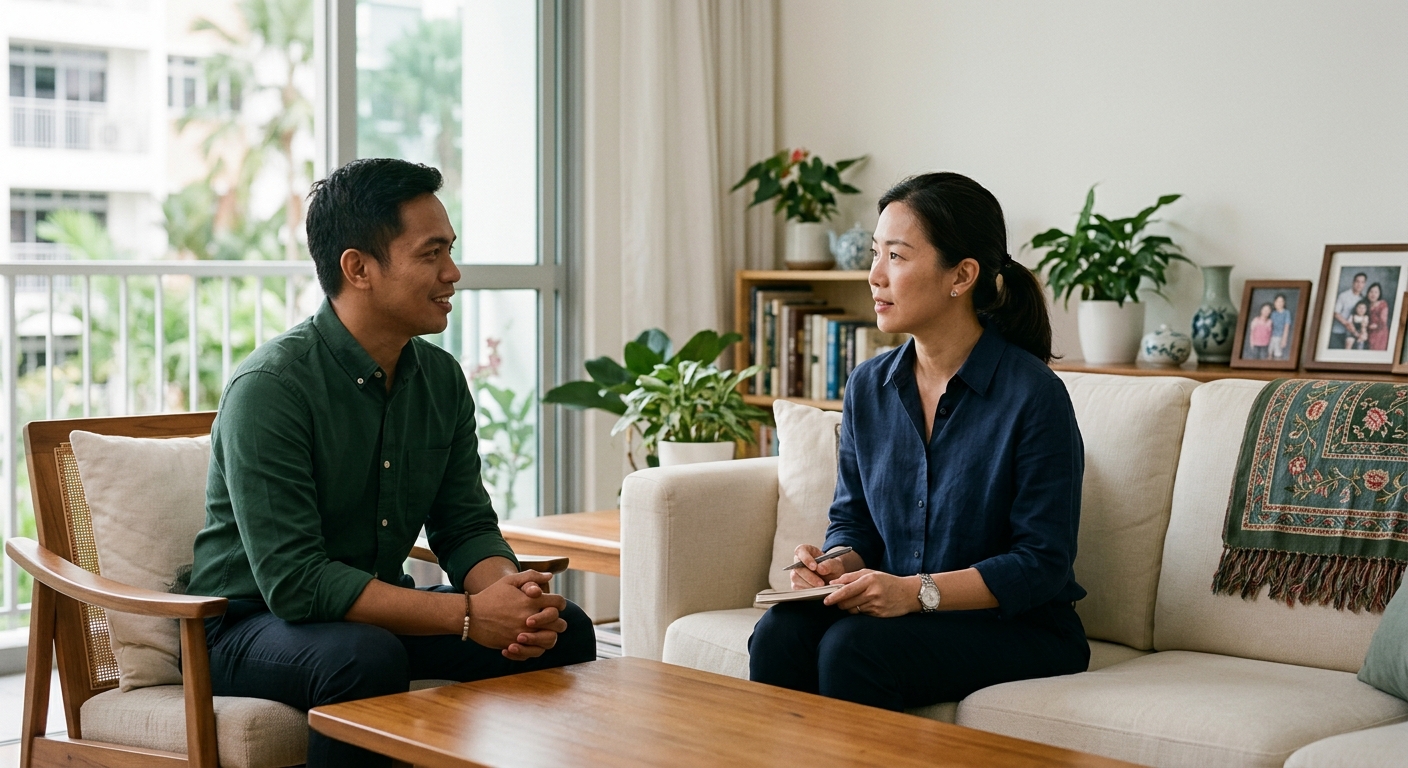
Direct hire vs agency: which route suits Singapore employers is one of the most common questions we hear from families who are hiring a Filipino domestic helper (FDH) in Singapore. The “best” route is rarely about price alone—it’s about your family’s risk tolerance, your timeline, your confidence handling paperwork, and how much support you want after the helper starts work.
In this guide, we’ll walk through both pathways in Singapore—what’s involved, where families get stuck, and how to decide in a practical, MOM-compliant way.
What “direct hire” and “agency hire” mean in Singapore
When families compare direct hire vs agency: which route suits Singapore employers, it helps to define the two routes clearly.
Direct hire (also known as direct employment)
Direct hire usually means you found a helper on your own—often a transfer helper already in Singapore, or a candidate you know through relatives/friends—and you manage the process as the employer.
Common sources include:
- Personal referrals from friends or relatives
- Social media groups (be cautious and verify carefully)
- Meeting helpers on their off day around Lucky Plaza / Orchard (again, verify carefully)
- A current helper requesting a “transfer” to your household
Even when it’s “direct,” you still must follow Ministry of Manpower (MOM) rules for employing a Foreign Domestic Worker, including Work Permit processes, medical checks, and settling-in requirements.
Agency hire
Agency hire means engaging a licensed employment agency to source, screen, and process the hiring—either for a new helper from the Philippines, or a transfer helper already in Singapore.
A reputable agency should support you through:
- Proper screening and matching
- MOM paperwork and scheduling
- Coordination with overseas partners (for new FDHs)
- Training and onboarding requirements (e.g., Settling-In Programme (SIP) for first-time FDWs)
- Post-placement support if issues arise
At Happy Home Agency (EA Licence 06C4290, est. 2006), our approach is built around Precision Match™ (to reduce mismatch risk) and 365-Day Employer Care™ (so families aren’t left alone after placement). You can start by browsing our helper directory or start a hiring application to share your household needs.
Cost comparison: what you pay (and what you may not see upfront)
Cost is often the first comparison point in direct hire vs agency: which route suits Singapore employers, but it’s also where misunderstandings happen.
Direct hire costs (typical categories)
Direct hire can look cheaper because you may not pay agency service fees. However, you should still budget for:
- MOM-related fees (e.g., Work Permit issuance, renewals, levies)
- Medical examination and insurance/medical coverage requirements
- Air ticket (if bringing in a helper from overseas)
- Training costs if required (or if you choose to arrange extra training)
- Lost time costs (time off work to handle appointments, forms, interviews)
If the helper is from the Philippines and currently overseas, families often underestimate the complexity around Philippine deployment requirements.
Agency hire costs (what fees usually cover)
An agency fee is not just for “introductions.” Ideally, you are paying for:
- Screening beyond a basic interview (work history checks, suitability discussions)
- Matching based on caregiving needs, household routines, and communication style
- Document handling and scheduling (MOM steps, medical, SIP coordination)
- Coordination with Philippine-side requirements where relevant
- Guidance on fair, clear employment terms and expectations
Cost transparency matters. Always request a written breakdown and ask what happens if the match does not work out.
A practical way to think about cost: “total cost of hiring”
Instead of comparing only direct hire vs agency fees, compare total cost of hiring, including:
- Your time and stress
- Risk of mismatch or early termination
- Potential need for re-hiring (and paying again—whether in time or money)
For many households—especially first-time employers—support and risk reduction can outweigh the initial fee difference.
Paperwork and compliance: who manages what (MOM, Embassy, OEC)
For Singapore employers, compliance is non-negotiable. In direct hire vs agency: which route suits Singapore employers, paperwork is often the deciding factor.
MOM requirements apply to both routes
Whether you hire directly or via an agency, the employer is responsible for meeting MOM requirements, including:
- Applying for the helper’s Work Permit
- Buying medical insurance and personal accident insurance as required
- Paying the Foreign Domestic Worker Levy (unless eligible for concession)
- Ensuring the helper attends SIP (for first-time FDWs in Singapore)
- Completing the Employer Orientation Programme (EOP) if required (commonly for first-time employers)
An agency can execute and guide many of these steps, but the legal responsibility remains with the employer.
For Filipino helpers: understand OEC and Philippine-side processes
If you are hiring a Filipino domestic helper from the Philippines (not a transfer already in Singapore), Philippine deployment rules can be a major hurdle for direct hire.
The Overseas Employment Certificate (OEC) is a key exit clearance document for Filipino overseas workers. Without proper deployment processing, a helper may face issues departing the Philippines.
In practice, many families find that agency coordination is particularly valuable here because the process involves:
- Philippine-side documentation and validation
- Coordination aligned with Philippine government requirements
- Avoiding delays that can happen when paperwork is incomplete or inconsistent
For families considering direct hire from the Philippines, it’s wise to clarify early what the Philippine-side requirements are, and how you will meet them without a licensed network.
Speed and predictability: timelines you can realistically expect
Timelines are another major factor in direct hire vs agency: which route suits Singapore employers.
Direct hire can be fast—if it’s a local transfer with clean availability
If you are hiring a transfer helper already in Singapore, direct hire can be quick because:
- There is no overseas deployment timeline
- Interviews can be arranged quickly
- Availability can be immediate depending on release arrangements
However, “fast” depends on whether the current employer agrees to release on time, and whether all documents and medical results are in order.
Agency hire can be more predictable for new arrivals
For new helpers arriving from overseas, an agency route can be more predictable because:
- A structured process is followed end-to-end
- Flights, medical, and training schedules can be coordinated
- Documentation is managed in a coordinated way
That said, even with an agency, timelines can shift due to embassy appointments, medical clearances, and peak periods.
Tip: decide what matters more—speed or certainty
Ask yourself:
- Do we urgently need help within 2–3 weeks?
- Or can we wait longer if it means better screening and smoother processing?
Families caring for infants, seniors, or persons with mobility needs often prioritise stability and support over the fastest possible start date.
Screening and matching: where most “regret” comes from
When we speak with employers after a difficult placement, the problem is usually not the Work Permit—it’s mismatch. This is where direct hire vs agency: which route suits Singapore employers becomes very personal.
Direct hire: what you must screen for yourself
If you hire directly, you carry the full burden of assessing:
- Caregiving experience (infant care, eldercare, dementia care, stroke care)
- Cooking ability aligned to your family’s preferences
- Initiative and independence (especially if both employers work)
- Communication style and language comfort
- Attitude towards boundaries, privacy, and phone use
- Willingness to follow household routines and safety standards
A helpful approach is to do a structured interview and request scenario-based answers (not just “yes/no”).
Agency hire: what good agencies add beyond interviews
A careful agency should help you translate your needs into a real match. For example:
- A family with a frail senior needs patience, safe transfer techniques, and calm communication.
- A household with toddlers needs energy, supervision habits, and hygiene routines.
- A family in a smaller flat may prioritise emotional maturity and conflict management.
At Happy Home Agency, we use Precision Match™ to align helper strengths to household realities, not just job titles. You can explore profiles in our helper directory and short-list candidates before speaking with our consultants.
Red flags to watch (both routes)
Whether direct or agency, be alert to:
- Inconsistent work history explanations
- Unclear reasons for leaving previous employers
- Overpromising (“I can do everything”) without concrete examples
- Resistance to discussing rest day arrangements, handphone use boundaries, or caregiving routines
If something feels unclear, slow down and clarify. A rushed hire is often an expensive lesson.
Risk management: disputes, replacement, and ongoing support
Risk is the quiet factor behind direct hire vs agency: which route suits Singapore employers.
What happens if things don’t work out?
Even with careful screening, not every placement succeeds. Common friction points include:
- Misaligned expectations (work standards, privacy, food preferences)
- Caregiving stress (especially with dementia or night waking)
- Communication breakdown
- Homesickness and adjustment issues in the first 4–8 weeks
Direct hire means you manage everything yourself: coaching, conflict resolution, and if needed, restarting the hiring process.
Agency hire should come with a clear post-placement support plan. Ask specifically:
- Is there counselling/mediation support?
- What is the replacement policy and timeframe?
- Will the agency help re-match based on what was learned?
Our 365-Day Employer Care™ is designed for this reality: many issues can be resolved with timely guidance, and if not, families need a structured way forward. Learn more via our services or contact our consultants.
Managing expectations protects both employer and helper
A stable working relationship is built early. Two practical steps:
- Do a written household routine (wake time, meal times, school runs, elderly exercise, cleaning priorities).
- Agree on “non-negotiables” (child safety rules, medication handling, privacy boundaries, visitors policy).
This reduces misunderstandings and improves retention.
Which route suits which employer? A decision guide for Singapore families
If you’re weighing direct hire vs agency: which route suits Singapore employers, use your household profile—not online opinions—to decide.
Direct hire may suit you if…
- You are hiring a transfer helper you can interview thoroughly in person
- You have prior experience as an FDW employer and know the MOM process well
- You have time to manage admin tasks, appointments, and follow-ups
- You have a strong referral where work performance is verified (not hearsay)
Agency hire may suit you if…
- This is your first time hiring, or you want guided support
- You are hiring from overseas (especially Philippines) and want smoother coordination
- You have complex caregiving needs (infant + elder, dementia care, special needs)
- You prefer a structured screening process and post-placement support
A simple scoring tool (quick self-check)
Give yourself 1 point for each “yes”:
- We need a helper urgently within the next few weeks.
- We have never hired a helper before.
- We are caring for an elderly person with higher needs (mobility, dementia, medication).
- We cannot take time off work to handle multiple appointments.
- We want support if the helper struggles to adjust.
If you score 3 or more, agency support is usually the less stressful route.
Practical tips before you commit (either route)
Before you decide, these steps reduce risk whichever pathway you choose.
Clarify your job scope and daily reality
Write down:
- Who needs care, and what tasks are involved
- Sleeping arrangements and privacy boundaries
- Cooking expectations (daily cooking vs simple meals)
- Cleaning priorities (what matters most to you)
This helps you interview properly and avoid assumptions.
Prepare a fair, compliant onboarding plan
The first two weeks set the tone. Plan for:
- A calm house tour and safety briefing (gas stove, child gates, cleaning chemicals)
- Demonstration of preferred methods (laundry sorting, baby bottle hygiene)
- Clear rest day and communication rules aligned with MOM requirements
If you’re unsure what’s reasonable, it’s worth speaking with an experienced consultant. You can contact our consultants for a practical, Singapore-based perspective.
Keep documentation and agreements tidy
Even if you trust a referral, keep records:
- Copy of passport and Work Permit details
- Emergency contacts
- Salary, rest day arrangement, and loan/advance understanding (if any)
- Medical needs and caregiving instructions for elderly family members
Good documentation prevents misunderstandings later.
Where Happy Home Agency Fits In
Direct hire vs agency: which route suits Singapore employers depends on how much support you want, how complex your household needs are, and how comfortable you feel managing MOM compliance and real-life onboarding.
If you prefer a guided, structured experience, Happy Home Agency can help you narrow choices carefully and hire with less uncertainty. You can begin by browsing our helper directory, then start a hiring application so we understand your family’s routines and caregiving needs. If you’d rather speak to someone first, you can also contact our consultants (including WhatsApp via the contact page) for a calm discussion of timelines, budgets, and what MOM-compliant hiring looks like for your situation.
For more practical reading, you may also like our other guides on interviews, transfer hiring, and settling-in tips for new employers.
Questions & answers
Let Happy Home Agency match your family with someone you can trust.
Since 2006, we've helped Singapore families find the right helper — not just any helper. EA Licence 06C4290.
Related articles
Hiring a Filipino helper in Singapore involves clear MOM rules, Philippine Embassy processes, and practical fit checks at home. Here’s a complete, family-first guide.
Considering a Filipino helper in Singapore? Learn the step-by-step hiring process, expected costs, MOM rules, OEC basics, and practical tips to match your household well.
Hiring a helper starts with the right MOM steps. Learn how the MOM work permit for domestic helper works, what you must prepare, and common pitfalls to avoid.