Elderly caregiver helpers: what Singapore families should look for
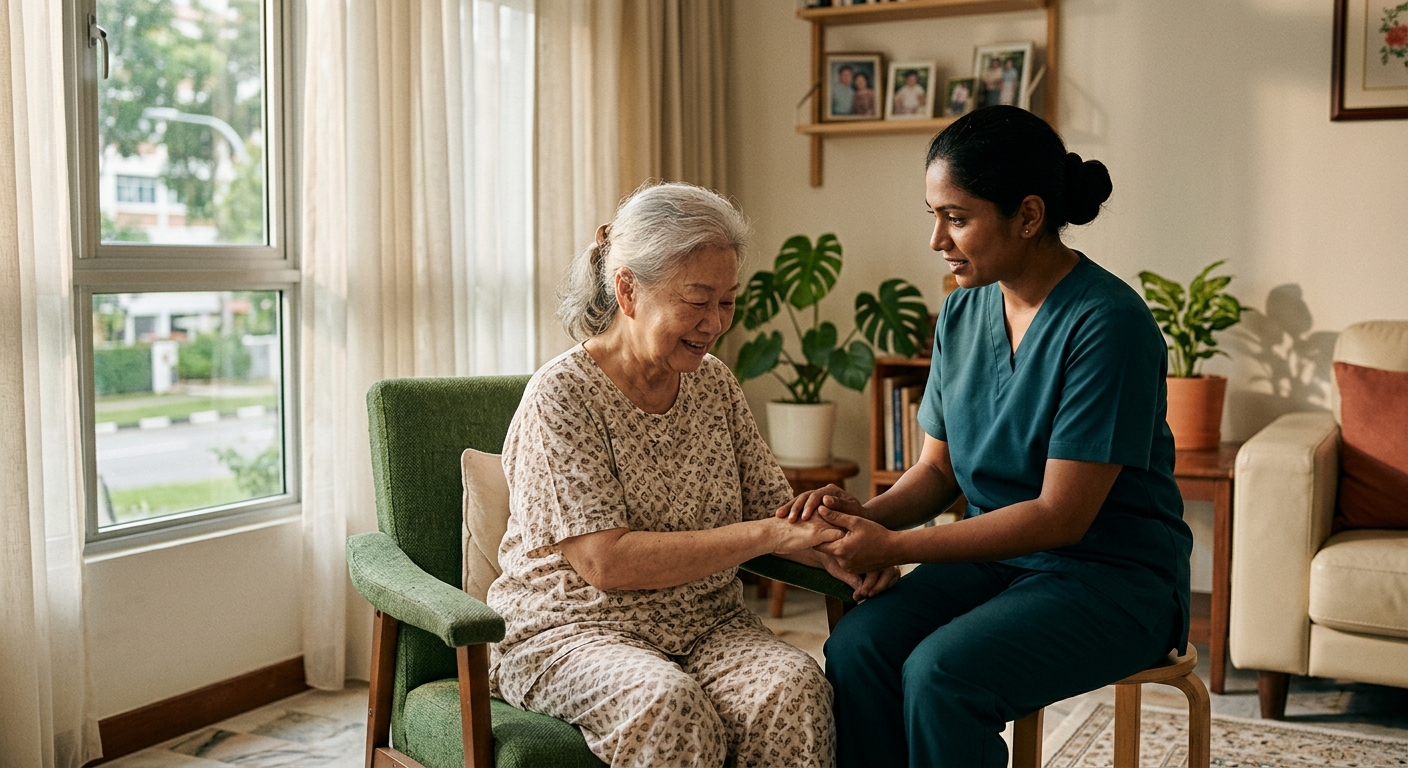
Elderly caregiver helpers can make a real difference to an ageing parent’s comfort and your family’s peace of mind—but only when the match is right. In Singapore, the “right” helper is rarely just about years of experience. It’s about the specific care needs (mobility, dementia, stroke recovery, post-op), the home environment, communication style, and how well the helper can follow care routines safely under Singapore’s rules.
This guide shares what Singapore families should look for when assessing elderly caregiver helpers—from practical caregiving competencies to soft skills, red flags, and the deployment steps that matter (including MOM requirements and Philippine processes). If you’re comparing profiles, you can also browse our helper directory and short-list candidates based on caregiving background.
Start with the senior’s care needs (not the resume)
Many families begin by asking, “Does she have elderly experience?” A better starting point is: “What care does our parent actually need daily?” Elderly caregiving is not one job—it’s a set of tasks that change by condition, stage, and even personality.
Map the day-to-day care plan
Write down a simple routine for a typical day and week. Include:
- Mobility: transfer bed-to-wheelchair, assisted walking, fall risk, stair safety
- Personal care: showering, diapering, toileting schedules, skin care
- Medical routines: medications timing, blood pressure or glucose monitoring (where appropriate), appointment logistics
- Feeding: soft diet prep, feeding assistance, swallowing precautions
- Sleep and supervision: night wakings, wandering, call-bell response
- Cognitive or behavioural needs: dementia confusion, sundowning, anxiety, stubbornness
- Rehab: simple physiotherapy exercises as instructed by a therapist
This is how you identify the “must-have” skill set. For example, a helper experienced with wheelchair transfers may be more important than one who has general “elderly care” exposure.
Decide what should never be delegated
A domestic helper can support daily living needs, but families should be careful not to place clinical duties on the helper beyond her training and comfort. Keep a clear boundary between:
- Daily living support (often suitable): hygiene assistance, meal prep, safe mobility assistance, reminders, companionship
- Medical decisions and invasive procedures (typically not suitable): changing sterile dressings, injections, inserting tubes, managing complex wound care without training
If your parent’s condition is medically complex, discuss with your doctor and consider whether home nursing should complement a helper’s support.
Core caregiving skills elderly caregiver helpers should demonstrate
When Singapore families interview elderly caregiver helpers, look for practical skills they can explain step-by-step. “I can do” is less helpful than “This is how I do it safely.”
Safe transfers and mobility support
Transfers are where many injuries happen—both to seniors and helpers. Ask the candidate to describe:
- How she positions a wheelchair and locks brakes
- How she supports a senior who is weak on one side (post-stroke)
- How she prevents slipping in bathrooms
- What she does if the senior feels dizzy mid-transfer
Good answers sound cautious: slow pace, clear communication, checking footing, using gait belts if provided, and calling for help when needed.
Hygiene and continence care with dignity
Diapering and toileting require both technique and respect. Look for:
- Experience preventing pressure sores (regular repositioning, keeping skin dry, barrier cream use if supplied)
- Understanding of hygiene steps to prevent UTIs
- Comfort with respectful language and privacy
A strong caregiver helper will mention observing changes (rashes, unusual urine, reduced appetite) and informing the employer early.
Meal preparation suited for seniors
Ask about:
- Preparing soft foods and soups familiar to older Singaporeans (and your parent’s preferences)
- Low-sodium cooking if there’s hypertension
- Encouraging hydration
- Handling swallowing risk (if known), such as slow feeding and upright posture
The best candidates also understand that elderly eating can be emotional—patience matters.
Medication support: reminders, not prescribing
Many families need a helper to remind and observe. The helper should be able to:
- Follow a medication chart prepared by the family
- Understand “before/after meals” instructions
- Record what was taken and when
- Escalate promptly if a dose is missed or vomiting occurs
Be cautious with candidates who claim they “know which medicines to give” without a family-managed system. For safety and compliance, keep medication management structured and documented.
Experience that matters: what to verify (and how)
Not all “elderly care experience” is equal. A helper may have cared for a mobile grandparent, which is very different from dementia supervision or stroke transfers.
Ask condition-specific questions
Use scenarios:
- “If Ah Ma refuses to shower for three days, what would you do?”
- “If Ah Gong insists he can walk alone but keeps falling, how do you manage?”
- “If she wakes at 2am confused and wants to leave the house, what’s your plan?”
Listen for calm, practical steps: de-escalation, redirecting, ensuring safety first, notifying the employer.
Request examples, not generalities
Helpful prompts:
- “Tell me about the last elderly person you cared for—age, condition, routine.”
- “What was the hardest part and how did you handle it?”
- “What would your previous employer say you need to improve?”
A genuine caregiver can recall details. Vague answers may mean limited exposure.
Consider training and willingness to learn
Some excellent caregivers are not “born experienced”—they are coach-able. If your family can provide a clear routine and is willing to train (especially in the first month), look for:
- Willingness to take instructions
- Comfort using mobility aids
- Openness to learning your home’s preferences
If you are hiring through an agency, ask about caregiving orientation and how candidates are screened for elderly suitability. At Happy Home Agency, our Precision Match™ approach focuses on daily routines, home layouts, and personality fit—not just a generic “elderly care” label.
The soft skills that make elderly care work
Elderly caregiving is emotionally demanding. A helper can be technically capable but still struggle if she lacks patience or communication skills.
Patience and emotional steadiness
Look for signs the candidate can cope with repetitive tasks and slow progress. Useful indicators:
- Speaks respectfully about previous elderly employers
- Doesn’t show frustration when describing difficult behaviours
- Understands that dementia is not “stubbornness”
Communication in a Singapore household
Elderly care often requires communicating with:
- The elderly person (who may speak Singlish, Mandarin, Hokkien, Malay, or Tagalog-accented English)
- Adult children coordinating schedules
- Clinic staff during visits
A helper doesn’t need perfect English, but she should be able to:
- Report symptoms clearly
- Understand instructions
- Ask when unsure
If your parent is Mandarin-speaking only, consider whether language is a must-have, or whether you can support communication through simple phrases, translation apps, and consistent routines.
Respect for boundaries and privacy
The helper will be present during vulnerable moments (toileting, bathing). Watch for cues that she understands dignity:
- knocking before entering
- covering the senior appropriately
- avoiding gossip or sharing personal details
MOM and employment requirements you should plan for
Hiring a foreign domestic worker in Singapore involves MOM requirements that directly affect elderly caregiver helpers.
Work Permit and eligibility basics
Your helper will work under an MOM Work Permit and must meet eligibility conditions (age, medical fitness, etc.). Employers also have obligations on:
- salary and timely payment
- safe working environment
- acceptable accommodation
- rest days and well-being
If you are unsure what applies to your household, it’s better to clarify early—especially when elderly care involves night supervision or irregular routines.
Rest days and sustainable caregiving
Elderly caregiving can be physically taxing. Under MOM rules, helpers are entitled to rest days (or compensation if both parties agree to work on rest days). From a practical standpoint:
- A rested helper is safer during transfers and supervision.
- Consistent breaks reduce burnout and turnover.
Families managing heavy care (e.g., dementia night waking) should plan caregiver coverage—alternate family members at night, or consider part-time respite.
Insurance and risk management
Elderly caregiving increases risk of back strain and falls. Ensure you have the required insurance and think about:
- installing grab bars and anti-slip mats
- using proper wheelchairs or commodes
- training the helper to call for assistance rather than “hero lifting”
For step-by-step hiring support, you can review our services or contact our consultants to discuss what your household needs.
Philippine deployment realities: OEC, documentation, and timelines
For Filipino elderly caregiver helpers coming to Singapore, Philippine deployment processes matter. If you have previously hired helpers, you may have heard about the OEC (Overseas Employment Certificate), which is part of the Philippines’ documentation requirements.
Why the OEC affects start dates
Even when a family chooses a suitable candidate quickly, deployment may still depend on:
- completion of required paperwork
- scheduling of medicals and briefings
- immigration and clearance steps on the Philippine side
A responsible agency will set expectations on timelines and help you plan interim care for your elderly parent.
Embassy touchpoints and authentic documents
From time to time, families may need guidance involving the Philippine Embassy (for example, general verification questions or advisory updates). What matters most is to work with proper channels and ensure documents are authentic and correctly processed.
If you need a realistic timeline for your chosen profile, start with start a hiring application so our team can advise based on current processing conditions.
Interview checklist: questions that reveal real capability
Here is a practical set of questions Singapore families can use when selecting elderly caregiver helpers. Use them as a structured interview, and compare answers across candidates.
Care routines and safety
- “Describe how you help an elderly person from bed to wheelchair.”
- “What do you do to prevent falls in the bathroom?”
- “If the elderly refuses to eat, what will you try?”
- “How do you handle night waking?”
Observation and escalation
- “What signs will make you call me immediately?”
- “Have you handled fever, dizziness, or a fall before? What did you do first?”
Character and working style
- “When you are stressed, how do you calm yourself?”
- “How do you prefer to receive instructions?”
- “What feedback did your previous employer give you?”
Practical home fit
- “Are you comfortable with lifting? What is your limit?”
- “Can you cook simple Chinese food/porridge/soup?”
- “Are you okay with showering an elderly person?”
Use a simple scoring method after each interview:
- Safety competence (transfers, falls, hygiene)
- Communication (clarity, honesty, reporting)
- Temperament (patience, steadiness)
- Willingness to learn (coach-able)
- Home fit (diet, language, schedule)
This keeps decisions fair—especially when families are emotional or under time pressure.
Common red flags (and what to do instead)
It’s normal to feel uneasy about certain answers. Elderly care is high-stakes, so don’t ignore warning signs.
Red flags to take seriously
- Overconfidence about medical tasks (“I can decide medicine”) without structure
- Minimising safety risk (“No need wheelchair brakes, I hold can already”)
- Blaming previous elderly employers harshly
- Reluctance to follow routines (“I do my own way faster”)
- Inconsistent employment history without clear explanation
Better alternatives
- Choose candidates who prioritise safety and ask questions.
- Put routines in writing (mobility steps, meal preferences, emergency contacts).
- Schedule a trial period mindset: close supervision early, then gradual independence.
If you are shortlisting profiles, our helper directory can help you compare backgrounds, and our consultants can clarify what each experience line really implies.
Settling-in plan: how to set your helper up for success
Even a strong candidate needs structured onboarding, especially in elderly care.
The first two weeks: train, document, observe
Prepare:
- A one-page care routine (wake times, toileting schedule, diet)
- A medication chart (managed by the family)
- Emergency numbers and clinic contacts
- A home safety walkthrough (where cleaning chemicals are, where grab bars are)
Observe transfers and shower routines closely at the start. Correct gently but clearly.
Create a “single point of instruction”
Elderly caregiving breaks down when multiple family members give conflicting directions. Decide who will be the main person to:
- update routines
- review issues nightly
- communicate performance feedback
This reduces stress for everyone, including the elderly parent.
Plan relief so care remains safe
If your parent needs frequent night attention, build a sustainable plan:
- rotate family support
- use daycare/respite services when needed
- consider part-time caregiver support for heavy lifting tasks
Long-term care is a marathon, not a sprint.
Where Happy Home Agency Fits In
Selecting elderly caregiver helpers is one of the most important household decisions you’ll make—because it affects safety, dignity, and daily harmony. If you’d like guidance tailored to your parent’s condition and your home routine, Happy Home Agency can help you short-list suitable Filipino caregiver profiles through our Precision Match™ screening and support you after placement with our 365-Day Employer Care™ program.
You can browse our helper directory, or start a hiring application so we can recommend matches based on your care needs. If you prefer to speak to a consultant first (or WhatsApp us), please contact our consultants. For more practical advice, see other guides. Elderly caregiver helpers work best when the match is careful—and we’re here to help you make that choice with confidence.
Questions & answers
Let Happy Home Agency match your family with someone you can trust.
Since 2006, we've helped Singapore families find the right helper — not just any helper. EA Licence 06C4290.
Related articles
Hiring a Filipino helper in Singapore involves clear MOM rules, Philippine Embassy processes, and practical fit checks at home. Here’s a complete, family-first guide.
Considering a Filipino helper in Singapore? Learn the step-by-step hiring process, expected costs, MOM rules, OEC basics, and practical tips to match your household well.
Hiring a helper starts with the right MOM steps. Learn how the MOM work permit for domestic helper works, what you must prepare, and common pitfalls to avoid.