Employer Orientation Programme (EOP) Explained for Singapore Employers
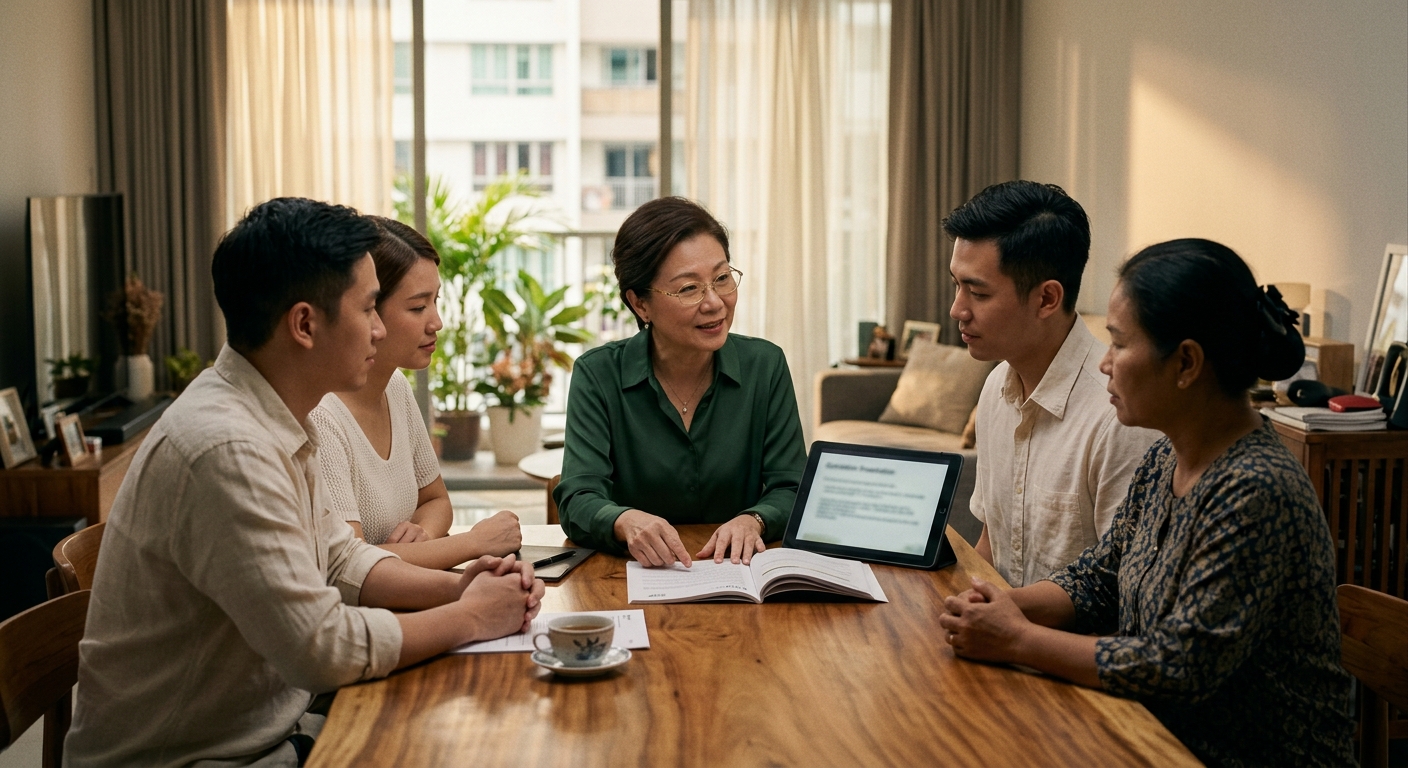
Bringing a migrant domestic worker (MDW) into your home is not just a hiring decision—it’s a caregiving partnership that affects your family’s routines, privacy, and safety. In Singapore, the Employer Orientation Programme (EOP) is one of the key safeguards that helps first-time (and some repeat) employers understand their responsibilities before a helper arrives. This article shares the Employer Orientation Programme (EOP) explained for Singapore employers in plain language, with the practical details you’ll need to plan your hiring timeline confidently and stay aligned with MOM requirements.\n\n## What the Employer Orientation Programme (EOP) is—and why MOM requires it\nThe Employer Orientation Programme (EOP) is a mandatory orientation for certain employers who want to hire a foreign domestic worker (today termed migrant domestic worker, or MDW) in Singapore. It is required by the Ministry of Manpower (MOM) to ensure employers understand: \n\n- The employer’s legal responsibilities and duties of care\n- Key employment conditions, including rest, accommodation, and salary\n- Safe management practices at home, including supervision and preventing accidents\n- How to resolve issues early through proper communication and documentation\n\nThe EOP is not meant to “test” you. Think of it as an essential baseline: MOM wants every employer—especially those without prior experience—to start from a common understanding of what fair, safe, and compliant employment looks like inside a family home.\n\n### How EOP supports a smoother helper-employer match\nFrom an agency perspective, the EOP reduces avoidable friction. When expectations are clearer from Day 1, it’s easier to agree on household routines, manage elderly/infant care safely, and avoid misunderstandings about rest days, workload, and privacy.\n\nIf you are still exploring profiles, you can browse our helper directory and shortlist based on caregiving experience, language comfort, and willingness to handle specific tasks—then align those expectations during interviews.\n\n## Who must attend EOP (and who is exempt)\nOne of the most common questions we hear is: “Do I really need to take EOP?” Here is the practical way to think about it. MOM requires EOP for: \n\n- First-time employers hiring an MDW\n- Employers who have not employed an MDW before, or whose prior employment history triggers the EOP requirement\n- Some employers who meet MOM’s criteria based on past MDW employment outcomes (for example, if there was a record that indicates the employer should be re-oriented)\n\nBecause MOM’s exact triggers can change and may depend on your NRIC profile and prior work permit history, the safest approach is: check your requirement at the point of application and plan your timeline assuming you may need to attend.\n\n### If you are hiring for parents or as a shared household\nIn multi-generation homes, it’s common to ask whether the “main employer” or “co-employer” must attend EOP. Typically, MOM’s requirement is tied to the employer named in the work permit application. If your parents are the named employer, they may be required to attend even if you are heavily involved in day-to-day management.\n\nWhen in doubt, speak with an agency consultant early so you don’t lose time mid-process. If you are ready to proceed, you can start a hiring application and we’ll advise on the steps based on your household situation.\n\n## Employer Orientation Programme (EOP) explained for Singapore employers: what you’ll learn\nMany employers worry the EOP is a generic lecture. In reality, the value comes from the practical reminders—especially if you are juggling caregiving, work, and children. While course coverage varies by provider, the EOP typically reinforces the employer’s role in: \n\n- Providing acceptable accommodation, adequate food, and basic privacy\n- Ensuring rest and recovery (rest days, sleep time, and manageable workload)\n- Managing safe work practices at home (especially for cleaning at heights)\n- Knowing what to do during conflicts, illness, or emergencies\n- Understanding key MOM processes (work permit conditions, insurance, repatriation responsibilities)\n\n### Common home-safety topics highlighted in EOP\nHome accidents are one of the biggest risks for MDWs in Singapore, particularly during cleaning. EOP messaging often stresses: \n\n- Avoiding unsafe practices like cleaning the outside of windows without proper safety measures\n- Setting clear rules for use of ladders and handling heavy objects\n- Supervising new routines until both parties are comfortable\n\nIf you live in a high-rise unit (common around Orchard, River Valley, Bishan, Punggol, and so on), this is especially relevant. A few small changes—like assigning indoor window cleaning only, or using long-handle tools—can prevent serious incidents.\n\n### Communication and expectations: the part families underestimate\nThe best helper-employer relationships are often built on simple, consistent habits: \n\n- A weekly check-in (10 minutes is enough)\n- Clear priorities (what must be done daily vs. weekly)\n- Respect for boundaries (phones, rest hours, personal space)\n\nThis is where a structured matching and onboarding process helps. At Happy Home Agency, our Precision Match™ approach focuses on aligning household needs (infant care, dementia care, cooking, cleaning standards, pet care) with a helper’s real experience—not just what looks good on paper. You can read more about our services if you want to understand how we support interviews, documentation, and settling-in.\n\n## How to take EOP: format, duration, cost, booking, and validity\nThe EOP is typically completed online through MOM-approved providers. You should plan to take it early—ideally before you are at the final stage of choosing a helper—so it doesn’t become a last-minute bottleneck.\n\nHere’s what Singapore employers usually want to know: \n\n- Format: Commonly online (e-learning)\n- Duration: Often around a few hours, depending on the provider\n- Cost: A course fee is payable to the training provider (fees can vary)\n- Booking: You register with an approved provider and complete the modules as instructed\n- Validity: Typically valid for a set period (commonly a couple of years). Always confirm your current validity window during your application\n\n### Practical planning tip: do EOP before you commit to flight dates\nIf you are hiring from the Philippines, timelines can be influenced by factors beyond Singapore’s side—particularly the Philippine overseas employment documentation process. This includes items regulated by Philippine authorities and requirements that can affect a helper’s departure schedule.\n\nFor Filipino MDWs, one key requirement is the Overseas Employment Certificate (OEC) process, usually managed through the Philippine government’s channels and supported by agencies on both sides. Families sometimes hear about “going to Lucky Plaza” because it’s a common location for Filipino community services and remittance, but the actual deployment documentation is governed by official processes and the Philippine Embassy / relevant authorities. The key point for employers: build buffer time and avoid fixing a hard start date until documentation is moving smoothly.\n\n## How EOP fits into the overall MDW hiring process in Singapore\nEven when you understand the EOP, it helps to see where it sits in the full journey. A typical hiring sequence looks like this: \n\n1. Assess household needs: caregiving scope, mobility support, infant routines, cooking preferences, day-to-day cleaning\n2. Shortlist and interview: clarify expectations, experience, and comfort with your specific routines\n3. Complete required employer steps: including EOP if required\n4. Submit work permit-related paperwork: via MOM processes (often handled with agency support)\n5. Pre-arrival preparation: room setup, household rules, and a simple first-week schedule\n6. Arrival and settling-in: orientation at home, clear training plan, and realistic adjustment period\n\n### Where agencies add value beyond paperwork\nA reliable agency is not just a form-filler. Look for support in: \n\n- Interview coaching (so you ask the right questions respectfully)\n- Transparent explanation of salary expectations and placement timelines\n- Proper handling of documentation for both Singapore and the source country\n- Post-arrival guidance for settling-in and managing issues early\n\nIf you want to see how we do it, you can explore other guides covering interviews, rest days, transfers, and common first-month challenges.\n\n## EOP and your responsibilities after the helper arrives (what MOM expects in practice)\nCompleting the EOP is only the starting point. MOM’s expectations of employers are ongoing, and they show up in everyday decisions at home. The families who do best tend to treat employment as a professional arrangement—warm, respectful, but clear.\n\n### Rest days, phone use, and personal time\nRest and personal time are frequently misunderstood, especially in households under caregiving pressure. Employers should plan schedules that allow genuine rest. Practical steps include: \n\n- Agreeing in writing on rest day arrangements and how changes will be discussed\n- Setting reasonable rules for phone use (for example, avoid phones during active caregiving, but allow during rest periods)\n- Creating a predictable daily routine so your helper knows when work ends\n\n### Accommodation and privacy in HDBs and condos\nNot every home has a spare room. MOM generally expects acceptable accommodation and a safe environment. If space is tight, think about: \n\n- A proper bed (not a sofa)\n- Adequate ventilation\n- A safe area to store personal items\n- Respectful boundaries around changing and resting\n\nThese are sensitive topics in Singapore’s compact housing context. The goal is to be practical and humane—what you would consider acceptable for a family member staying long-term.\n\n### Medical care and insurance awareness\nEmployers are responsible for providing and paying for medical care per MOM’s requirements, including maintaining the necessary insurance coverage. Keep a simple file (digital or physical) with: \n\n- Insurance and policy contacts\n- Clinic preferences and any chronic condition notes\n- Emergency contacts\n- Copies of key documents\n\nSmall preparation steps reduce stress when someone falls ill—especially in homes caring for young children or elderly parents.\n\n## Special situations: transfers, first-time employers, and hiring Filipino helpers\nNot every household is a straightforward “first-time hire from overseas.” Below are common scenarios we see in Singapore, and how EOP and related steps may affect them.\n\n### If you are hiring a transfer helper already in Singapore\nWhen hiring a transfer MDW, timelines can be shorter, but you still need to check whether EOP is required for you as the employer. Transfer cases also benefit from very clear interviews, because the helper may have developed routines in a previous household.\n\nGood interview questions include: \n\n- What was your previous daily schedule like?\n- What type of cooking are you comfortable with (Chinese soups, simple stir-fry, baby food)?\n- Are you comfortable with night wakings for infants or elderly?\n- What tasks do you find most challenging, and how do you prefer to be trained?\n\n### If you are a first-time employer juggling childcare and eldercare\nMany Singapore families today are in the “sandwich” stage—young kids and ageing parents. If that’s you, the EOP will likely feel very relevant, but you should also set realistic expectations: \n\n- One person can’t do two full-time caregiving roles at the same time without trade-offs\n- Training takes time; the first month is usually adjustment\n- Your home routines may need simplifying (meal plans, cleaning standards, the number of daily tasks)\n\n### Hiring Filipino helpers: documentation realities to plan for\nFilipino domestic helpers are valued in Singapore for communication comfort and caregiving experience, but employers should understand that deployment involves compliance on both sides. Apart from MOM processes, the Philippines side has its own requirements (including the OEC) and regulated steps.\n\nIf you hear terms like “Philippine Embassy” or “OEC appointment,” it’s often related to ensuring the worker is properly documented for overseas employment. This is not something employers can or should shortcut. A good agency will advise you honestly on timelines and what documents you need to provide as the Singapore employer.\n\nFor families who work near Orchard or frequent Lucky Plaza on weekends, it can be tempting to rely on informal advice. It’s better to verify against official guidance and work with a licensed agency so your helper’s deployment is safe, lawful, and less stressful.\n\n## Common mistakes employers make around EOP (and how to avoid them)\nEven careful employers can run into avoidable delays. Here are the most common EOP-related pitfalls we see—and what to do instead.\n\n- Mistake 1: Treating EOP as an afterthought.\n Fix: Do it early. If you are required to attend, complete EOP before you finalise arrival timing.\n\n- Mistake 2: Assuming a spouse can “stand in” informally.\n Fix: The requirement is tied to the employer record. Check who is the official employer in MOM’s system and ensure the right person completes EOP.\n\n- Mistake 3: Not aligning household rules before arrival.\n Fix: Prepare a simple written schedule and house rules (privacy, phone use, visitors, rest day communication) and review them calmly in the first week.\n\n- Mistake 4: Overloading the first two weeks.\n Fix: Prioritise. Start with core tasks (safe caregiving routines, essential cleaning) before adding “nice-to-have” extras.\n\n- Mistake 5: Not knowing where to get help when issues arise.\n Fix: Keep your agency contact handy and document key conversations. Good advice early can prevent problems from escalating.\n\n## Where Happy Home Agency Fits In\nUnderstanding the Employer Orientation Programme (EOP) explained for Singapore employers is a strong first step—but the real confidence comes from having a structured hiring process, clear documentation, and steady support once your helper starts. At Happy Home Agency (EA Licence 06C4290, est. 2006), we help families shortlist and interview through our Precision Match™ system, then stay supported with our 365-Day Employer Care™ programme so you’re not left alone after placement.\n\nIf you’d like tailored advice on whether you need EOP, how it affects your timeline, or which helper profile suits your caregiving needs, you can start a hiring application or contact our consultants (WhatsApp is available via the contact page). If you are still comparing options, browse our helper directory and save a shortlist—then we’ll guide you through the next steps in a calm, MOM-aligned way.
Questions & answers
Let Happy Home Agency match your family with someone you can trust.
Since 2006, we've helped Singapore families find the right helper — not just any helper. EA Licence 06C4290.
Related articles
Hiring a Filipino helper in Singapore involves clear MOM rules, Philippine Embassy processes, and practical fit checks at home. Here’s a complete, family-first guide.
Considering a Filipino helper in Singapore? Learn the step-by-step hiring process, expected costs, MOM rules, OEC basics, and practical tips to match your household well.
Hiring a helper starts with the right MOM steps. Learn how the MOM work permit for domestic helper works, what you must prepare, and common pitfalls to avoid.