
How to Interview a Filipino Domestic Helper Effectively
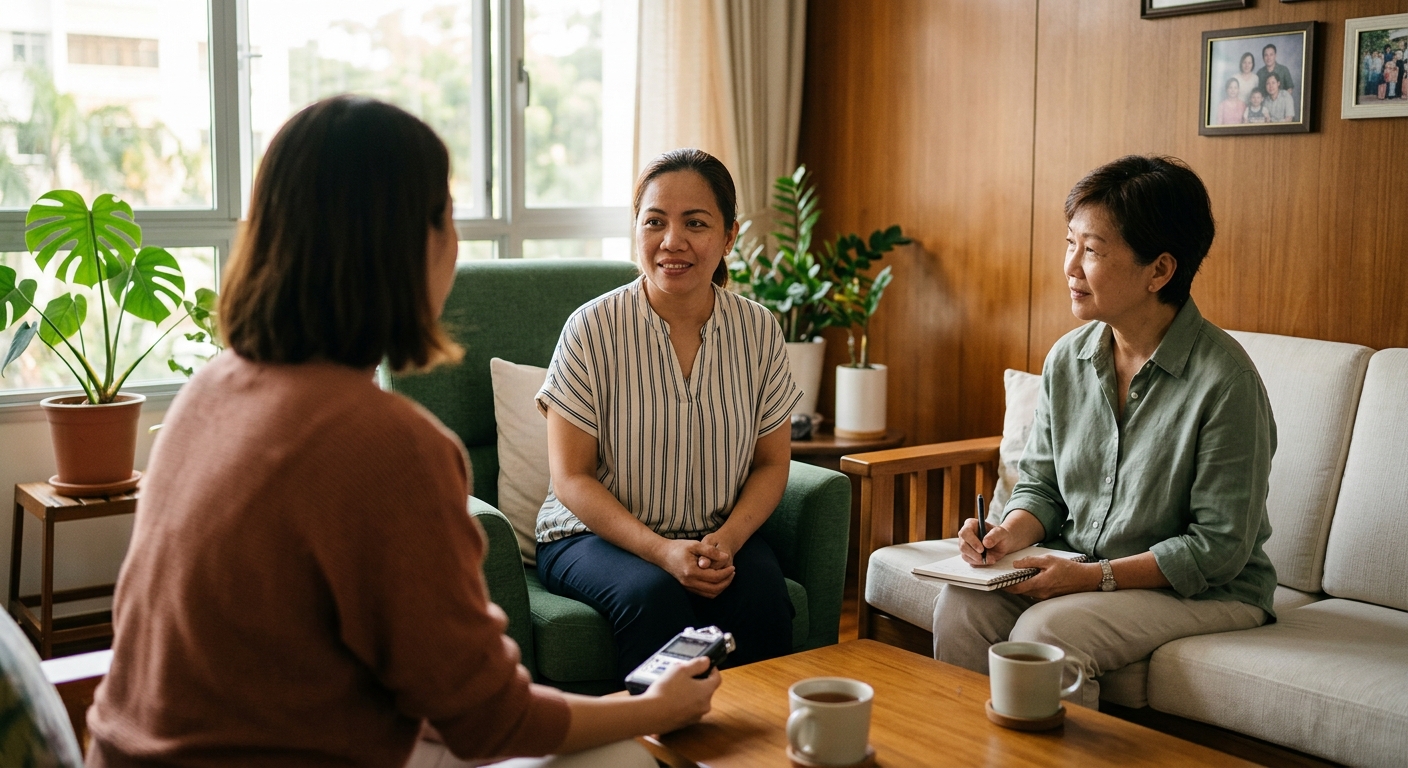
Hiring help for your home is personal. You’re not just filling a role—you’re inviting someone into your family’s daily rhythm, private spaces, and caregiving routines. That’s why knowing how to interview a Filipino domestic helper effectively matters: it reduces mismatched expectations, supports a respectful working relationship, and helps you stay aligned with Singapore’s MOM regulations and practical household needs from day one.
In Singapore, many families speak to candidates over video calls while the helper is still overseas, or interview transfer helpers who are already in-country. Either way, a good interview is less about “testing” and more about clarity: duties, schedules, rest, communication style, and what support your family can provide. Below is a step-by-step approach we use as a matching agency—adapted so you can confidently run your own interview and make a fair decision.
1) Prepare before you speak to any candidate
If you start the interview without defining your household needs, you’ll end up asking random questions and comparing candidates based on “feel” rather than fit. Preparation also helps you communicate clearly, which is important for mutual respect.
Define your household “must-haves” and “nice-to-haves”
Write these down before the interview:
- Care needs: infant care, toddler routines, elderly mobility support, special diet, medication reminders.
- Core chores: cooking, marketing, ironing, hand-wash delicate items, general cleaning.
- Home set-up: condo vs landed, number of rooms, stairs, pets, appliances.
- Language needs: English level for child safety, ability to read labels/instructions.
- Lifestyle: work-from-home adults, frequent guests, travel plans.
A practical tip: shortlist 3 “non-negotiables” (e.g., infant care experience, can cook simple Chinese dishes, comfortable with dogs). This keeps interviews consistent.
Align internally as a family
If two spouses have different standards or different rules, the helper will feel pulled in two directions. Before interviewing, agree on:
- Daily schedule and priorities
- Who gives instructions
- House rules (phone use, visitor policy, privacy)
- What “clean” and “safe” mean in your home
Know the key Singapore requirements (high level)
You don’t need to recite the regulations in the interview, but you should be familiar with the basics:
- The employer’s responsibilities under MOM for a Foreign Domestic Worker (FDW)
- Weekly Rest Day requirements (and the option to compensate if both parties agree, following MOM rules)
- Mandatory medical examinations and insurance requirements
If you’re unsure, speak with an agency consultant or review current requirements via MOM’s official channels.
2) Set the right tone: respectful, structured, and clear
The best interviews feel like a professional conversation, not an interrogation. Filipino domestic helpers often come from service-oriented cultures; many are polite and may say “yes” even when unsure. Your job is to create space for honest answers.
Start with a simple agenda
You can say:
- “We’ll introduce our family and routine.”
- “We’ll ask about your experience and preferences.”
- “We’ll discuss duties, rest day, and communication.”
- “You can ask us questions too.”
This reduces nerves and improves accuracy.
Use plain English and confirm understanding
Avoid fast speech and local slang. After explaining something important, ask the candidate to repeat it back in her own words. This is not to embarrass her—this is to confirm understanding.
Be upfront about what your household truly needs
If you need heavy cooking, infant night feeds, or care for a frail elderly person, say it clearly. Many problems in employment relationships begin because expectations were softened during the interview.
3) Ask the right questions (and listen for real details)
A strong interview covers three areas: experience, practical skills, and attitudes/communication.
Experience and employment history
Aim for specifics, not general statements:
- “Tell me about your last employer—how many family members, what ages?”
- “What time did your day start and end?”
- “What were your main duties—daily and weekly?”
- “Why did you leave?” (Listen for how she speaks about conflict.)
If she has worked in Singapore before, you can ask about her familiarity with local routines—marketing, food handling, school schedules, and living with multi-generational families.
Infant/child care (if relevant)
Child safety is where you want the most detail.
Ask scenario-based questions:
- “If the baby has a fever, what will you do first?”
- “How do you sterilise bottles and prepare milk safely?”
- “How do you manage a toddler tantrum without shouting?”
- “What activities do you do for a 2-year-old at home?”
Listen for calm, safety-first answers: handwashing, supervision, asking parents, not giving medication without instructions.
Elderly care (if relevant)
Elderly care varies widely. Be very clear about physical requirements.
Questions to ask:
- “Have you assisted with walking support, wheelchair transfers, or toileting?”
- “Are you comfortable with showering an elderly person?”
- “Have you managed special diets (low salt, diabetes)?”
- “Can you follow a medication schedule set by the family?”
If there is lifting involved, be honest. Also consider whether your home has the right equipment (grab bars, commode chair) and whether you need professional nursing support alongside a helper.
Cooking, marketing, and food preferences
Cooking expectations are a common mismatch point in Singapore.
Ask:
- “What dishes can you cook confidently?”
- “Can you follow recipes from YouTube or written instructions?”
- “Are you comfortable handling pork?” (Important in multi-faith households.)
- “Do you know how to choose fresh vegetables/fish at wet market or supermarket?”
If cooking is essential, request the candidate to talk you through a dish step-by-step. You’ll learn how she thinks, not just what she claims.
Cleaning standards and time management
Instead of asking “Are you good at cleaning?”, ask:
- “How do you clean a bathroom properly?”
- “How often do you change bedsheets?”
- “How do you organise chores across the week?”
- “Do you have experience with delicate surfaces (marble, parquet)?”
These questions reveal whether her “clean” matches your “clean”.
Personality, initiative, and communication
A helper can have strong skills but struggle with communication.
Ask:
- “When you are unsure about instructions, what do you do?”
- “If you make a mistake, how do you report it?”
- “Do you prefer checklists, verbal instructions, or both?”
You want someone who asks questions early rather than hiding problems.
4) Use scenario questions to test judgment (without being unfair)
Scenario questions are one of the best ways to learn how to interview a Filipino domestic helper effectively, because they show practical thinking and values.
Here are scenarios that Singapore families commonly face:
- Child safety: “We are cooking and the toddler runs to the kitchen. What do you do?”
- Prioritisation: “Baby is crying but laundry is in the machine and someone is at the door—what comes first?”
- Food allergy: “If you realise a snack may contain peanuts, what will you do?”
- Grandparent falls: “Ah Ma slips in the bathroom—what are your immediate steps?”
- Work-from-home: “If we are in meetings, how do you manage noise and requests?”
Good answers are calm, safety-oriented, and include notifying the employer promptly.
5) Discuss boundaries early: rest day, phone use, privacy, and visitors
Many difficult situations can be prevented by discussing boundaries upfront. This is not about being strict—it’s about avoiding misunderstandings.
Weekly rest day and well-being
Rest is essential for performance and mental health. Talk about:
- Preferred rest day arrangement
- Typical plans on rest day (church, meeting friends, errands)
- Your household’s expectations for emergency help (rare and clearly defined)
Follow MOM requirements on weekly rest days and compensation if rest day is worked. If you’re unsure, clarify before finalising employment terms.
Phone use and availability
Rather than banning phones (which often backfires), set practical rules:
- No phone while caring for infants/young children
- Phone allowed during break times
- Reasonable contact with family overseas
Privacy and personal space
Clarify:
- Sleeping arrangements
- Use of bathrooms
- Handling of family documents and valuables
- Photography and social media boundaries (no posting children’s photos)
Visitors and going out
Be clear about visitor policy at home, and how you handle late nights. If the helper is new to Singapore, also mention safe meeting points. Many Filipino helpers meet friends on rest days around Lucky Plaza or Orchard; being non-judgmental while setting safety expectations helps build trust.
6) Watch for red flags—and also avoid unfair assumptions
A good interview checks fit, but it should also be fair. Not every nervous candidate is hiding something, and not every confident candidate is suitable.
Red flags to clarify gently
- Vague employment history with no clear dates or duties
- Overpromising (“I can do everything”) without examples
- Unwillingness to discuss rest day expectations
- Poor attitude when talking about previous employers
- Unsafe answers around children/elderly care
If something feels unclear, ask follow-up questions. Many issues are misunderstandings, especially over video calls.
Avoid assumptions
- Older does not always mean more patient; younger does not always mean less responsible.
- A quiet personality can still be competent.
- Some helpers understate their skills out of modesty.
Your goal is evidence-based hiring: examples, routines, and scenario answers.
7) Practical interview formats that work in Singapore (video, in-person, trial)
Different hiring routes call for different interview methods.
Video interview (overseas candidate)
This is common when hiring from the Philippines. Tips:
- Use a quiet environment and stable connection
- Keep it to 30–45 minutes; offer a second call if needed
- Ask the candidate to show simple proof of skills when appropriate (e.g., describe how she cooks a dish; if she has certificates, ask to share via the agency)
Remember that documentation and deployment typically involve Philippine requirements such as the OEC (Overseas Employment Certificate) process for legal overseas employment. A reputable agency will guide you through timelines and ensure proper compliance.
In-person interview (transfer helper in Singapore)
If the candidate is already in Singapore, you may be able to meet in person. Keep it respectful and private—avoid overly personal questions. Consider meeting at the agency office or a neutral location.
A structured “work plan” discussion instead of a trial day
Some families ask for a “trial”, but in Singapore you should be careful not to create informal arrangements that may breach regulations or create misunderstandings. A safer alternative is to walk through a detailed work plan:
- Daily schedule (school runs, naps, meals)
- Weekly schedule (deep cleaning days, marketing days)
- Monthly tasks (fridge clean, curtains)
This work plan becomes your shared reference after hiring.
8) After the interview: compare fairly and confirm next steps
The final step in how to interview a Filipino domestic helper effectively is having a consistent way to evaluate candidates, and then confirming the onboarding process clearly.
Use a simple scorecard
Right after each interview, rate (1–5) on:
- Relevant care experience (infant/elderly)
- Cooking/cleaning competence for your home
- Communication and honesty
- Attitude and willingness to learn
- Fit with your schedule and household rules
Write down evidence next to the score (“Explained bottle sterilising steps clearly”; “Handled fall scenario with calm steps”). This reduces bias and “last interview wins” effect.
Confirm deal-breakers in writing (through proper channels)
Before you proceed to hire, ensure everyone is aligned on:
- Main duties and any special care needs
- Rest day arrangement
- Salary structure and deductions (if any) according to regulations
- Start date and deployment timeline
If hiring from the Philippines, you may also hear the candidate mention the Philippine Embassy in Singapore for consular support once she is in-country; that’s normal. A legitimate deployment process is important for the helper’s protection and your peace of mind.
Plan a kind but clear onboarding period
Many good helpers still need time to adapt to your home.
For the first 2–4 weeks:
- Use checklists with photos (where items go)
- Demonstrate your preferred methods (baby bath routine, cleaning products)
- Provide feedback weekly (what’s working, what to adjust)
A calm onboarding period builds long-term stability.
Where Happy Home Agency Fits In
Interviewing well is one part of hiring; matching the right profile to your family’s needs is the bigger picture. If you’d like support, we can help you apply how to interview a Filipino domestic helper effectively through our structured shortlisting and guided interview process—so you spend time on the right candidates and ask the right questions.
You can browse our helper directory to shortlist profiles, or start a hiring application and share your household requirements so our consultants can advise on a suitable match. If you’d like to speak to someone first, contact our consultants. For related topics like rest days, transfers, and onboarding, you can also explore other guides or view our services.
If you’re ready, reach out via the application form or message us through WhatsApp via our contact page—we’ll walk you through the interview steps, documentation timeline, and practical onboarding plan with care and clarity.
Questions & answers
Let Happy Home Agency match your family with someone you can trust.
Since 2006, we've helped Singapore families find the right helper — not just any helper. EA Licence 06C4290.
Related articles
Hiring a Filipino helper in Singapore involves clear MOM rules, Philippine Embassy processes, and practical fit checks at home. Here’s a complete, family-first guide.
Considering a Filipino helper in Singapore? Learn the step-by-step hiring process, expected costs, MOM rules, OEC basics, and practical tips to match your household well.
Hiring a helper starts with the right MOM steps. Learn how the MOM work permit for domestic helper works, what you must prepare, and common pitfalls to avoid.