
Insurance and medical coverage for foreign domestic workers
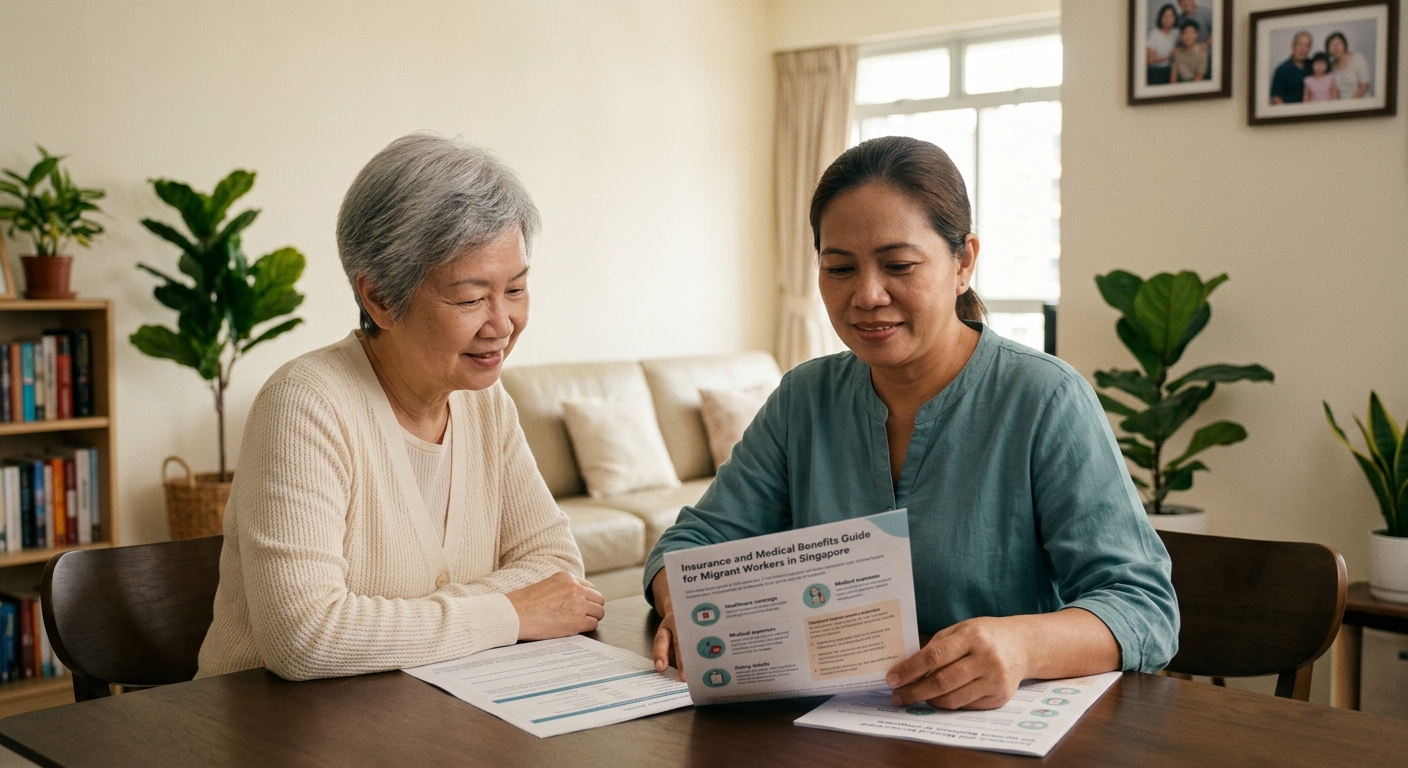
Hiring a helper is about trust, safety, and long-term peace of mind—especially when it comes to health matters. Insurance and medical coverage for foreign domestic workers (FDWs) in Singapore is not just a “nice-to-have”; it’s a set of responsibilities guided by MOM rules, and it also shapes how confidently your household can handle medical bills, accidents, and unexpected hospitalisation. If you’re hiring your first helper—or reviewing your current coverage—this guide breaks down what’s required, what’s practical, and what Singapore families commonly misunderstand.
What MOM requires: the baseline insurance every employer must have
When Singapore families talk about insurance, it helps to separate what is legally required versus what is “good coverage.” MOM sets out clear requirements for FDWs, and employers must comply throughout the helper’s employment.
Mandatory: Medical insurance (minimum coverage)
MOM requires employers to buy and maintain medical insurance for each FDW with at least S$15,000 per year in coverage for inpatient care and day surgery (including conditions that may arise during employment). This is the basic floor—not a guarantee that all hospital bills will be fully covered.
What this means in daily life:
- A short hospital stay can already run into thousands.
- Specialist procedures, imaging, and surgery can quickly exceed basic limits.
- Co-payments, exclusions, and waiting periods (depending on insurer) may still apply.
Mandatory: Personal accident insurance (PA)
Employers must also buy personal accident insurance with at least S$60,000 coverage. This is typically intended for permanent disability or death due to an accident.
In practice, families should read the benefit table closely, because PA plans may vary in:
- Coverage for accidental medical reimbursement
- Specific events covered (e.g., burns, fractures)
- Whether commuting or off-day activities are included
Mandatory: Security bond (S$5,000)
Most employers must buy a S$5,000 security bond (often via an insurer) for non-Malaysian FDWs. The bond is not “insurance for medical bills.” It is a legal instrument to ensure employer compliance with FDW-related conditions (e.g., repatriation responsibilities and not breaching work permit rules).
A common confusion: the security bond does not replace medical insurance, and it’s not meant to be used like a healthcare fund.
Important: Where to check the latest requirements
MOM rules can be updated. Before you sign any policy, it’s wise to confirm the current requirements directly on MOM’s website and ensure the plan meets them.
What “medical coverage” really includes (and what it often doesn’t)
Even when you buy a plan labelled “FDW medical insurance,” the real-world protection depends on the policy details. Understanding the difference between inpatient and outpatient coverage is crucial.
Inpatient, day surgery, and specialist care
Most standard FDW medical insurance focuses on inpatient hospitalisation and day surgery. This is where large bills happen—ward charges, operating theatre fees, anaesthetist, investigations, and post-op inpatient medications.
However, families should pay attention to:
- Panel hospitals/clinics versus non-panel (cashless options may depend on panel arrangements)
- Sub-limits (e.g., room-and-board daily caps)
- Pre- and post-hospitalisation coverage windows (e.g., 30/60/90 days)
Outpatient GP visits: usually not included unless you add it
Routine outpatient visits (fever, cough, rashes, stomach upset, simple infections) are often not included in basic plans. Some employers assume “medical insurance” covers all GP visits—then feel surprised when they pay out of pocket.
If you prefer predictability, consider adding outpatient benefits (where available) or set a household practice such as:
- Use a regular GP clinic near home
- Keep receipts and a simple medical log
- Agree on when the helper should inform the employer (e.g., before visiting a doctor unless urgent)
Dental, TCM, physiotherapy: typically limited or excluded
Dental care, Traditional Chinese Medicine, and physiotherapy may be excluded or have low caps unless you buy add-ons. Yet these needs do arise—especially for helpers doing physically demanding work.
A practical approach:
- Treat dental and physiotherapy as “possible additional costs” rather than assuming they’ll be insured
- Ask your insurer/agency what riders are available and whether they are worth it for your household
Choosing the right plan: how Singapore families can evaluate coverage realistically
There isn’t one “best” plan for every family. The right decision depends on your risk tolerance, your budget, and your helper’s profile (age, known conditions, and job scope).
Step 1: Start with your risk scenarios
Think about what would cause stress in your household:
- A large hospital bill that exceeds S$15,000
- An accident at home (slips, burns, cuts)
- Time off work and replacement helper costs due to prolonged illness
If a single scenario would be financially hard to manage, higher coverage can be reasonable.
Step 2: Compare beyond the headline coverage amount
Two policies can both say “S$15,000 medical insurance” but behave very differently. Compare:
- Annual limit and whether it resets each policy year
- Co-insurance / deductible (some plans require the employer to pay part of the bill)
- Exclusions (e.g., pre-existing conditions, pregnancy-related care, mental health, self-inflicted injury)
- Claim process (documents needed, timelines, panel arrangements)
Step 3: Consider whether you want higher medical limits
Many families choose medical coverage above the minimum, especially when:
- The helper is older
- The household wants the option of private hospitals (not always practical, but some prefer it)
- The family wants stronger protection against rare but costly events
In our experience as an agency, the most “comfortable” coverage is the one you understand and can execute quickly during a real emergency.
Step 4: Align coverage with job scope and home environment
A helper caring for infants, cooking daily, and doing heavy cleaning faces different risks from a helper focused mainly on eldercare. Consider:
- More cooking = higher burn/cut risk
- More lifting/transfers (eldercare) = back strain risk
- Working in landed property = more staircase risk
Common mistakes employers make (and how to avoid them)
Even responsible employers can get caught out by assumptions. These are the issues we see most often.
Mistake 1: Buying the cheapest plan without checking exclusions
A low premium may come with strict limits, higher co-payments, or narrow definitions of covered events. If the policy wording is difficult, ask your agency or insurer to explain it in plain language.
Mistake 2: Not knowing the clinic/hospital process during an emergency
When something happens late at night, families scramble. Prepare a simple plan:
- Identify your nearest 24-hour clinic and nearest A&E.
- Keep the policy hotline saved in your phone.
- Store the helper’s policy details and FIN number securely.
- Decide who will accompany the helper (employer or family member).
Mistake 3: Not documenting outpatient visits and minor incidents
Small issues become big misunderstandings when there is no record. A simple shared note is enough:
- Date, symptoms, clinic name
- Diagnosis and medication
- Receipt amount and whether reimbursed
This also helps if a condition worsens and later becomes a hospital claim.
Mistake 4: Assuming the agency will handle everything automatically
Agencies can support and guide, but the legal responsibility sits with the employer. It’s best to stay involved—especially for renewals and claims.
If you’re still exploring your options, you can view our services to understand what support we provide, including guidance on documentation and employer responsibilities.
How claims typically work in Singapore (hospitalisation, accidents, and paperwork)
Claims are where “insurance and medical coverage for foreign domestic workers” becomes real. The smoother your documentation, the faster reimbursements generally are.
Hospitalisation claims: what you usually need
Most insurers will ask for:
- Hospital discharge summary
- Itemised bill and receipts
- Doctor’s memo (if relevant)
- Claim form signed by employer (and sometimes the FDW)
- Work permit/FIN details
If the hospital can bill directly to insurer, it may reduce upfront payment. If not, be prepared to pay first and claim later.
Personal accident claims: when do they apply?
PA claims usually apply for significant accident outcomes (e.g., disability), but some plans also include accident medical reimbursement. Check:
- The definition of “accident”
- Time window to report
- Required evidence (A&E report, X-ray findings, doctor’s certification)
Timeline expectations and practical tips
Insurers differ, but to reduce delays:
- Submit complete documents in one go
- Keep clear scans/photos
- Follow up using the insurer’s claim reference number
If you are hiring through Happy Home Agency, our consultants can guide you on what to prepare, especially when documents come from multiple sources.
Special topics families ask about: pre-existing conditions, pregnancy, mental health, and repatriation
Some situations are sensitive, and it’s better to be clear upfront.
Pre-existing conditions
Many policies exclude or limit pre-existing conditions, meaning conditions the helper had before the policy started or before arrival in Singapore. If your helper discloses a condition, discuss with your insurer/agency how it affects coverage.
Tip: “Pre-existing” is not always obvious. For example, recurring migraines, chronic skin issues, or previous back injuries may fall into grey areas.
Pregnancy and related care
FDWs are not allowed to become pregnant or deliver a child in Singapore during the work permit period (MOM work permit conditions apply). Insurance policies commonly exclude pregnancy-related care.
If you need the official position, refer to MOM’s work permit conditions for FDWs. If you face a real case, speak to MOM promptly and handle it with sensitivity.
Mental health and stress-related conditions
Some plans exclude psychiatric treatment or have strict definitions. Yet mental wellbeing matters—especially for helpers adjusting to a new environment, workload, and homesickness.
Practical steps that help prevent issues escalating:
- Clear rest-day arrangements and communication norms
- Access to contact family
- Early check-ins when mood or sleep changes
Repatriation responsibilities
Repatriation is an employer responsibility under MOM regulations. Insurance may cover some repatriation costs in specific circumstances, but you should not assume this.
When repatriation involves Philippine processes, families may hear terms like OEC (Overseas Employment Certificate) and may need to coordinate with the helper, agency, and sometimes the Philippine Embassy. For Filipino helpers, documentation processes can also involve collection points and services around Lucky Plaza (near Orchard), where many Filipino community services are concentrated.
Planning for real life: budgeting, renewals, and a fair medical arrangement at home
A calm, sustainable household usually comes from clear expectations—especially around medical matters.
Budgeting: what families often forget to include
Beyond insurance premiums, plan for:
- Outpatient GP visits and medication
- Dental checks or emergency dental pain relief
- Vaccinations (if recommended by a doctor)
- Follow-up appointments after an injury
Having a small “medical buffer” reduces stress for everyone.
Renewals and coverage gaps
Policies need to be active continuously. Avoid a gap where:
- The policy expires before renewal is issued
- The helper changes employer and coverage needs updating
If you are renewing the helper’s work permit, align insurance renewal dates early so you don’t rush.
Setting a household medical protocol (simple and respectful)
Consider putting this in writing (even as a WhatsApp note):
- When the helper should inform the employer (immediately for injury/fever above a threshold)
- Which clinic to visit for non-emergency issues
- Whether the employer will accompany the helper
- How medical leave is handled (MC, rest, light duties)
This reduces misunderstandings and helps the helper feel safe reporting symptoms early.
Matching matters: how the right helper fit reduces medical and accident risk
While insurance is essential, prevention is better. A good match lowers the chances of injury, stress, and repeated minor illnesses.
With Happy Home Agency’s Precision Match™ approach, we look at:
- The family’s real job scope (including caregiving intensity)
- The helper’s experience and comfort level
- Communication style and expectations
- Home environment and risk points (e.g., stairs, heavy lifting)
If you’re still deciding, you can browse our helper directory to understand profiles and experience areas, or read other guides that cover onboarding, rest days, and best practices.
Where Happy Home Agency Fits In
Insurance and medical coverage for foreign domestic workers is one of those areas where small misunderstandings can become expensive and stressful. Our role is to help you comply with MOM requirements, understand what your policy does (and doesn’t) cover, and put practical processes in place so you can act quickly when something happens.
If you’re ready to hire or transfer a helper, you can start a hiring application and our consultants will guide you step-by-step. If you prefer a quick discussion about the right coverage level for your household, contact our consultants (you can also reach us via WhatsApp through the contact page) and we’ll advise based on your family’s needs and budget.
Questions & answers
Let Happy Home Agency match your family with someone you can trust.
Since 2006, we've helped Singapore families find the right helper — not just any helper. EA Licence 06C4290.
Related articles
Hiring a Filipino helper in Singapore involves clear MOM rules, Philippine Embassy processes, and practical fit checks at home. Here’s a complete, family-first guide.
Considering a Filipino helper in Singapore? Learn the step-by-step hiring process, expected costs, MOM rules, OEC basics, and practical tips to match your household well.
Hiring a helper starts with the right MOM steps. Learn how the MOM work permit for domestic helper works, what you must prepare, and common pitfalls to avoid.