
Insurance and medical coverage for foreign domestic workers
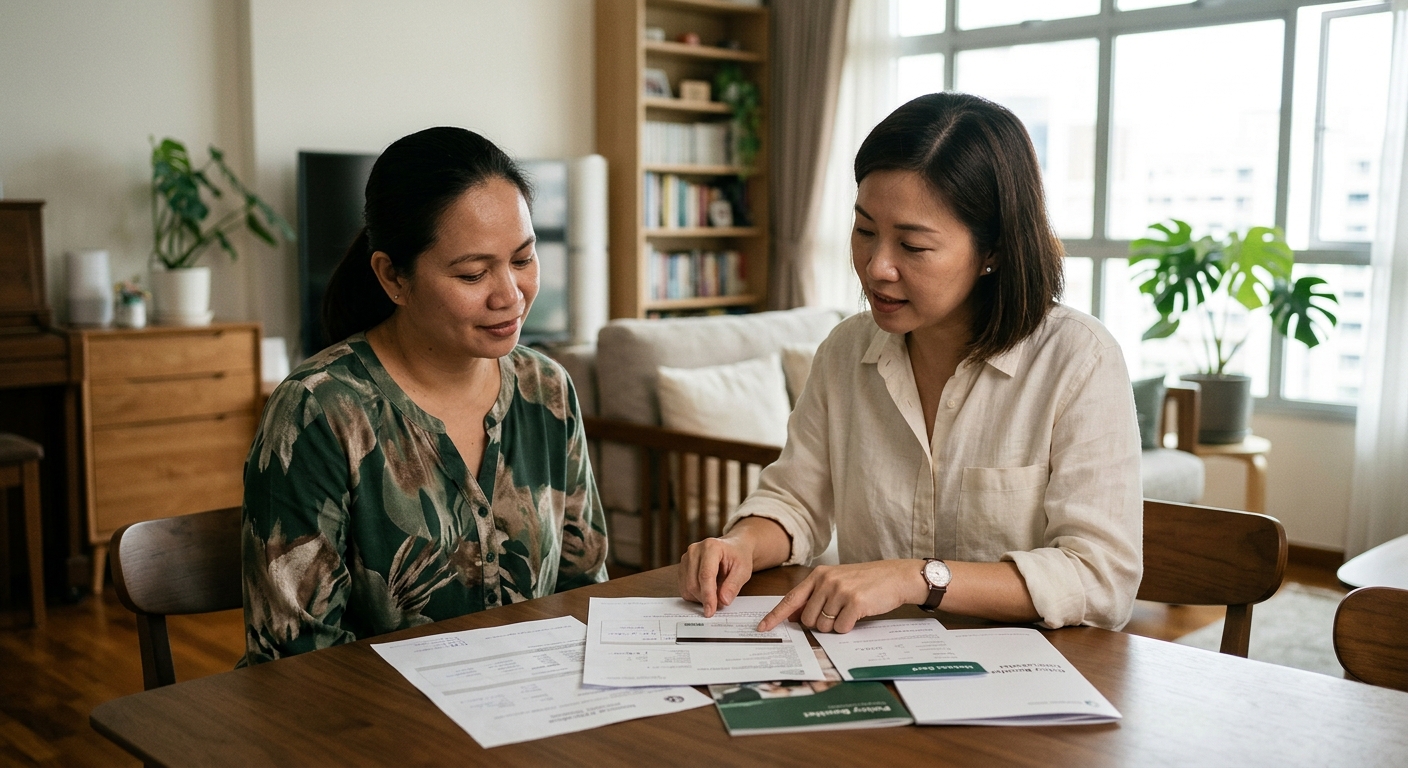
Insurance and medical coverage for foreign domestic workers can feel like a lot at the start—especially if you are hiring a helper for the first time. Yet this is one of the most important parts of responsible employment in Singapore: it protects your helper’s health, protects your family from unexpected costs, and keeps you compliant with Ministry of Manpower (MOM) requirements.
In practice, most families want the same things: a policy that meets MOM rules, good hospital coverage, clear claim processes, and as few surprises as possible. This guide breaks down what is legally required, what is optional but wise, and how to think about real-life scenarios like outpatient treatment, specialist follow-ups, and emergencies.
What MOM requires: the non-negotiables
Insurance and medical coverage for foreign domestic workers is not just a “nice to have”. MOM sets minimum requirements that employers must meet throughout the employment period. The exact policy wording differs across insurers, but the obligations are consistent.
Mandatory medical insurance (hospitalisation & surgery)
Employers must buy medical insurance for their FDW. This is typically a hospitalisation and surgery plan, designed to cover inpatient treatment and certain day surgeries.
When comparing policies, confirm:
- The plan explicitly meets MOM’s minimum medical insurance requirement.
- The annual limit is sufficient for Singapore private hospital costs (many families choose higher limits for peace of mind).
- Pre- and post-hospitalisation coverage periods (if included) are clearly stated.
- Any exclusions (e.g., pre-existing conditions, pregnancy-related claims depending on plan terms).
Practical tip: If your helper is older or has a known medical history, do not assume a standard plan will cover everything. Some policies may impose exclusions or waiting periods. Your agency or insurer should explain this in plain language before purchase.
Mandatory personal accident insurance (PA)
You must also buy personal accident insurance for your helper. This generally provides a lump-sum payout in the event of death or permanent disability due to an accident.
Even if you hope never to use it, PA matters because accidents can happen during routine tasks: cleaning windows, carrying heavy items, or slips in the kitchen.
Security bond (for non-Malaysian FDWs)
For most FDWs, employers must buy a $5,000 security bond (usually via an insurer). This is not medical coverage, but it is part of the overall “insurance package” most families encounter.
The bond can be forfeited if certain conditions are breached (for example, if the helper goes missing). The best way to manage bond risk is not fear—it is good onboarding, clear house rules, and humane employment practices.
Understanding what medical insurance really covers (and what it doesn’t)
Many employers assume “medical insurance” means everything from flu medicine to dental to specialist visits. Most FDW medical insurance is primarily inpatient-focused, with variations that may include limited outpatient benefits.
Inpatient: the core of FDW medical cover
This is the part insurers price for risk: hospital admissions can be expensive. The policy may cover:
- Ward charges and surgery fees
- Anaesthetist and specialist charges
- Diagnostic tests done during admission
- Day surgery (depending on definition)
Some policies allow treatment in restructured and/or private hospitals; others have preferred provider arrangements.
Outpatient: where misunderstandings often happen
Outpatient care includes GP visits, polyclinic consults, simple medication, and follow-up reviews. Some employer-bought FDW plans provide add-ons for outpatient GP visits; many do not.
That means, as an employer, you should decide and document (in a simple house policy) how outpatient costs are handled, such as:
- You reimburse all outpatient medical expenses (common and relationship-friendly).
- You reimburse up to a monthly cap.
- You require receipts and clinic notes (reasonable, but keep it respectful).
A good working arrangement is one where your helper does not delay treatment because she is worried about cost or approval.
Dental, optics, and chronic conditions
Dental and vision are usually not covered under basic FDW medical insurance. Chronic conditions may be excluded if pre-existing, depending on underwriting.
If your helper needs ongoing care (e.g., hypertension follow-ups), plan for:
- Regular outpatient consults and medication refills
- A realistic monthly allowance for medical spend
- A clinic near your home for consistent records
How to choose the right policy: practical decision framework
Insurance and medical coverage for foreign domestic workers should be chosen like you choose any family protection plan: start from real risk, not just the cheapest premium.
Step 1: Confirm compliance first
Before comparing “better benefits”, verify the basics:
- Meets MOM medical insurance requirement
- Meets MOM personal accident insurance requirement
- Includes the correct security bond (where applicable)
If you are working with an agency, they should be able to show you the policy schedule and key benefit limits clearly.
Step 2: Decide on coverage level based on your household situation
Consider these factors:
- Helper’s age and general health
- Work scope (eldercare lifting vs. general housekeeping)
- Children in the home (higher chance of contagious illnesses going around)
- Your preference for restructured vs. private hospital treatment
A family with an elderly parent who needs daily transfers might prioritise stronger accident-related medical coverage and clear claims support.
Step 3: Look closely at claim process, not just benefits
When stress happens, process matters. Ask:
- Is there a 24/7 hotline?
- Are there panel hospitals/clinics?
- How fast are reimbursements?
- What documents are needed for claims?
A slightly more expensive plan with a smoother process often saves time and avoids disputes.
Step 4: Clarify exclusions in plain language
Do not accept “standard exclusions” as a throwaway line. Ask for examples:
- Are pregnancy-related complications covered?
- Are mental health conditions covered?
- Are injuries from certain activities excluded?
- Are pre-existing conditions excluded, and how are they defined?
This protects both employer and helper because expectations are aligned.
Medical check-ups, OEC, and the Philippines side of the process
For Filipino helpers, Singapore families often hear about documents and processes involving the Philippine government. While employers in Singapore mainly follow MOM requirements, it helps to understand how the Philippines system intersects with medical readiness and deployment.
Pre-employment and arrival medical checks
FDWs undergo medical examinations at different stages (before deployment and after arrival). In Singapore, there is an arrival medical examination requirement within a set timeframe. These checks are separate from insurance, but they influence what conditions are discovered early.
If a medical issue is found, it is better addressed transparently rather than “wait and see”. It affects:
- Fitness for work
- Appropriate job scope (especially for eldercare)
- Insurance exclusions if the condition is deemed pre-existing
OEC and why documentation discipline matters
Filipino workers often require an Overseas Employment Certificate (OEC) as part of legal overseas employment processing. While agencies typically coordinate these steps, employers should appreciate that:
- Delays happen when paperwork is incomplete.
- Medical documentation must be consistent across submissions.
If your helper needs medical treatment while on home leave or during processing, keep all medical records and receipts organised. It helps if questions arise later.
The Philippine Embassy and support channels
In sensitive situations (serious illness, repatriation matters, or welfare issues), the Philippine Embassy may be part of the broader support ecosystem. Most families never need embassy involvement, but knowing it exists is reassuring.
Common real-life scenarios (and how good coverage helps)
This is where insurance and medical coverage for foreign domestic workers becomes practical. Here are scenarios we see often in Singapore households.
Scenario 1: Helper has a high fever and needs GP visits and MC
Outpatient GP visits are usually straightforward. The key questions are:
- Do you allow her to visit a nearby clinic promptly?
- Do you reimburse consultation and medicine?
- Do you need an MC to justify rest time?
Good practice: Focus on recovery rather than suspicion. A helper who feels trusted tends to be more responsible with reporting symptoms early.
Scenario 2: Slip-and-fall at home with suspected fracture
Accidents at home happen. In this case:
- Take her for medical assessment quickly (A&E if needed).
- Keep records: incident details, medical memo, receipts.
- Notify your insurer/agent early if hospitalisation occurs.
Personal accident insurance may apply for permanent disability; medical insurance handles hospital bills if admission/surgery is needed.
Scenario 3: Specialist follow-up after a hospital admission
Even if inpatient bills are covered, follow-ups can create cost confusion:
- Is post-hospitalisation specialist consultation covered (and for how long)?
- Are outpatient scans covered if ordered after discharge?
If not covered, plan for these expenses to avoid a situation where your helper skips follow-up care.
Scenario 4: Existing condition discovered after arrival
Sometimes a condition is discovered after the helper arrives, but it may have existed earlier. Insurers may classify it as pre-existing and exclude it.
What you can do:
- Speak to the clinic to understand likely onset and necessary treatment.
- Speak to your agency to assess whether job scope should change.
- Keep communication respectful and avoid blame.
This is also where thoughtful matching matters. At Happy Home Agency, our Precision Match™ approach aims to reduce “surprises” by aligning job scope, experience, and suitability as carefully as possible.
Cost planning: what employers should budget beyond premiums
Premiums are only one part of the total cost. A sensible budget includes:
- Insurance premiums (medical + PA + bond)
- Routine outpatient care (GP, common medications)
- Dental or vision needs (if you choose to support)
- Emergency transport (private ambulance if chosen)
- Potential specialist consults not covered by insurance
A helpful approach is to set a simple annual medical budget on top of insurance. This prevents resentment and makes decision-making calm when something happens.
Where to buy and how to compare
Many families purchase coverage via:
- Their employment agency (convenient bundling)
- Directly from insurers
Bundling is fine as long as you still understand what you are buying. Ask for:
- The benefit schedule
- Key exclusions
- Claim steps and required documents
If you are exploring hiring options, you can also start by browsing our helper directory and then start a hiring application. Your consultant can walk you through the insurance arrangements alongside the job scope and timeline.
Employer responsibilities: medical care, consent, and respectful boundaries
Beyond compliance, the way you handle medical matters shapes trust in the household.
Prompt access to medical treatment
MOM expects employers to bear the costs of medical care and ensure the helper receives treatment when needed. In day-to-day life, this often means:
- Allowing time off to seek treatment
- Not delaying care for cost reasons
- Keeping a clear process for clinic visits (who to inform, which clinic to go)
Handling medical confidentiality appropriately
You may need medical documents for claims and to manage work arrangements, but avoid over-collecting personal details. A fair balance:
- Keep receipts and medical certificates
- Keep discharge summaries if hospitalised
- Avoid pressuring for unnecessary details that do not affect work or safety
Keep written agreements simple
It is reasonable to document a simple household practice, such as:
- Which clinic to visit for non-emergencies
- How reimbursements work
- What to do in emergencies when the employer is not home
This reduces misunderstandings, especially for first-time employers.
Getting help in Singapore: clinics, restructured hospitals, and practical logistics
Singapore has excellent healthcare access, but logistics can be confusing when you are busy.
Choosing between polyclinic and GP
For common issues:
- A nearby GP is usually fastest.
- Polyclinics can be cost-effective but require appointments/queues.
What matters is consistency and documentation, especially if the issue becomes recurrent.
If you need documents or support around Orchard/Lucky Plaza
Some employers prefer to settle admin tasks in central areas, especially if they work around Orchard Road. Helpers also often congregate around Lucky Plaza on rest days, so it is wise to:
- Remind your helper to keep valuables safe
- Ensure she knows how to return home safely
- Encourage her to seek help from official channels if she faces issues
Medical insurance typically does not relate to Lucky Plaza specifically, but the real-world point is: your helper is part of daily Singapore life, and practical guidance helps prevent avoidable incidents.
Emergency readiness at home
Consider a simple emergency plan:
- Keep your helper’s insurance details accessible (policy number, hotline).
- Keep a list of emergency contacts (employer, next-of-kin where appropriate).
- Brief your helper on what to do if an elderly person falls or a child has fever.
This is not about control—it is about safety.
Where Happy Home Agency Fits In
Insurance and medical coverage for foreign domestic workers is easiest when it is handled alongside good matching, clear job scoping, and steady after-placement support. At Happy Home Agency (EA Licence 06C4290, est. 2006), we guide employers through what MOM requires, what your insurer is actually covering, and what household practices reduce disputes later.
If you are planning to hire, you can browse our services, review other guides, or contact our consultants for a calm discussion of your situation. When you are ready, you can start a hiring application—and we will help you put the right insurance and medical coverage for foreign domestic workers in place from day one, with ongoing support through our 365-Day Employer Care™ program.
Questions & answers
Let Happy Home Agency match your family with someone you can trust.
Since 2006, we've helped Singapore families find the right helper — not just any helper. EA Licence 06C4290.
Related articles
Hiring a Filipino helper in Singapore involves clear MOM rules, Philippine Embassy processes, and practical fit checks at home. Here’s a complete, family-first guide.
Considering a Filipino helper in Singapore? Learn the step-by-step hiring process, expected costs, MOM rules, OEC basics, and practical tips to match your household well.
Hiring a helper starts with the right MOM steps. Learn how the MOM work permit for domestic helper works, what you must prepare, and common pitfalls to avoid.