
Managing Your Helper's Remittance and Personal Finances
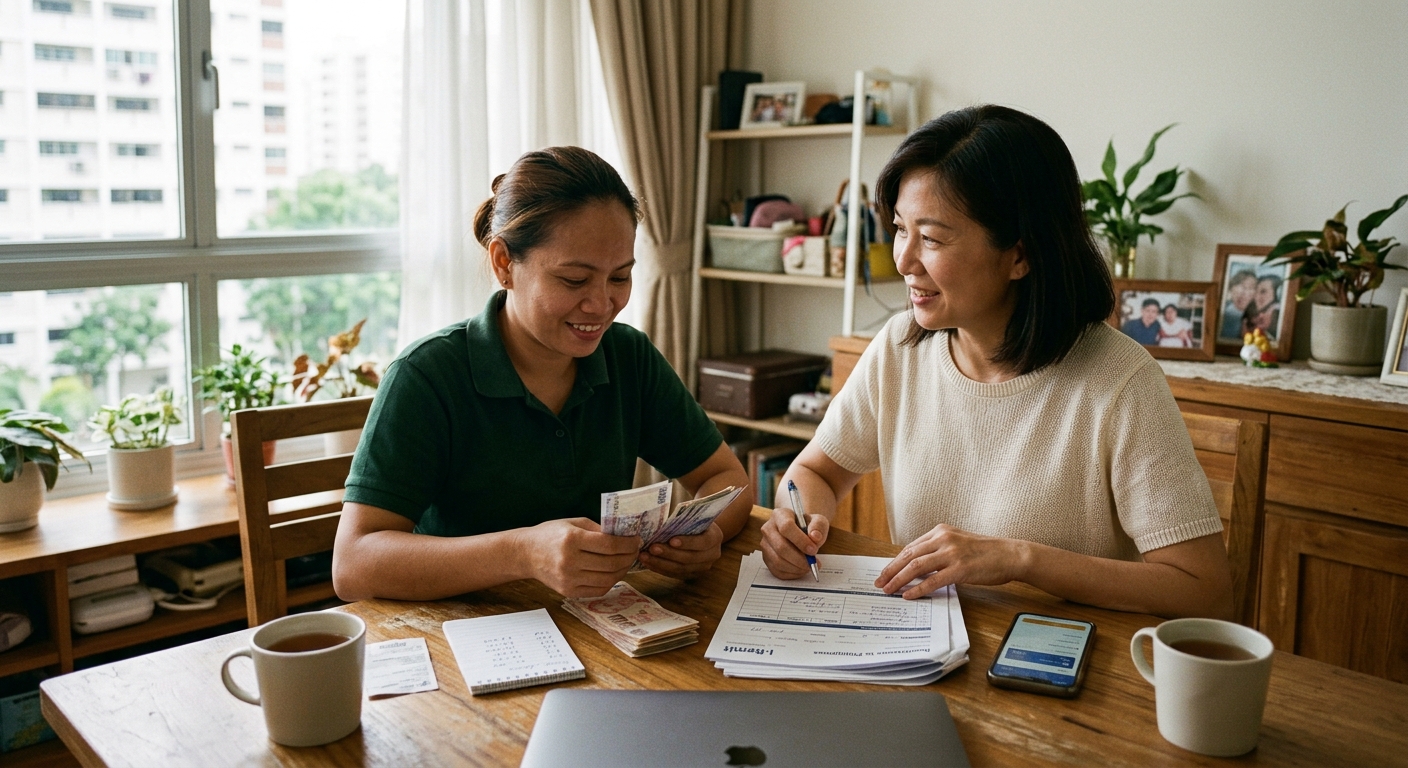
Managing your helper's remittance and personal finances is one of those “quiet” topics that can make or break a working relationship. In many Singapore homes, it only comes up when something goes wrong—missed transfers, urgent money requests, salary advances, or pressure from family back home. With a little structure and the right boundaries, you can reduce misunderstandings while still being kind and supportive.
This guide is written for Singapore employers who want to handle financial discussions respectfully, in line with MOM expectations, and with a clear understanding of how remittances and overseas family obligations commonly work for Filipino domestic helpers.
Why remittance matters (and why employers should care)
Managing your helper's remittance and personal finances isn’t about controlling how she spends her money. It’s about creating a stable environment where:
- Salary is paid correctly and on time, reducing stress for everyone.
- Your helper can support her family without falling into debt traps.
- You minimise awkward last-minute requests that disrupt household planning.
- Trust stays intact—especially during emergencies or big family events.
For many Filipino helpers, remittance is not optional. It may cover school fees, medical expenses, rent, and daily living for parents or children. A helper who is constantly worried about money may become distracted, anxious, or vulnerable to scams.
The Singapore context: salary, records, and expectations
In Singapore, employers should pay salary promptly and keep proper records. MOM commonly expects clear proof of salary payment (for example, signed payslips or bank transfer records). A simple, consistent system protects both employer and helper.
Practical baseline habits:
- Agree on a fixed salary payment date each month.
- Provide a written payslip showing basic salary, rest day compensation (if any), and any agreed deductions allowed under MOM guidelines.
- Avoid cash “lumps” without documentation. If you pay cash, get a signature.
If you are still in the hiring stage and want a better fit from the start, our consultants can help you screen for financial maturity and realistic family obligations through Precision Match™. You can browse our helper directory or start a hiring application to share your household needs.
Set healthy boundaries early—without being cold
A common mistake is either (1) avoiding the topic entirely, or (2) becoming overly involved. The sweet spot is: clear boundaries + respectful support.
Consider covering these points during onboarding (or at the next calm moment if she has already started):
- Salary payment method (bank transfer or cash) and timing.
- Whether you are comfortable helping her access a bank account or remittance service on her rest day.
- Your stance on salary advances and loans.
- How you prefer to handle genuine emergencies.
A helpful script you can adapt
You can keep it simple and non-judgemental:
- “We will pay salary on the 28th every month. We will provide a payslip so both sides are clear.”
- “If you need help understanding remittance options, we can share what other helpers use, but your money decisions are yours.”
- “For advances, we prefer not to do them regularly. If there is a real emergency, tell us early and we discuss a plan.”
This approach supports managing your helper's remittance and personal finances without turning the employer-employee relationship into a parent-child dynamic.
Safer ways to remit money from Singapore to the Philippines
Most friction comes from “how” money is sent. A helper may choose what feels familiar (friends, informal agents), but those options can carry risk.
Common remittance channels helpers use
On rest days, many Filipino helpers go to Lucky Plaza (Orchard) where remittance centres and Philippine services are concentrated. Some also use digital transfers.
Typical options include:
- Licensed remittance counters (in-person service, cash-in/cash-out).
- Bank transfer to the Philippines (more formal, may require recipient bank account details).
- E-wallet or app-based services (convenient, but needs comfort with apps and security practices).
As an employer, you don’t need to pick the service for her—but you can encourage two safety principles:
- Use reputable, licensed providers and keep receipts.
- Avoid giving OTPs, PINs, or passwords to anyone (including “friends” offering help).
Simple checklist: safer remittance habits
Share this checklist if she welcomes guidance:
- Take a photo of every remittance receipt.
- Confirm recipient details before sending.
- Don’t accept “special rates” from unknown people.
- Never hand over ATM cards or reveal PIN.
- If something feels suspicious, pause and ask a trusted person.
If your helper is new to Singapore, a quick orientation to Orchard/Lucky Plaza norms can prevent her from being taken advantage of by informal “runners” or loan sharks.
Building a budget that matches real obligations
Managing your helper's remittance and personal finances becomes much easier when she has a realistic budget. Many helpers want to save, but family needs can expand quickly once relatives know she is working in Singapore.
A practical budgeting framework (that respects privacy)
If your helper is open to it, you can introduce a simple three-bucket method:
- Needs (Philippines + Singapore basics): remittance for essentials, phone bill, toiletries.
- Savings: emergency fund, future plans, reintegration goals.
- Wants/Personal: small treats, social activities, gifts.
You are not auditing her spending. You are offering a structure she can use privately.
Encourage an emergency fund—because emergencies will happen
Emergencies are common: hospitalisation, school deadlines, typhoons, sudden travel. When a helper has zero buffer, every event becomes a crisis.
A practical target is “small but consistent”:
- Start with S$20–S$50 per month set aside.
- Aim for one month’s salary over time.
Even modest savings reduce advance requests and stress-related conflict.
Handling salary advances, loans, and repeated money requests
This is where many employers feel stuck: you want to help, but you also don’t want to create dependency or resentment.
Decide your policy before a request happens
A clear policy protects relationships. Common employer approaches:
- No advances except documented emergencies.
- Limited advances (cap amount; only once every X months).
- Advance only after a probation period.
If you do provide an advance, keep it professional:
- Write down the amount, date, and repayment plan.
- Both parties sign.
- Deduct in small instalments so she can still remit.
This avoids misunderstandings and supports managing your helper's remittance and personal finances responsibly.
Watch out for red flags that need a calm conversation
Red flags do not mean your helper is “bad”, but they indicate stress, pressure, or possible scams:
- Frequent urgent requests with vague explanations.
- Asking to send money through a third party’s account.
- Sudden “investment opportunities” or high-return schemes.
- Mention of unlicensed lenders or threats from collectors.
If you suspect illegal moneylending harassment, take it seriously. In Singapore, unlicensed moneylending is a law enforcement matter. Encourage her not to engage further and consider seeking advice from the authorities.
Digital banking, salary crediting, and documentation (practical Singapore tips)
Some households prefer salary crediting into a bank account because it creates a clean record. Others use cash but keep signed payslips.
What works well in many families
- Bank transfer + payslip: simplest for record-keeping.
- Cash + signed acknowledgment: workable if you are consistent.
Keep documents for the full employment period. This is helpful if questions arise later.
Helping your helper use banking safely
If your helper is new to app-based banking, basic digital hygiene matters:
- Teach her to lock her phone and enable biometrics.
- Remind her not to share OTPs.
- Encourage her to keep bank cards secure and not lend them.
Keep the tone supportive. Many helpers are capable, but they may be targeted because they are new to Singapore systems.
When family pressure back home becomes a problem
A big challenge in managing your helper's remittance and personal finances is family expectation. Some helpers feel obligated to fund extended relatives, expensive purchases, or ongoing “emergency” stories.
How employers can support without overstepping
You can’t manage her family. But you can:
- Encourage her to prioritise essentials (children, parents, medical needs).
- Suggest she sets a fixed remittance amount and communicates boundaries.
- Offer emotional support when she needs to say “no” to unreasonable requests.
If she shares that she is being emotionally pressured, you can suggest she speaks with trusted community support or a counsellor. Some helpers also seek assistance through official channels such as the Philippine Embassy for documentation guidance or welfare concerns, depending on the situation.
A respectful way to frame the conversation
Try:
- “Your family requests may not end, so it helps to decide what is sustainable every month.”
- “If you keep borrowing, it becomes harder to help them long-term.”
This keeps dignity intact while steering towards long-term stability.
Travel, home leave, and the OEC: financial planning that prevents panic
For Filipino helpers, overseas travel and re-entry rules can involve extra steps and costs. While rules can change, many Filipino overseas workers plan around documents such as the OEC (Overseas Employment Certificate) when travelling and returning to work.
From an employer standpoint, the key is planning early so your helper doesn’t end up paying “rush fees” to third parties or falling for misinformation.
Practical planning tips for home leave
- Discuss intended travel dates early.
- Encourage her to budget for: airfare, gifts, and processing-related costs.
- Remind her to follow official instructions from the Philippine government and the Philippine Embassy.
If she asks you for help verifying what she was told by an agent or a friend, support her to check official sources rather than relying on hearsay. This reduces the risk of scams and unnecessary spending.
Using your agency support (and when to ask for help)
Some financial issues are actually matching issues: unrealistic expectations, hidden debts, or a mismatch in communication style. A good agency doesn’t just place a helper and disappear.
At Happy Home Agency (EA Licence 06C4290, est. 2006), our role is to help both sides settle into a sustainable arrangement. If you’re facing repeated salary advance requests, remittance-related conflict, or uncertainty about fair boundaries, it’s worth discussing early rather than waiting for frustration to build.
You can also explore our services and browse other guides for employer-focused resources. If you’d like to speak to a consultant about your household situation, you can contact our consultants.
A simple, employer-friendly process for tough situations
When money issues surface, try this sequence:
- Clarify the facts (amounts, dates, who requested money, what was promised).
- Separate “one-time emergency” from “ongoing pattern”.
- Agree on a written plan if you decide to help (repayment schedule, future boundaries).
- If needed, seek third-party guidance (agency, official resources) rather than escalating at home.
This keeps the relationship professional and reduces emotional decision-making.
Making the Right Choice
Managing your helper's remittance and personal finances is ultimately about stability: paying salary properly, encouraging safe remittance habits, and setting boundaries that are fair to both sides. When handled calmly, it becomes a trust-building topic—not a recurring conflict.
If you’d like guidance on setting salary processes, discussing advances, or selecting a helper who is a better fit for your household’s expectations, we’re here to help. You can start a hiring application anytime, or reach us quickly via WhatsApp and our enquiry form at contact our consultants. We’ll walk you through practical next steps with the same care we’d advise our own families.
Questions & answers
Let Happy Home Agency match your family with someone you can trust.
Since 2006, we've helped Singapore families find the right helper — not just any helper. EA Licence 06C4290.
Related articles
Hiring a Filipino helper in Singapore involves clear MOM rules, Philippine Embassy processes, and practical fit checks at home. Here’s a complete, family-first guide.
Considering a Filipino helper in Singapore? Learn the step-by-step hiring process, expected costs, MOM rules, OEC basics, and practical tips to match your household well.
Hiring a helper starts with the right MOM steps. Learn how the MOM work permit for domestic helper works, what you must prepare, and common pitfalls to avoid.