
MOM work permit rules every employer of a domestic helper
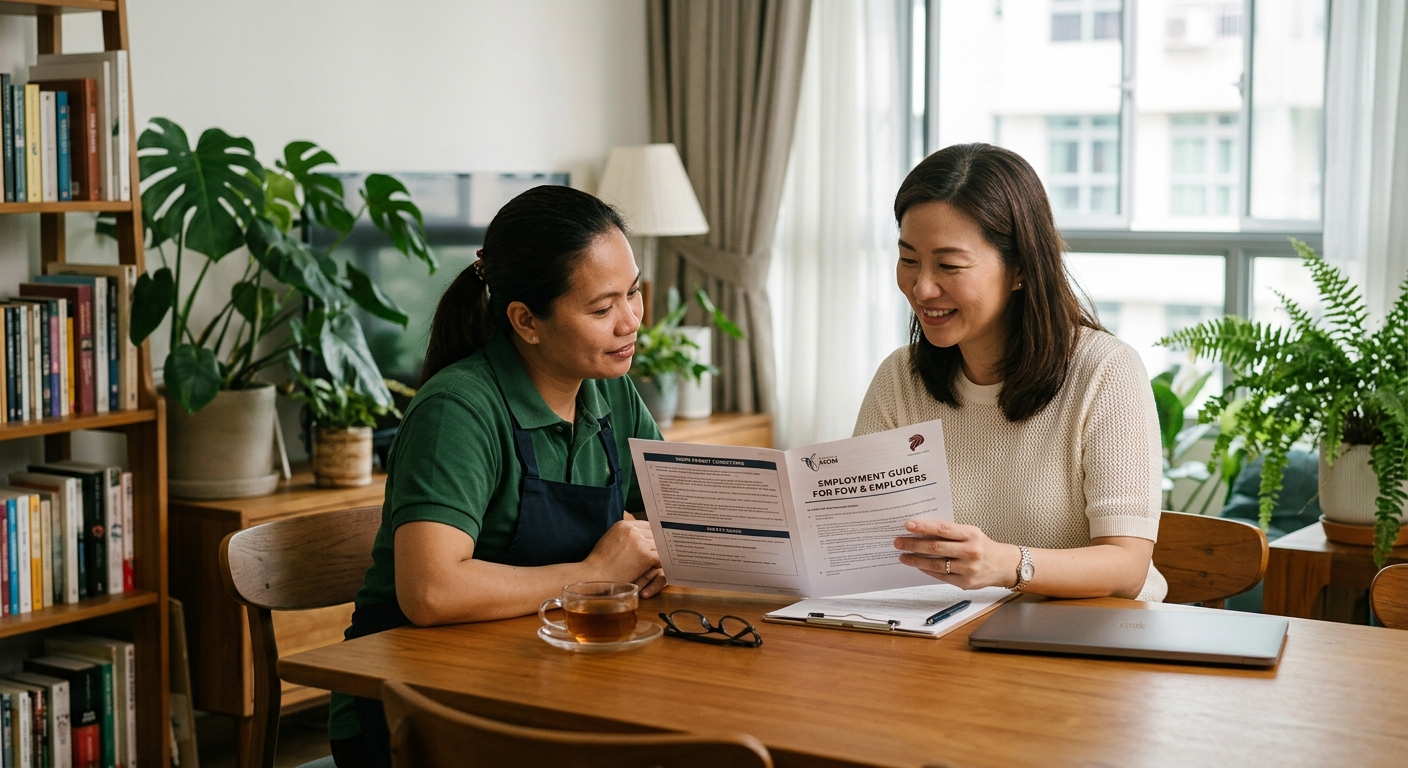
Bringing a domestic helper into your home can be life-changing—especially for families juggling young children, elderly care, or demanding work schedules. But in Singapore, a helper is also a Work Permit holder, and that means the employer has specific legal responsibilities under the Ministry of Manpower (MOM). This guide covers the MOM work permit rules every employer of a domestic helper should know, in plain language, so you can hire confidently, avoid common compliance mistakes, and build a stable working relationship from day one.
1) Work Permit basics: what MOM expects from employers
The domestic helper Work Permit is tied to a specific employer, and MOM expects employers to take responsibility for the helper’s welfare, upkeep, and safe employment. The key principle is simple: when you employ a helper, you are accountable for what happens under your employment—both administratively and in day-to-day living conditions.
Who can employ a migrant domestic worker (MDW)
MOM generally requires employers to:
- Be at least 21 years old
- Not be an undischarged bankrupt
- Be able to provide acceptable accommodation and a safe working environment
- Attend the Employer Orientation Programme (EOP) if it is your first time employing an MDW (or if MOM requires it)
Some families will also need a security bond (typically SGD 5,000), which is a commitment to comply with Work Permit conditions. Your agency or insurer will normally help you set this up, but it remains the employer’s responsibility.
The Work Permit is not “set and forget”
Many first-time employers think the Work Permit is a one-time approval. In reality, MOM expects ongoing compliance such as:
- Paying the salary on time and keeping clear records
- Ensuring the helper has medical insurance and required healthcare coverage
- Maintaining acceptable living conditions
- Renewing the Work Permit before it expires
- Reporting changes promptly (e.g., address changes, hospitalisation, transfer, early termination)
If you want to browse suitable profiles while keeping these responsibilities in mind, you can start with our helper directory and shortlist based on your household needs.
2) Employer eligibility and the Employer Orientation Programme (EOP)
A key MOM requirement for first-time MDW employers is completing the EOP, which introduces practical responsibilities and common pitfalls.
When the EOP is required
The EOP is typically required if:
- You are employing an MDW for the first time
- You have not employed an MDW for a long period and MOM requires a refresher
- MOM flags it as required based on your employment history
The EOP is not just a formality—it is designed to reduce misunderstandings that can lead to disputes, premature repatriation, or unintentional breaches.
What responsible employers do after EOP
Families that do well long-term tend to implement a few simple habits:
- A written job scope (daily routines, priorities, do’s and don’ts)
- Clear weekly scheduling, especially when caregiving is involved
- Agreed communication channels (WhatsApp for updates, emergency contacts)
- Upfront discussion of rest, privacy, and household rules
If you would like help translating these expectations into a practical onboarding plan, see our services or contact our consultants.
3) Salary, payment records, and rest days: the rules families often miss
Among the MOM work permit rules every employer of a domestic helper should know, salary and rest-day compliance are the areas where misunderstandings happen most often.
Salary payments and documentation
MOM expects employers to pay salary in full and on time, and to maintain proper documentation. Practical best practices include:
- Use bank transfer when possible to create a clear payment trail
- Issue a simple monthly payslip record (even if it’s a shared spreadsheet)
- Keep records of any agreed deductions that are lawful and properly explained
Avoid “informal” arrangements where salary is delayed, partially paid, or mixed with ad-hoc loans without documentation. These arrangements can quickly become disputes.
Rest days: what to clarify upfront
Your helper is entitled to rest days in line with the employment contract and prevailing rules. Where rest days are compensated instead of taken, you should ensure there is clear written agreement and proper calculation.
A practical way to prevent conflict is to align on three points early:
- Which day is the regular rest day
- How rest-day compensation (if any) is calculated
- How to request swaps (e.g., family events, caregiving emergencies)
Families also ask about weekend time off and meeting other Filipino helpers at familiar areas like Lucky Plaza (Orchard). Many helpers value a predictable rest day routine, and employers benefit too—well-rested helpers generally perform better and integrate more smoothly into the household.
4) Levy, security bond, and mandatory insurance: financial obligations that are not optional
Another core area in the MOM work permit rules every employer of a domestic helper should know is understanding the mandatory costs beyond salary.
Foreign Domestic Worker (FDW/MDW) levy
Employers must pay the monthly levy. Some households may qualify for a levy concession, such as families with young children, elderly members, or persons with disabilities—subject to eligibility and documentation.
Because levy status affects monthly budgeting, it’s best to confirm eligibility before finalising the hire. If you’re starting the process, you can start a hiring application and share your household profile so we can advise on what documents you may need.
Security bond
For many employers, MOM requires a security bond (often SGD 5,000). It is a guarantee that the employer will ensure the helper complies with Work Permit conditions and is repatriated when required.
Common issues that can put the bond at risk include:
- Helper working outside of approved employment
- Overstaying or missing after employment ends
- Breaches connected to immigration or Work Permit conditions
Medical insurance and required coverage
Employers must buy and maintain medical insurance for the helper as required by MOM. In practice, families should also understand:
- Coverage limits and exclusions
- Claims procedures and panel clinics (if any)
- Who to call if hospitalisation occurs
Even with insurance, you should plan for out-of-pocket items such as certain outpatient costs, depending on policy terms.
5) Accommodation, privacy, and safety: living conditions are part of compliance
In Singapore, your home is the workplace. MOM expects that employers provide acceptable accommodation and ensure a safe living environment.
Suitable accommodation and basic needs
While households vary (HDB flats, condos, landed homes), good compliance usually looks like:
- A clean, safe sleeping space with reasonable privacy
- Access to basic hygiene facilities
- Adequate nutrition and drinking water
- Safe storage for personal items
The aim is not luxury—rather, it’s dignity, safety, and practicality for long-term employment stability.
Safety training and household risk management
Accidents often happen during routine chores. Employers should proactively address:
- Safe use of cleaning chemicals (no mixing; proper ventilation)
- Safe ironing and electrical appliance handling
- Fall risks when cleaning windows (avoid dangerous tasks)
- Kitchen safety (burn prevention, knife handling)
If you have caregiving duties (infants, elderly with mobility issues), add basic handling guidance and emergency steps. These measures reduce injuries and protect both your family and your helper.
6) Medical care, pregnancy rules, and reporting responsibilities
Medical obligations are not only about paying bills. The employer must ensure timely access to care and comply with reporting and Work Permit conditions.
Medical examinations and fitness to work
Helpers must undergo required medical examinations and remain fit for work according to MOM requirements. Employers should:
- Schedule medical appointments promptly
- Keep documents and test results organised
- Follow up on any special conditions early (e.g., allergies, chronic conditions)
Pregnancy and Work Permit conditions
MOM has specific rules relating to pregnancy for Work Permit holders. If a helper becomes pregnant, employers must handle the matter carefully, consult MOM’s current requirements, and avoid making assumptions. Always check the latest MOM guidance and, where appropriate, seek advice from your agency.
Hospitalisation, accidents, and when to inform MOM
If serious incidents occur (e.g., hospitalisation, accidents, safety-related events), employers may have duties to report or document. The safest approach is:
- Seek medical care immediately
- Inform the insurer/agent promptly for claims guidance
- Keep clear incident notes and receipts
- Check MOM’s reporting requirements based on the situation
This is also where a structured after-sales support program matters. At Happy Home Agency, our 365-Day Employer Care™ support is designed to help employers respond promptly and correctly when unexpected issues happen.
7) Transfers, termination, repatriation, and the Philippines paperwork (OEC and Embassy-related realities)
Employment sometimes changes—family caregiving needs evolve, job scopes shift, or expectations don’t match. Understanding the correct processes protects everyone.
Transfers and changing employers
A domestic helper cannot simply “change job” like a local employee. Transfers must follow MOM processes and timelines. Avoid informal arrangements where a helper works for another household “temporarily” while paperwork catches up—this can breach Work Permit conditions.
Termination: notice, documentation, and last salary
When terminating employment, employers should ensure:
- Written notice is aligned with the employment contract
- Last salary, rest-day compensation (if applicable), and any reimbursements are properly calculated
- All key documents and belongings are returned appropriately
Keep communications calm and documented. Many disputes escalate due to unclear final payments or emotional, last-minute decisions.
Repatriation and exit responsibilities
Employers are responsible for repatriation arrangements when employment ends, unless a transfer is properly arranged. This typically includes:
- Flight arrangements and airport logistics
- Ensuring Work Permit cancellation is completed correctly
- Settling outstanding payments before departure
OEC (Overseas Employment Certificate) and Philippine government requirements
For Filipino domestic helpers, there are also Philippines-side requirements, including the OEC, which is commonly associated with overseas workers’ documentation for leaving the Philippines and confirming proper employment processing.
Employers in Singapore don’t issue the OEC, but your hiring process can be affected by these requirements and timelines. It’s wise to work with an agency that understands the practical steps, including coordination that may involve the Philippine Embassy and standard documentation pathways. When families understand these realities early, there are fewer surprises around deployment dates and travel.
If you want more step-by-step articles on documentation and common timelines, you can explore other guides.
8) Practical compliance checklist (and where Happy Home Agency fits in)
When families ask for a simple summary of the MOM work permit rules every employer of a domestic helper should know, we usually boil it down to: pay properly, insure properly, house safely, and follow process for every change.
A quick checklist you can save
Use this as a practical reference:
- Before hiring: Confirm eligibility, complete EOP if required, plan accommodation, budget for salary + levy + insurance
- During employment: Pay salary on time with records, provide rest days as agreed, maintain safe work practices, ensure medical coverage stays active
- When something changes: Update address changes, manage hospitalisation/major incidents responsibly, follow MOM procedures for transfer or termination
- At end of employment: Settle final payments, cancel Work Permit correctly, arrange repatriation or formal transfer
How Precision Match™ reduces avoidable problems
Compliance is easier when the match is right. Our proprietary Precision Match™ approach focuses on:
- Matching caregivers to the right care needs (infant, elderly, special needs)
- Aligning language comfort and household expectations
- Screening for experience that fits Singapore home routines
You can review suitable candidates in our helper directory, and when you’re ready, start a hiring application so we can advise on timelines and required documents.
A clear next step if you want guidance
If you’re hiring for the first time—or you’ve had a difficult experience before—it helps to talk through your specific household context: work schedules, caregiving intensity, and what “good help” realistically looks like for your family.
Making the Right Choice
Knowing the MOM work permit rules every employer of a domestic helper should know is not about being fearful—it’s about setting up a stable, respectful working relationship where your helper can do good work and your household can run smoothly.
If you’d like personalised advice on MOM requirements, Filipino deployment considerations (including OEC realities), or how to structure job scope and rest days, reach out to our team. You can start a hiring application anytime, or WhatsApp and speak with a consultant via contact our consultants. We’ll guide you step-by-step, with practical, Singapore-specific recommendations that protect both your family and your helper.
Questions & answers
Let Happy Home Agency match your family with someone you can trust.
Since 2006, we've helped Singapore families find the right helper — not just any helper. EA Licence 06C4290.
Related articles
Hiring a Filipino helper in Singapore involves clear MOM rules, Philippine Embassy processes, and practical fit checks at home. Here’s a complete, family-first guide.
Considering a Filipino helper in Singapore? Learn the step-by-step hiring process, expected costs, MOM rules, OEC basics, and practical tips to match your household well.
Hiring a helper starts with the right MOM steps. Learn how the MOM work permit for domestic helper works, what you must prepare, and common pitfalls to avoid.