
MOM Work Permit Rules Every Employer of a Domestic Helper
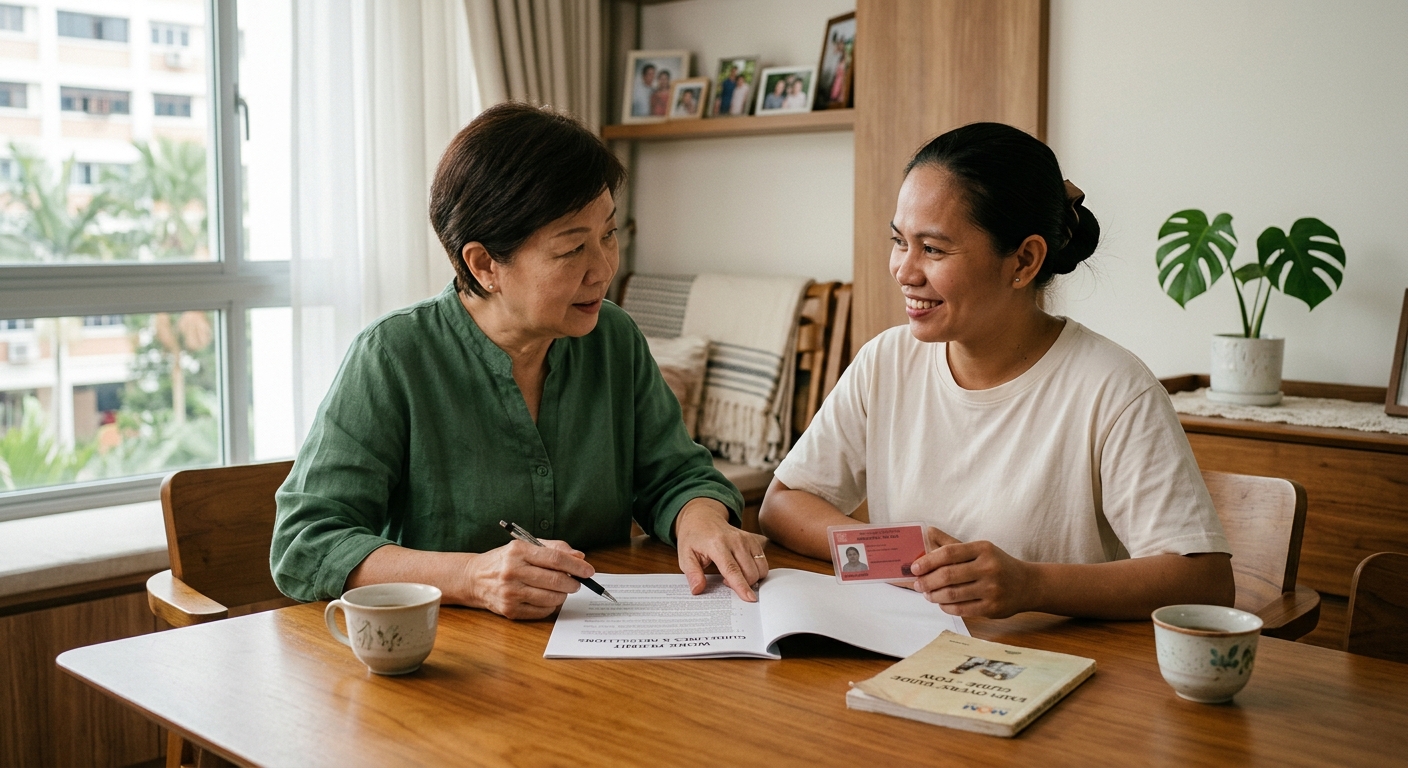
Hiring a Foreign Domestic Worker (FDW) is often a family decision—made when caring needs grow, children arrive, or ageing parents need support. But once you employ a helper, you are also taking on legal duties. This guide on MOM work permit rules every employer of a domestic helper should know is written for Singapore families who want a smooth, compliant hiring journey from day one.
We will cover the key Ministry of Manpower (MOM) requirements in plain language, plus a few practical “on the ground” realities Singapore employers face—from medical checks to rest days, and even the Philippine Embassy and OEC (Overseas Employment Certificate) process that applies to Filipino helpers. If you are still comparing profiles, you can start with our helper directory and short-list candidates while you read.
1) Who can employ an FDW under MOM rules
MOM’s baseline expectation is simple: the employer must be able to responsibly employ and manage a helper. In practice, MOM work permit rules every employer of a domestic helper should know start with eligibility.
Employer eligibility and age
Generally, you should be at least 21 years old to employ an FDW. MOM may also consider whether you can meet salary and upkeep obligations, and whether the household arrangement is safe and reasonable.
Household needs and suitable scope of work
An FDW’s work is domestic in nature—household chores, cooking, caregiving, and child-minding within the home setting. It should not become a “workaround” for business labour, such as working in a shop, office, warehouse, or doing delivery runs for a business. If you need help for a business, MOM has other work pass categories, but the FDW Work Permit is not one of them.
First-time employers: what to expect
If you are hiring for the first time, be prepared to:
- Attend the Employers’ Orientation Programme (EOP) if required.
- Learn the do’s and don’ts of supervision, rest days, and salary practices.
- Set expectations early in writing (job scope, rest days, phone use, privacy boundaries).
If you would like a guided, step-by-step approach, you can start a hiring application and our consultants will walk you through what applies to your situation.
2) Work Permit conditions you must follow (the “must-dos”)
MOM Work Permits come with conditions that are legally enforceable. Breaching them can lead to penalties and future hiring restrictions. Here are the big ones employers should understand.
Salary payment and proof
Pay your helper’s salary promptly and keep clear records. While many families still pay in cash, it is safer to have a paper trail (for example, bank transfer or signed monthly acknowledgement). Salary disputes are one of the most common avoidable conflicts.
Good practice includes:
- Agreeing on salary, payday, and any deductions (if allowed) before she starts.
- Keeping a simple salary sheet with signatures.
- Avoiding “rolling deductions” that the helper does not understand.
Rest days and mutual agreement
FDWs are entitled to regular rest. MOM rules require rest days, and if a rest day is compensated instead of taken, it must be by mutual agreement with proper compensation. Even where compensation is agreed, many families find that consistent rest improves wellbeing, reduces burnout, and stabilises performance.
Safe working and living conditions
Employers must provide:
- Acceptable accommodation with privacy and dignity.
- Adequate food and essentials.
- A safe environment (no dangerous tasks without proper safety measures).
Avoid asking your helper to do high-risk work such as cleaning outside windows from dangerous ledges or handling hazardous chemicals without guidance and protection.
No illegal deployment
Your FDW cannot be deployed to work outside your household (e.g., your parents’ home as “main employer” unless properly arranged, or a workplace). If caregiving is shared between homes, discuss it upfront with an agency consultant so the arrangement remains compliant.
3) Costs, levy, and financial obligations to budget properly
One of the most important MOM work permit rules every employer of a domestic helper should know is that cost planning is part of compliance. A well-planned budget reduces disputes and helps you keep to the terms of employment.
Monthly levy and concessions
Employers pay a monthly FDW levy. Some households may qualify for levy concession (for example, where there is an eligible young child, elderly person, or person with disability in the household). MOM’s definitions and criteria matter here—check eligibility carefully before assuming you qualify.
Security bond
Most employers must buy a security bond for the helper (commonly S$5,000). This is not “paid to MOM”; it is a bond you purchase from an insurer. If certain conditions are breached, the bond can be forfeited. Understanding what triggers forfeiture is critical.
Medical insurance and personal accident insurance
MOM requires employers to buy and maintain medical insurance coverage for FDWs, and personal accident insurance with minimum coverage terms. The aim is to ensure helpers have access to medical care and that employers are not exposed to uncontrolled medical costs.
Practical budgeting tips:
- Budget for routine outpatient visits and dental needs (some policies focus on inpatient coverage).
- Plan for a contingency buffer, especially for caregivers who may have higher medical needs.
- Clarify who pays for what in advance to reduce misunderstandings.
If you want a single checklist of typical upfront and recurring costs, explore our services or speak with us directly via contact our consultants.
4) Medical requirements: check-ups, pregnancy rules, and health responsibilities
Medical compliance is one of the most scrutinised parts of FDW employment. Families often focus on the initial medical exam, but MOM requirements continue across the employment period.
The initial medical examination
Before a Work Permit is fully issued, the helper must pass a medical examination by an approved clinic. This typically includes screening for specific conditions and ensuring she is fit for work.
6-monthly medical examination (6ME)
Most FDWs must go for a 6-monthly medical examination (6ME). Employers are responsible for ensuring this is done on time. Missing 6ME deadlines can lead to Work Permit problems.
A simple system helps:
- Put the 6ME due dates in your calendar.
- Keep soft copies of appointment slips and results.
- Use a consistent clinic familiar with FDW 6ME requirements.
Pregnancy and related MOM rules
FDWs are generally not allowed to become pregnant or deliver a child in Singapore during their Work Permit employment (unless specific exemptions apply). If pregnancy happens, it becomes a serious Work Permit issue involving MOM processes and timelines.
As an employer, you should handle this sensitively and promptly:
- Seek advice early from MOM channels or a reputable agency.
- Avoid confrontational approaches—focus on safe medical care and lawful steps.
5) Transfers, renewals, termination, and repatriation: doing it properly
Many employer problems happen not during hiring, but during changes—transfer to a new employer, renewing a permit, or ending employment. Understanding these MOM work permit rules every employer of a domestic helper should know will protect your household and the helper.
Work Permit duration and renewal planning
Work Permits are issued for a fixed period and can be renewed if eligibility criteria continue to be met. Start planning early—don’t wait until the last minute, especially if you need to align renewal with travel, home leave, or contract milestones.
Transfer to a new employer
When a helper transfers, the process must be done through proper MOM channels. Avoid informal “handshake arrangements.” A proper transfer ensures:
- Clear employment end date and start date.
- Correct salary and levy responsibility.
- Proper handover of documents and medical records.
If you are considering a transfer hire (often a faster option), browsing our helper directory can help you compare profiles and interview availability.
Termination and repatriation responsibilities
Employers are typically responsible for repatriation—meaning arranging and paying for the helper’s return trip when employment ends, unless the contract specifies otherwise and it is lawful. Even when relationships are strained, follow a professional process:
- Document the reason and agreed last day.
- Pay all outstanding salary and agreed compensations promptly.
- Arrange travel and handover of personal belongings.
If you anticipate a difficult termination, seek guidance early rather than letting matters escalate.
6) Filipino helpers: Philippine Embassy, OEC, and what Singapore employers should know
Singapore’s MOM rules apply to all FDWs, but Filipino helpers have additional documentation processes governed by the Philippines’ regulations. Many families only discover this late in the timeline.
Why the OEC matters
For many Filipino workers, the OEC (Overseas Employment Certificate) is a required exit document for deployment and re-deployment. Without an OEC, travel and deployment can be delayed.
What employers commonly experience in Singapore
If your helper is Filipino, you may hear about:
- Verification steps tied to Philippine overseas employment rules.
- Appointments or documentation support that may involve the Philippine Embassy.
- Practical admin tasks that agencies often coordinate.
It is also common for helpers to visit remittance centres and Filipino community hubs around Lucky Plaza and Orchard on rest days. From an employer perspective, what matters is having clear rest day arrangements and a reasonable communication approach—so outings don’t become a recurring conflict.
Avoiding deployment delays
To reduce last-minute disruptions:
- Confirm document readiness early (passport validity, required certificates).
- Work with an agency familiar with both MOM and Philippine processes.
- Plan a realistic start date window, not a single “fixed day,” especially for overseas arrivals.
If you want to keep the process predictable, you can start a hiring application and we will advise on timeline planning for Filipino candidates.
7) Common compliance pitfalls (and how to avoid them)
Many problems are not caused by bad intentions—they come from misunderstandings. Here are frequent pitfalls we see, and how a careful employer can avoid them.
Pitfall 1: Unclear job scope that expands endlessly
If your helper was hired for childcare and general housework but ends up doing heavy eldercare plus cooking for extended family every weekend, dissatisfaction builds quickly.
What helps:
- Write a clear, realistic job scope.
- Re-negotiate respectfully if needs change (with salary/rest adjustments where appropriate).
Pitfall 2: Rest day “assumptions”
Some families assume the helper will “sure work on Sundays.” MOM’s expectations around rest days require clarity and agreement.
What helps:
- Decide rest day schedule upfront.
- If rest day is compensated, document the agreement and payment.
Pitfall 3: Late salary or undocumented deductions
Even if the relationship is warm, late salary creates anxiety. Undocumented deductions feel unfair.
What helps:
- Use a consistent payday.
- Keep receipts or a signed salary record.
Pitfall 4: Missing 6ME deadlines
This is surprisingly common, especially in busy households.
What helps:
- Calendar reminders.
- Assign one household member as the “FDW admin lead.”
Pitfall 5: Informal loans and money conflicts
Loans can quickly complicate the relationship and cause pressure.
What helps:
- Keep finances simple.
- If you choose to help, document clearly and keep it reasonable.
For more practical employer education, you can browse other guides and compare topics relevant to your household setup.
8) Where Happy Home Agency Fits In
MOM compliance is not just about avoiding penalties—it is about creating a stable home environment where your helper can do her job with clarity and dignity. When families follow MOM work permit rules every employer of a domestic helper should know, hiring becomes less stressful, expectations are clearer, and problems are easier to prevent or resolve.
At Happy Home Agency (EA Licence 06C4290, est. 2006), we support Singapore families with structured matching through our Precision Match™ system, and ongoing guidance through our 365-Day Employer Care™ program. If you’d like personalised advice on eligibility, paperwork timelines (including Philippine Embassy/OEC considerations for Filipino helpers), or choosing between transfer and overseas candidates, reach out to us.
Call-to-action: You can start a hiring application for a guided recommendation, or contact our consultants to speak with us (including WhatsApp) about your household needs and next steps.
Questions & answers
Let Happy Home Agency match your family with someone you can trust.
Since 2006, we've helped Singapore families find the right helper — not just any helper. EA Licence 06C4290.
Related articles
Hiring a Filipino helper in Singapore involves clear MOM rules, Philippine Embassy processes, and practical fit checks at home. Here’s a complete, family-first guide.
Considering a Filipino helper in Singapore? Learn the step-by-step hiring process, expected costs, MOM rules, OEC basics, and practical tips to match your household well.
Hiring a helper starts with the right MOM steps. Learn how the MOM work permit for domestic helper works, what you must prepare, and common pitfalls to avoid.