
Onboarding a new helper: the first 30 days at home (SG)
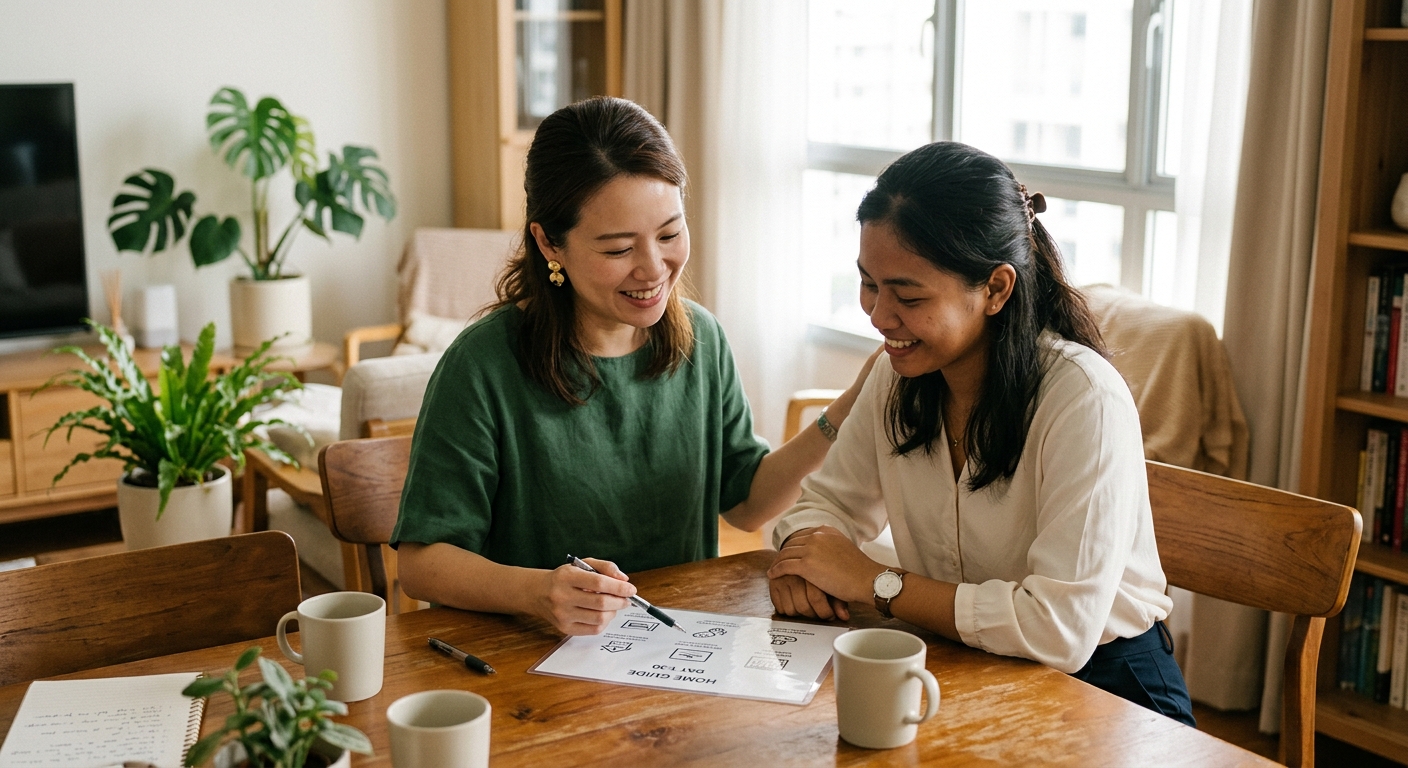
Onboarding a new helper: the first 30 days at home can feel like a big adjustment for everyone—your family, your household rhythm, and your helper who is learning a new home (and often a new country) overnight. In Singapore, a good first month is not just about getting chores done; it’s about safety, clear communication, and reasonable expectations that match your home’s needs and your helper’s abilities. When onboarding is done well, misunderstandings drop dramatically, and trust builds faster.
This guide shares a practical, week-by-week plan tailored for Singapore families hiring a Filipino domestic helper. It also highlights what to keep in mind around MOM requirements, day-to-day integration, and common first-month issues we see as a long-standing agency.
Before Day 1: Prepare your home and your mindset
A smoother first 30 days starts before your helper arrives. Many early problems come from unclear expectations and an unprepared environment.
Set up a clear “home base”
Your helper needs a clean, private, and respectful space—even if your home is compact.
Consider:
- A proper sleeping area with ventilation and a safe place to keep personal items
- Basic toiletries, towel, and a spare set of bedsheets
- A house key policy (if you’re giving a key, discuss boundaries and security)
- Wi-Fi access rules (times, usage, and privacy)
Prepare a simple house rules sheet
Keep it friendly and practical—one page is enough. Use plain English (or Tagalog if you can) and cover:
- Wake/sleep times (flexible where needed)
- Phone usage during work hours
- Meal arrangements (what’s free to eat, what’s for planned meals)
- Visitor policy (most families prefer no visitors at home)
- Safety rules (no leaning out windows, handling knives, electrical safety)
Decide what “success” looks like in your household
Before onboarding a new helper in the first 30 days at home, align internally as a family:
- Which tasks matter most (e.g., infant care, elder care, cooking, cleaning)
- What you can compromise on (e.g., Western vs Filipino cooking style)
- What is non-negotiable (e.g., hygiene, medication schedules, child safety)
If you are still exploring candidates or want a better fit, you can browse our helper directory and compare profiles based on actual household needs.
Day 1–3: Welcome, orient, and reduce first-week anxiety
The first three days are about reducing stress and setting a respectful tone. A helper who feels safe and guided learns faster.
Start with a warm but structured welcome
On Day 1:
- Give a short tour of the home: bedrooms, toilets, kitchen, where things are kept
- Explain what can be used freely (rice, bread, eggs, drinks) vs what should be asked first
- Show how to lock the door, use the gate, and handle deliveries
If your helper is Filipino, it helps to acknowledge the practical realities of relocation. Many will be thinking about essentials like SIM cards and remittances, and may later visit Lucky Plaza or the Orchard area on their rest day. Setting expectations calmly upfront helps avoid misunderstandings.
Keep tasks light, focus on observation and training
Avoid handing over the full household on Day 1. Instead:
- Demonstrate how you like beds made and laundry sorted
- Walk through how you organise groceries and kitchen storage
- Let her watch how you handle children’s mealtimes, nap routines, or elder mobility
A useful approach is: you do, she watches → you do together → she does while you watch.
Cover immediate safety basics (especially in high-rise homes)
High-rise safety must be non-negotiable in Singapore:
- Never stand on stools/chairs near windows
- Never lean out or clean window exteriors unsafely
- Use proper tools for drying laundry; no climbing or overreaching
Explain clearly and kindly. Many helpers come from different housing environments and may not instinctively recognise high-rise risks.
Days 4–7: Set routines, communication, and clear expectations
By the end of Week 1, your helper should know what “a normal day” looks like in your home.
Create a simple daily schedule (and update it together)
Instead of vague instructions, outline a realistic flow:
- Morning: breakfast prep, school items, quick tidy
- Late morning/afternoon: laundry, cleaning zones, cooking prep
- Evening: dinner, dishes, packing for next day
Keep it flexible—children get sick, elders have appointments, and every family has surprises.
Agree on standards without being harsh
Many onboarding issues come from unspoken standards. Be specific:
- “Wipe the stove after cooking” vs “keep kitchen clean”
- “Change bedsheets every Saturday” vs “change regularly”
- “Mop kitchen daily, bedrooms twice a week” vs “mop often”
Where possible, show photos of how you expect things to look (e.g., a neatly organised pantry). Clarity is kindness.
Introduce a communication habit (to avoid simmering resentment)
Choose one method:
- A shared notebook in the kitchen
- A WhatsApp checklist for daily/weekly tasks
- A 10-minute check-in each evening for the first two weeks
When you correct, focus on the task, not personality. For example: “The cutting board needs to be washed with soap after raw chicken” is better than “You are careless.”
Week 2 (Days 8–14): Skills transfer and building independence
Week 2 is often where families become more demanding—and where helpers can feel overwhelmed. Keep training intentional.
Prioritise 2–3 key skills to master first
Depending on your household:
- Infant care basics (sterilising, safe sleeping, bottle prep)
- Elder care routines (transfer assistance, meal textures, medication reminders)
- Cooking your family’s staple dishes
- Singapore-specific cleaning expectations (mould prevention, bathroom upkeep)
If your helper is new to certain tasks, don’t assume she can “figure it out” quickly. Demonstrate and repeat.
Food and cooking: set a realistic plan
Cooking is a common friction point in the first month.
Discuss:
- Budget and preferred grocery brands
- What’s okay to repeat weekly
- Halal/no pork rules, allergies, spice tolerance
- How you’d like leftovers handled
A practical approach is a rotating menu with 5–7 familiar dishes. You can add one new dish per week. This reduces stress and food waste.
Health, rest, and adjustment are part of onboarding
In Week 2, pay attention to signs of poor adjustment:
- Persistent fatigue (may be a sleep issue or stress)
- Poor appetite
- Frequent mistakes due to anxiety
Onboarding a new helper in the first 30 days at home should include reasonable rest and clear off-hours. A tired helper is more likely to make safety mistakes.
Week 3 (Days 15–21): Deeper trust, boundaries, and problem-solving
Week 3 is when patterns show. If something is off, it’s better to address it early, not after months.
Formalise boundaries around devices, visitors, and privacy
Be respectful and specific:
- Phone use: okay during breaks, not while supervising children
- Video calls: times and volume (especially if kids are asleep)
- No filming children or inside the home without permission
- Social media rules if you prefer privacy
Also clarify your family’s privacy boundaries: which rooms are private, and how to handle guests.
Introduce higher-responsibility tasks step-by-step
Examples:
- Sending children to the school bus point (only when both of you are confident)
- Solo cooking dinner while you are out (start with simple meals)
- Managing groceries within a set budget
A safe rule: independence increases as consistency increases.
Check alignment on rest day and personal admin
In Singapore, domestic helpers are entitled to rest days. Discuss:
- Which day works for your household (many prefer Sunday)
- Start/end timing
- Emergency contact expectations
If your helper needs to manage paperwork related to the Philippines, be patient but structured. For Filipino helpers, matters like the OEC (Overseas Employment Certificate) are usually handled around deployment and renewals, and the Philippine Embassy may be involved for documentation needs. You don’t need to manage it for her, but understanding that these admin needs exist helps you plan calmly.
Week 4 (Days 22–30): Review, refine, and build a sustainable rhythm
By Week 4, you’re no longer in “arrival mode”—you are shaping long-term household routines.
Do a 30-day check-in (use a simple framework)
Set aside 30–45 minutes. Keep it calm and collaborative.
You can use this structure:
- What’s going well (be specific)
- What’s hard for you / hard for her
- One priority improvement for next month
- Any schedule tweaks needed
This is also a good time to clarify household expectations in writing. Misunderstandings drop when both sides can refer back to a shared agreement.
Adjust workload to something sustainable
If your helper is doing everything and constantly rushing, quality and morale will drop.
Consider:
- Splitting tasks by day (e.g., bathrooms Tue/Fri; deep clean Sat)
- Using checklists for recurring duties
- Simplifying meals on busy weekdays
A helper who can deliver consistent “B+” daily is often better than one pushed to chase “A+” perfection and burning out.
Address gaps early (before they become character judgments)
Common Week 4 issues:
- Slow pace: may be due to unfamiliar tools or fear of making mistakes
- Repeated hygiene misses: needs clearer steps and supervision
- Child handling differences: needs alignment on safety and discipline
Aim for coaching rather than scolding. Most helpers respond well when instructions are respectful and precise.
Common first-30-day challenges (and practical fixes)
Even with good intentions, onboarding a new helper in the first 30 days at home can surface friction. Here are common patterns we see and what tends to help.
“She keeps asking questions”
Often a good sign. It means she wants to do things correctly.
Fix:
- Give a written checklist
- Demonstrate once, then ask her to repeat the steps back to you
- Avoid saying “use your common sense” (common sense differs across households)
“She seems homesick and quiet”
Very common, especially in the first month.
Fix:
- Keep your tone warm and steady
- Encourage rest-day plans and safe social time
- Allow reasonable calls home during off-hours
“My parents are unhappy with her standards”
Multi-generation homes need aligned expectations.
Fix:
- Appoint one main supervisor (too many bosses confuses)
- Translate feedback into clear tasks (“Sweep under sofa daily”)
- Keep corrections consistent and respectful
“The children don’t listen to her”
Children take cues from parents.
Fix:
- Back her up on agreed rules (no mixed messages)
- Establish house rules for kids too
- Start with simple responsibilities (snack prep, play supervision) before complex ones
MOM-related reminders that matter during onboarding
Most onboarding issues are practical, but you should also be mindful of Singapore’s regulatory environment.
Keep employment matters clear and documented
Your helper’s work in Singapore is governed by MOM requirements and the conditions tied to the Work Permit.
Good practices:
- Keep a record of salary payments and key agreements
- Ensure rest days and arrangements are discussed clearly
- Maintain a safe working environment at home
If you are hiring soon and want guidance from the start, you can start a hiring application and our team will walk you through the process step-by-step.
Medical and safety orientation is part of responsible onboarding
In the first month:
- Explain what to do in emergencies
- Share important contacts (parents, neighbour, condo security, nearest clinic)
- Show where first-aid items are stored
If you have elderly family members with mobility risks, demonstrate proper transfer techniques. Safety should be trained, not assumed.
Be careful with over-promising duties or changing scope abruptly
If the role shifts significantly (e.g., from general housework to heavy elder care), it can destabilise trust. Try to be upfront early, and adjust gradually with training.
If you’re unsure what scope is realistic for your home, read more in other guides or speak with contact our consultants for a grounded discussion.
Where Happy Home Agency fits in
Onboarding a new helper: the first 30 days at home is where a good match becomes a stable long-term arrangement. At Happy Home Agency (EA Licence 06C4290, established 2006), we support families with a careful matching process and practical after-placement guidance, so your household is not left to “figure it out” alone.
If you are still choosing a helper, you can browse our helper directory or review our services to understand what support looks like. If you’ve already hired and want help setting up a clear onboarding plan, we’re happy to talk it through.
Reach out to start a hiring application or message us via WhatsApp through contact our consultants. We’ll help you set expectations, align routines, and make the first month feel calmer and more structured for everyone in the home.
Questions & answers
Let Happy Home Agency match your family with someone you can trust.
Since 2006, we've helped Singapore families find the right helper — not just any helper. EA Licence 06C4290.
Related articles
Hiring a Filipino helper in Singapore involves clear MOM rules, Philippine Embassy processes, and practical fit checks at home. Here’s a complete, family-first guide.
Considering a Filipino helper in Singapore? Learn the step-by-step hiring process, expected costs, MOM rules, OEC basics, and practical tips to match your household well.
Hiring a helper starts with the right MOM steps. Learn how the MOM work permit for domestic helper works, what you must prepare, and common pitfalls to avoid.