
Onboarding a new helper: the first 30 days at home (SG)
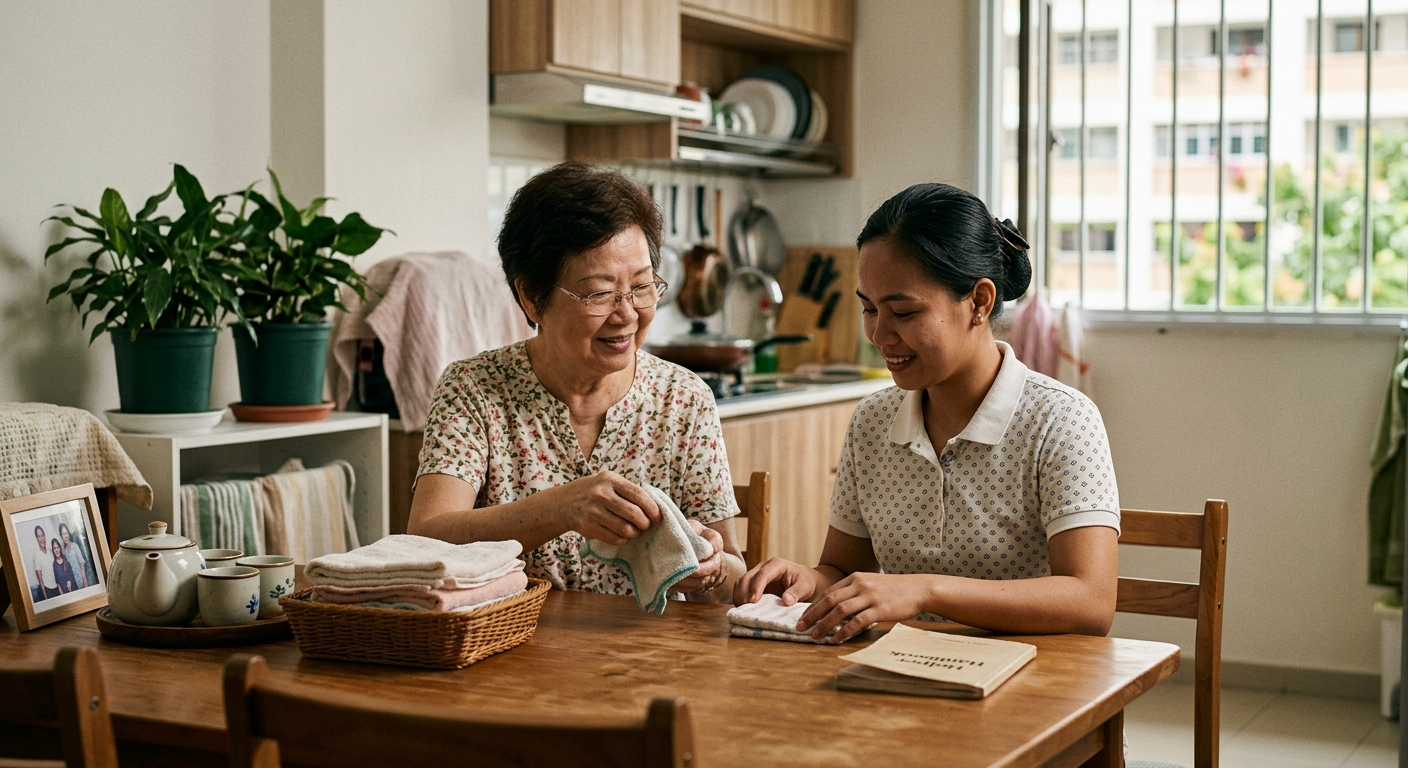
Onboarding a new helper: the first 30 days at home can feel like a big adjustment for everyone—your family, your children or seniors, and the helper who has just arrived in Singapore. The good news is that a steady, respectful onboarding plan usually prevents the common issues families face later: misunderstandings about standards, awkward boundaries at home, and safety gaps in childcare, cooking or eldercare. Below is a practical 30-day guide we use when supporting employers through Happy Home Agency’s Precision Match™ and 365-Day Employer Care™ approach—focused on clear expectations, humane management, and compliance with MOM requirements.
Day 0–1: Set up the basics before you “start work”
A smoother first week starts with practical arrangements ready on arrival day. Many helpers arrive tired, anxious, and worried about doing things wrongly. Your first job is to reduce uncertainty.
Prepare the living space (privacy, safety, dignity)
Aim for a sleeping area that is clean, ventilated and safe. It doesn’t have to be large, but it should feel secure and not constantly “on display”. Do a quick safety check:
- Bed, pillow, blanket, and a place to keep personal items
- Easy access to toilet and shower
- Basic toiletries for the first few days
- A secure place to charge her phone
- Clear rules for visitors (especially in the early weeks)
If you stay near Orchard and she needs essentials, many families do a simple first-week trip to Lucky Plaza on a rest day so she can buy personal items and call home comfortably.
Paperwork and compliance (MOM + practical essentials)
In Singapore, the employer is responsible for complying with MOM’s rules for foreign domestic workers, including medical requirements and safe accommodation. Keep a simple folder (digital or physical) for:
- Work Permit details and key dates
- Insurance information and emergency contacts
- Medical appointment details and receipts
- A copy of the employment terms you agreed (even if informal, write it down)
If your helper is newly arrived from the Philippines, be mindful that she may have had to complete documentation such as an OEC (Overseas Employment Certificate) before deployment. When she needs consular support later (e.g., passport renewal), families commonly visit the Philippine Embassy (or relevant consular services and appointment systems). You don’t need to manage these for her day-to-day, but knowing what’s involved helps you plan leave and scheduling support sensibly.
First-night priorities: rest, orientation, reassurance
Many families accidentally “start training” immediately. Consider a lighter first evening:
- Short home tour: kitchen, laundry area, cleaning tools, where to keep things
- Explain meal arrangements simply (what you normally eat, allergies, halal/non-halal boundaries)
- Provide Wi‑Fi access and a small window to message family
- Let her rest early
Week 1 (Days 1–7): Build trust and clarity—one routine at a time
Week 1 is about alignment, not speed. If you overload instructions, she may nod politely but miss key details.
Establish house rules (few, clear, written)
Keep rules practical and explain the “why”. A one-page list in simple English works well. Cover:
- Privacy boundaries (bedroom rules, phone use in common areas)
- Hygiene basics (handwashing after toilet, food handling)
- Security (door gate, keys, visitor policy)
- Photos/videos of children (only with permission)
- Smoking/alcohol rules (if relevant)
Avoid vague instructions like “keep the house clean”. Instead specify what “clean” means in your home (e.g., “kitchen counters wiped after every meal”).
Set working hours, rest hours, and rest day expectations
While Singapore doesn’t use a fixed legal maximum working hour cap for domestic helpers the way some industries do, MOM’s framework emphasises proper rest and rest days. Discuss early:
- Typical wake-up time and lights-out time
- Breaks when baby naps or when elderly is resting
- The weekly rest day arrangement (or compensation in lieu, if mutually agreed)
Write it down so there is no confusion later.
Do “show-then-do” training (not “tell and expect”)
For the first week, allocate time for demonstration. Use a simple method:
- You demonstrate once and explain the standard.
- She repeats while you watch.
- You give one improvement point only.
- She repeats independently the next day.
This works especially well for:
- Using appliances (induction hob, oven, air fryer)
- Laundry sorting (school uniform vs delicate vs towels)
- Where and how to store food (sealed containers, expiry habits)
Start with safety-critical tasks
Prioritise tasks where mistakes can cause harm:
- Handling hot water and gas/induction safety
- Knife safety and food hygiene
- Baby handling basics (support neck, never shake, safe sleep environment)
- Elderly transfer safety (avoid back strain; ask before lifting)
If your family needs childcare or eldercare competence from day one, be realistic. The helper may have experience, but your home setup is different. Treat training as non-negotiable.
Week 2 (Days 8–14): Shift from orientation to structured independence
By week 2, most helpers want to prove they can manage. This is where employers should move from “micro-instructions” to a clear system.
Create a weekly schedule (simple, visible)
A basic schedule reduces constant verbal reminders. Include:
- Daily must-dos (e.g., breakfast prep, school drop-off routine)
- Rotational chores (bathrooms on Tue/Fri; bedsheets weekly)
- Grocery rhythm (what to top up, how often)
- Special appointments (therapy, dialysis, enrichment)
Place it on the fridge or share via WhatsApp notes.
Align on “standards”: what matters most in your home
Families often disagree internally (one spouse is strict, the other relaxed). Align first, then communicate. Decide:
- Which rooms must be cleaned daily vs weekly
- Acceptable meal style (home-cooked daily vs batch-cooking)
- Screen time and childcare rules (no phone when supervising child)
Use specific examples rather than criticism. For instance: “For us, bathrooms must be dry—please squeegee the floor after shower.”
Money handling and purchases: set boundaries early
To protect both sides, set a transparent process:
- Who buys groceries (employer or helper)
- Whether petty cash is used, and how receipts are kept
- Approval steps for online purchases
A simple envelope system works: petty cash + receipt folder + weekly review.
Communication cadence: a short daily check-in
Keep it short and consistent (5–10 minutes). Ask:
- “Any questions about today’s schedule?”
- “Anything you need from us?”
- “Any safety issues you noticed?”
This reduces bottled-up stress that later becomes conflict.
Week 3 (Days 15–21): Strengthen skills and handle common friction points
Week 3 is typically when the “real” personality fit becomes clear. Small frustrations may show up—about cooking, cleaning standards, or smartphone use. Address these early with calm clarity.
Cooking and food preferences (especially in multi-generational homes)
Many Singapore households have mixed needs: kids, elderly, dietary restrictions, and different spice tolerance. Prevent daily stress by agreeing on:
- 5–10 “default meals” your family likes
- Breakfast routine (simple and repeatable)
- Lunch approach (leftovers, quick noodles, or meal prep)
- Elderly diet constraints (soft food, low salt, diabetic)
If you expect Filipino dishes sometimes, say so—it can boost morale. If you need her to learn local dishes, teach step-by-step and keep recipes printed or shared on WhatsApp.
Childcare routines: consistency over creativity
For families with young children:
- Standardise pick-up/drop-off instructions
- Set safety rules: road crossing, who can collect the child, emergency contact order
- Clarify discipline approach (no shouting, no threats—state your non-negotiables)
If you have infants, ensure safe practices like never leaving baby unattended on a bed or sofa. If your helper is new to infant care, consider your own involvement and supervision, especially in the first month.
Elderly care: protect dignity and protect the helper’s body
Eldercare requires sensitivity and physical safety. Align on:
- Toileting assistance boundaries
- Mobility support methods (use wheelchair, walker properly)
- Medication handling rules (who administers; where medicines are stored)
If lifting or transfers are required, train carefully and consider assistive tools. Back injuries are a common preventable issue.
Phone use and homesickness (manage, don’t shame)
Homesickness is real, especially in the first 30 days. Instead of blanket bans, set structured boundaries:
- Phone allowed during breaks and after main tasks
- No phone while supervising children or cooking
- Quiet hours at night
A helper who feels emotionally settled usually performs better.
Week 4 (Days 22–30): Review, formalise routines, and plan for the next 90 days
By week 4, you should see stable patterns. This is the right time to review expectations and confirm what “good performance” looks like.
Do a 30-day review meeting (kind but direct)
Set a calm time when children aren’t around. Cover three parts:
- What she did well (be specific)
- What needs improvement (choose 2–3 key items only)
- What support/training she needs from you
Document agreed changes in a message or simple note. This protects both parties from “he said/she said” later.
Confirm emergency readiness
Every household should have basic emergency readiness. Ensure she knows:
- Address details and nearest landmark
- How to call 995 (ambulance/fire) and 999 (police)
- What to do if a child has fever, seizure, or a fall
- What to do if an elderly person becomes unresponsive
Also show where first aid items are kept.
Plan rest days and healthy integration
Rest is not a luxury; it’s part of sustainable employment. Agree on:
- Rest day rhythm and timing
- How to request schedule changes politely
- Any curfew/security expectations
If she wants to meet friends at Lucky Plaza or around Orchard, that’s common. The key is safety, communication, and clear time boundaries.
Set next milestones (60–90 days)
A simple growth plan helps:
- By Day 45: cook 5 family meals confidently
- By Day 60: manage weekly cleaning cycle independently
- By Day 90: handle school routine with minimal reminders
This turns “feedback” into a shared path, not criticism.
Common first-30-day mistakes (and how to avoid them)
Even caring employers can stumble in the first month. Here are patterns we frequently see—and better alternatives.
1) Too many instructions, too fast
Better: Train one routine at a time, then repeat for a few days until consistent.
2) Assuming “experienced” means “knows your house”
Better: Every home is different—appliances, hygiene standards, family preferences, and even how to fold laundry.
3) Only talking when something goes wrong
Better: Short daily check-ins and a weekly reset reduce resentment.
4) Unclear boundaries with children and grandparents
Better: Give one set of instructions. If grandparents are involved, align them privately first so the helper is not caught in the middle.
5) Treating rest day as an inconvenience
Better: Plan around it early; a rested helper is safer and steadier, especially with childcare and cooking.
Practical checklists you can copy (Singapore homes)
Use these as a starting point and adjust to your household.
First 72 hours checklist
- Wi‑Fi access + basic phone charging setup
- House tour + where things belong
- Written list of 5–8 key house rules
- One simple meal plan for 3 days
- Laundry demonstration (one cycle)
- Emergency contact list shared
First 2 weeks checklist
- Weekly schedule on fridge/WhatsApp
- Appliance training (hob, oven/air fryer, washing machine)
- Cleaning standards agreed per room
- Child/elder routine documented
- Grocery and petty cash process set
- Rest day schedule confirmed
First 30 days checklist
- 30-day review completed
- Emergency procedure confirmed
- 5–10 default meals she can cook
- Stable rhythm for cleaning/laundry
- Plan for next 60–90 days
If you’re still selecting a helper, it helps to start with someone whose strengths match your needs (newborn care, eldercare, cooking, or independent household management). You can browse our helper directory and filter for the experience profile that fits your family.
Where Happy Home Agency Fits In
Onboarding a new helper: the first 30 days at home is not about being “strict” or “soft”—it’s about being clear, fair, and consistent so everyone feels secure. If you’d like guidance on setting expectations, aligning on rest day arrangements, or choosing a helper whose experience genuinely matches your household needs, we can support you from selection through settling-in.
You may start with our services or browse other guides to understand the process. When you’re ready, start a hiring application or contact our consultants (including WhatsApp via our contact page) so we can advise based on your family size, housing type, and care needs. A good first month sets up a good long-term working relationship—and we’re here to help you get that start right.
Questions & answers
Let Happy Home Agency match your family with someone you can trust.
Since 2006, we've helped Singapore families find the right helper — not just any helper. EA Licence 06C4290.
Related articles
Hiring a Filipino helper in Singapore involves clear MOM rules, Philippine Embassy processes, and practical fit checks at home. Here’s a complete, family-first guide.
Considering a Filipino helper in Singapore? Learn the step-by-step hiring process, expected costs, MOM rules, OEC basics, and practical tips to match your household well.
Hiring a helper starts with the right MOM steps. Learn how the MOM work permit for domestic helper works, what you must prepare, and common pitfalls to avoid.