
How the Philippine Embassy OEC Process Works in Singapore
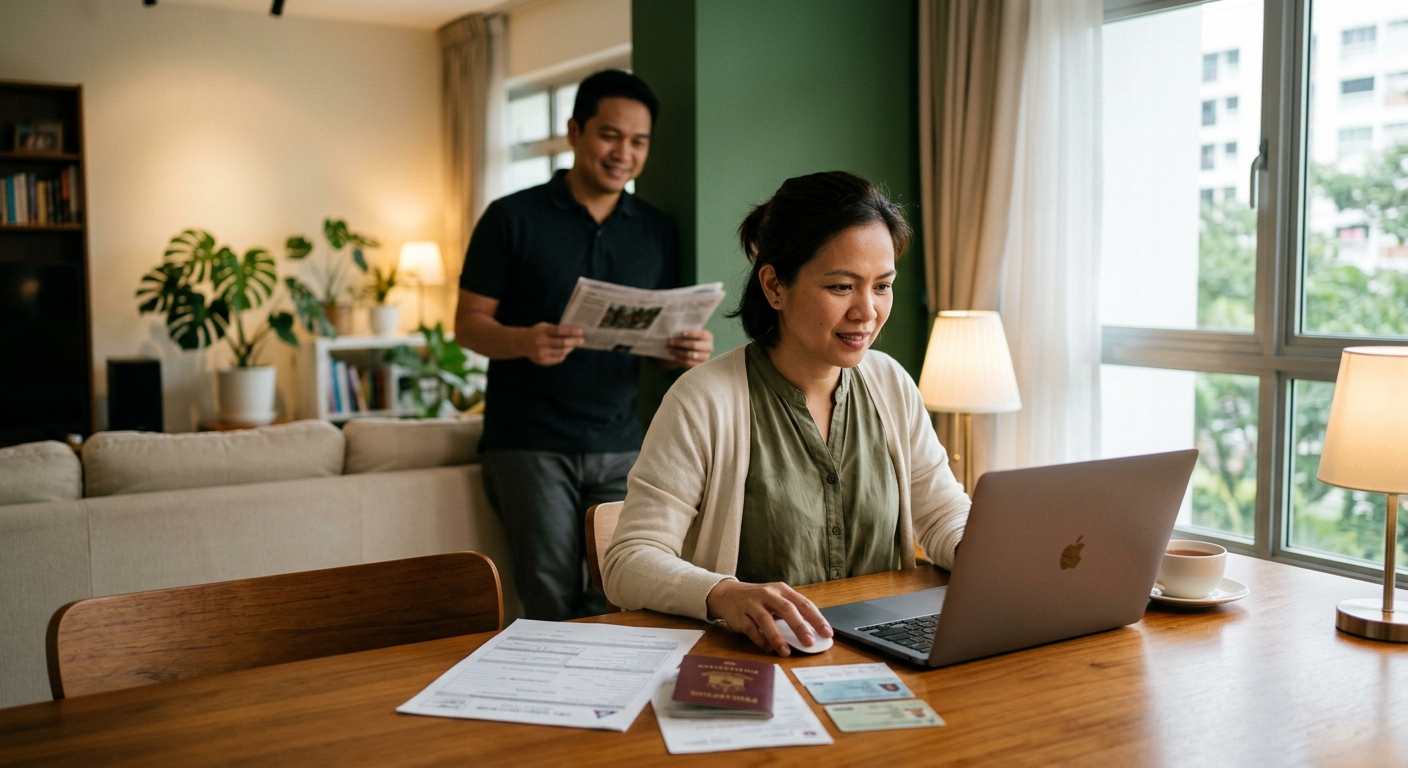
If you’re employing a Filipino domestic helper (FDH) in Singapore, there’s one travel document that can quietly derail a home leave plan if it’s missed: the OEC. This guide explains How the Philippine Embassy OEC process works for helpers in Singapore in plain, practical terms—what it is, when it’s needed, and what Singapore families can do to prevent last-minute stress at the airport.
Because rules and online systems change from time to time, consider this a family-friendly roadmap rather than legal advice. When in doubt, your helper should follow official instructions from the Philippine Embassy, the Philippine Overseas Labor Office (POLO) / Department of Migrant Workers (DMW), and the airline requirements for the day of travel.
What an OEC is (and why your helper may be asked for it)
The Overseas Employment Certificate (OEC) is a document issued by the Philippine government to certain Filipino workers leaving the Philippines or returning to their overseas employment. For migrant workers, it’s often described as an "exit clearance" that helps confirm the worker is properly documented.
For helpers in Singapore, the OEC topic typically comes up when:
- Your helper is going home to the Philippines for annual leave and will return to Singapore to continue employment.
- Your helper’s employment status has changed (e.g., new employer, transfer, or re-hire after a gap).
- Your helper is travelling via the Philippines en route to another destination and later returning to Singapore.
Why it matters: airline staff and Philippine immigration may ask for an OEC before allowing a worker to depart the Philippines to resume overseas work. Missing documents can lead to delayed flights, rebooking costs, and emotional stress for the helper and family.
OEC vs MOM requirements in Singapore
Singapore’s employment rules for FDWs are governed by MOM regulations (e.g., work permit validity, levy, insurance, and home leave planning). The OEC is separate—it’s a Philippine-side requirement connected to overseas employment documentation.
In other words:
- MOM controls whether your helper can legally work in Singapore.
- DMW/POLO/Philippine Embassy processes affect whether your helper can depart the Philippines to return to Singapore for work.
Keeping both sides aligned is the safest approach.
Who needs an OEC (and who may be exempt)
This is where families often get confused, because some helpers appear to travel without an OEC while others are turned back.
Generally, whether your helper needs an OEC depends on their status in the Philippine government’s system (and whether they qualify as a Balik-Manggagawa or returning worker under the relevant guidelines at the time).
Your helper may be more likely to need an OEC if:
- She is not properly registered or has incomplete records in the DMW/POLO system.
- She is changing employers, coming back after a long gap, or has a new contract arrangement.
- Her details (employer name, jobsite country, passport details) don’t match records.
Your helper may be exempt or able to obtain an OEC more smoothly if:
- She is recognised as a returning worker with consistent employment details.
- Her prior deployment documentation is complete and verifiable.
Because the Philippines periodically updates rules and online portals, the most practical mindset for employers is: treat the OEC as a potential requirement any time your helper will depart the Philippines to return to Singapore for work, and plan early.
Common misconception: "It’s only for first-timers"
Many families assume the OEC is only for first-time overseas workers. In reality, returning workers can still be asked for OEC-related proof, especially if there is a mismatch in documentation or if the online system flags the worker for in-person processing.
How the Philippine Embassy OEC process works for helpers in Singapore (step-by-step)
This section breaks down How the Philippine Embassy OEC process works for helpers in Singapore in a way most families can follow. Exact screens and names of steps may differ depending on the platform in use, but the flow is broadly consistent.
Step 1: Confirm the helper’s travel plan and work permit status
Before any appointment booking, align the basics:
- Planned departure date from Singapore
- Planned return date to Singapore
- Passport validity (ideally at least 6 months)
- Singapore work permit validity and employment continuity
If the helper’s work permit is expiring soon, families should avoid tight timelines. Renewing a work permit late and handling OEC late is a common recipe for travel disruption.
Step 2: Check what the helper needs based on her record
Your helper will usually need to check her status in the relevant Philippine government system (often through an online portal used for returning workers). Based on the result, she may:
- Qualify to process online (or receive an exemption reference), or
- Be instructed to book an appointment for in-person verification.
If she’s told to go in person, don’t panic—this is common, and it often happens when details need confirmation.
Step 3: Prepare documents (employer + helper)
While requirements vary, families should be ready to support the helper with the practical documents that commonly come up.
Typically helpful documents include:
- Helper’s passport (and copies)
- Singapore work permit details (and copies)
- Employment contract / standard FDW contract details
- Employer’s identification details (NRIC/FIN as applicable)
- Proof of employer address and contact information
- Prior OEC or deployment documents if available
Important: names and details must match across documents. Minor variations (middle names, spelling) can cause delays.
Step 4: Appointment at the Philippine Embassy / POLO-related service (if required)
If in-person processing is required, your helper will attend her scheduled appointment.
In Singapore, many helpers travel to the embassy area or combine errands with their off-day routines. Some also coordinate meet-ups with friends around Orchard or Lucky Plaza after appointments—useful for families to know when planning timing and transport expectations.
At the appointment, the officer may:
- Verify employment details and jobsite country (Singapore)
- Check supporting documents
- Confirm employer information
- Collect fees where applicable nIf anything is missing, your helper might be asked to return with additional paperwork.
Step 5: Issuance and validity considerations
Once processed, the OEC is typically tied to a specific return trip and has a validity window. The key practical point for families is to avoid processing too early (risk expiry) or too late (risk no appointment slots).
A safe practice is to plan backwards from the helper’s intended return-to-Singapore flight date and allow buffer time for:
- Appointment availability
- Document reprints
- Any corrections in names or details
- Unexpected portal downtime or public holiday closures
Step 6: Use the correct document on travel day
When your helper departs the Philippines to return to Singapore, she should bring:
- Passport
- Valid Singapore work permit details
- OEC (or approved exemption reference if that is the applicable pathway)
- Copies of key employment documents in case of questions
From the employer perspective, the best support is making sure your helper has clean, consistent documentation and time to resolve issues without pressure.
Typical timelines and planning tips for Singapore employers
Families often ask, "How early should we start?" The most practical answer: earlier than you think, especially during peak travel periods.
Consider these planning realities:
- School holidays and Christmas/New Year periods can create appointment bottlenecks.
- Portal changes or system maintenance can temporarily slow down processing.
- If your helper is switching employers or returning after a gap, verification may take longer.
A simple planning rule of thumb
Aim to start checking OEC requirements 4–8 weeks before the helper’s return-to-Singapore date, especially if:
- It’s her first home leave with your family
- You renewed the work permit recently
- You changed address or contact details
- Your helper previously had an employer change or transfer
For straightforward returning-worker cases, it may be faster—but having buffer is what keeps plans calm.
Common issues that delay OEC processing (and how to prevent them)
Most delays are avoidable with early checks and consistent paperwork.
Mismatched employer or helper details
Examples:
- Employer name on documents differs from the name in records (e.g., initials vs full name)
- Address has changed but old address is still in system
- Passport renewed but old passport number remains on file
Prevention:
- Keep a single “helper file” with scanned copies of passport, work permit, and contract.
- If you moved house, update relevant records and keep proof of the current address.
Last-minute flight bookings
Booking flights first and sorting OEC later is risky. When appointment slots are tight, the helper may have to change flights.
Better approach:
- Check OEC pathway/appointment feasibility first.
- Book flights with flexible change policies where possible.
- Keep at least a few days’ buffer between document finalisation and flight date.
Employer change / transfer scenarios
If your helper changed employers recently (including a transfer arranged under MOM processes), her Philippine-side record may require additional verification.
If you’re in this situation, it helps to work with an agency that can explain the timeline clearly and keep documentation consistent across the MOM and Philippine documentation expectations.
If you are hiring or transferring a helper and want a structured approach, you can browse our helper directory or start a hiring application to speak with a consultant about timing.
How this connects to hiring and transfers in Singapore
A well-managed hire isn’t only about matching skills and personalities—it’s also about keeping documentation travel-ready.
At Happy Home Agency, our Precision Match™ focuses on family needs and helper strengths, but we also pay attention to practicalities that affect real life in Singapore: home leave expectations, communication preferences, and whether a helper’s record is likely to require extra time for clearance steps.
MOM compliance vs Philippine documentation: treat them as two checklists
For employers, it helps to think in two parallel tracks:
- Singapore track (MOM): work permit validity, insurance, levy, employment terms, safe accommodation.
- Philippine track (Embassy/POLO/DMW): OEC/exemption pathway, record consistency, contract verification where applicable.
Neither replaces the other. Managing both is what reduces surprises.
What employers can do that genuinely helps
Small employer actions often make the biggest difference:
- Provide accurate employer details (full legal name and contact numbers) consistently.
- Keep a softcopy set of documents that your helper can access (with privacy in mind).
- Avoid changing travel dates repeatedly during processing.
- Encourage your helper to start early and ask questions without fear.
If you want support beyond paperwork—such as matching, transfers, counselling, and clear onboarding—see our services or explore other guides for practical Singapore-focused reading.
Practical checklist before your helper goes on home leave
Use this pre-departure checklist to keep things smooth.
Before leaving Singapore:
- Confirm helper’s passport validity and keep a copy.
- Confirm work permit validity covers the return date.
- Save employer contact information in the helper’s phone.
- Agree on a realistic return date and flight plan.
- Ensure any salary matters are settled clearly to avoid stress during leave.
Before leaving the Philippines (returning to Singapore):
- Confirm OEC/exemption status as applicable.
- Recheck that the helper is carrying all required documents.
- Keep screenshots/printouts of confirmations where possible.
A calm process often comes down to preparation and documentation consistency, not rushing.
Frequently asked questions families ask about the OEC in Singapore
This section addresses the real-life questions we hear from employers—especially those managing home leave for the first time.
"Can my helper process OEC on her off-day?"
Often yes, but it depends on appointment availability and any waiting time. Many helpers prefer to schedule it on a rest day and combine errands around Orchard/Lucky Plaza for convenience. Encourage her to allocate extra time in case the queue or verification takes longer than expected.
"What if my helper’s flight is soon and she can’t get an appointment?"
The best next step is to check if there is an online pathway available for her status, and if not, to reschedule travel rather than risk being offloaded on the return trip. For families, the key is to avoid locking in non-changeable tickets before confirming the clearance pathway.
"Will Happy Home Agency do the OEC for us?"
The helper generally needs to complete personal steps herself, and official processes must follow the Embassy/DMW requirements. What we can do is help families plan timelines, keep documentation consistent, and reduce the risk of preventable delays during hiring, transfer, or re-hire.
Making the Right Choice
Understanding How the Philippine Embassy OEC process works for helpers in Singapore is less about memorising rules and more about planning early, keeping documents consistent, and giving your helper enough time and support to complete the steps calmly.
If you’re hiring a Filipino helper, planning a transfer, or simply want to avoid travel-day surprises, speak with our team. You can start a hiring application or contact our consultants (WhatsApp available) and we’ll walk you through a practical timeline based on your family’s situation—warmly, clearly, and in line with MOM expectations.
Questions & answers
Let Happy Home Agency match your family with someone you can trust.
Since 2006, we've helped Singapore families find the right helper — not just any helper. EA Licence 06C4290.
Related articles
Hiring a Filipino helper in Singapore involves clear MOM rules, Philippine Embassy processes, and practical fit checks at home. Here’s a complete, family-first guide.
Considering a Filipino helper in Singapore? Learn the step-by-step hiring process, expected costs, MOM rules, OEC basics, and practical tips to match your household well.
Hiring a helper starts with the right MOM steps. Learn how the MOM work permit for domestic helper works, what you must prepare, and common pitfalls to avoid.