
How the Philippine Embassy OEC process works in Singapore
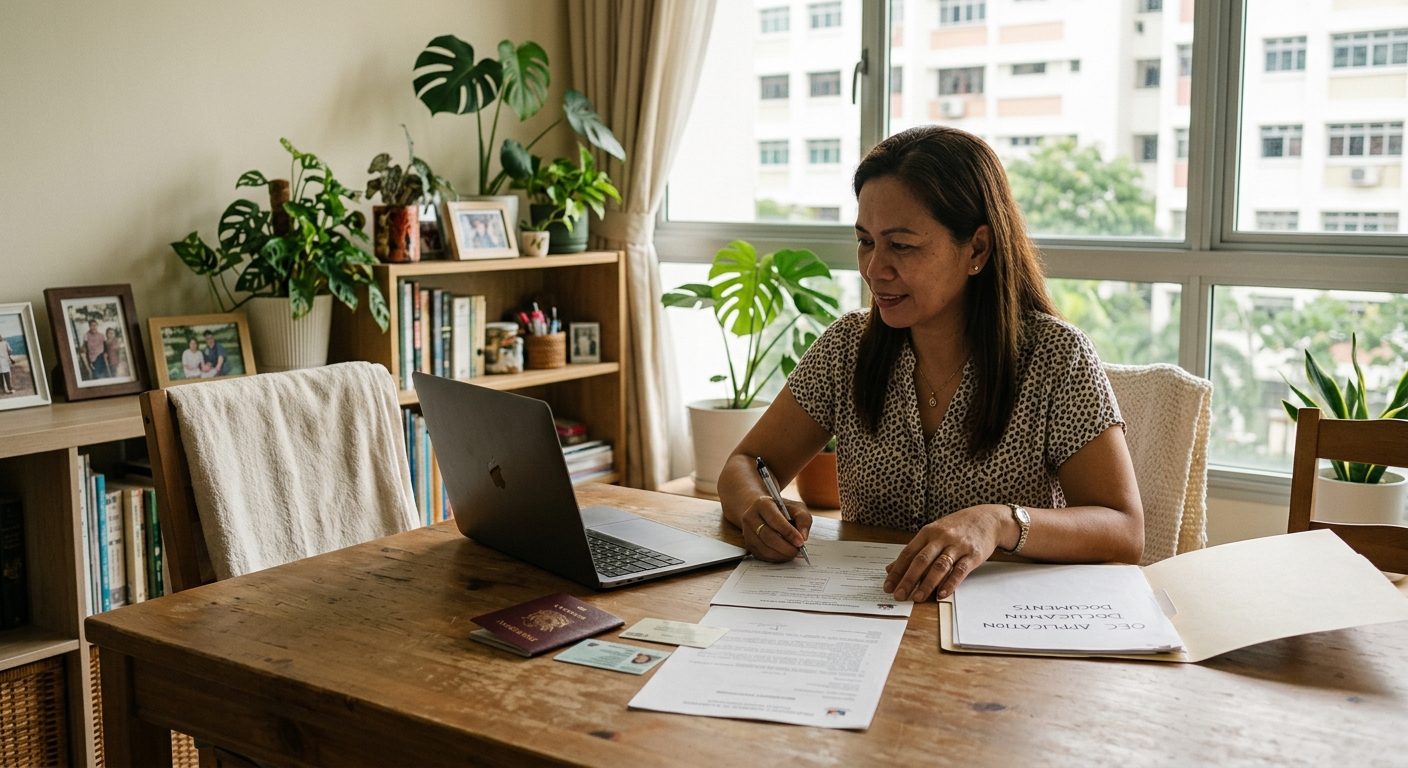
Hiring a Filipino helper in Singapore often goes smoothly—until travel, contract paperwork, or a home leave plan brings up one term: OEC. If you’ve heard your helper say she needs an OEC to fly back from the Philippines, or you’ve been asked for documents for POLO/DMW verification, this guide explains how the Philippine Embassy OEC process works for helpers in Singapore in a practical, Singapore-family-friendly way. We’ll cover what the OEC is, when it’s needed, where the Philippine Embassy and POLO fit in, and how to reduce last-minute stress before a flight.
What an OEC is—and why it matters for Filipino helpers
An Overseas Employment Certificate (OEC) is a document issued under the Philippines’ overseas employment system. It serves as proof that an Overseas Filipino Worker (OFW) is properly documented and is leaving the Philippines for overseas work with a verified employment record.
For a Filipino domestic helper based in Singapore, the OEC matters most when she:
- Returns to the Philippines for home leave and needs to exit the Philippines to re-enter Singapore for work
- Is newly hired and will travel from the Philippines to Singapore to start employment
- Changes employer or renews/updates her employment details in a way that requires re-documentation under Philippine rules
Why families in Singapore should care: without the right documentation, your helper may face delays at the airport in the Philippines, missed flights back to Singapore, or repeated trips to fix paperwork. While Singapore’s side is governed by MOM requirements (Work Permit, medical, insurance, arrival formalities), the Philippine side has its own processes handled through DMW/POLO and the Philippine Embassy network.
Who does what: DMW, POLO, and the Philippine Embassy in Singapore
Understanding the agencies reduces confusion.
DMW (Philippines) and POPS-BaM
The Department of Migrant Workers (DMW) oversees OFW documentation. Many OEC steps are initiated online through systems such as POPS-BaM (online appointment and account portal used for OEC-related services).
POLO (Philippine Overseas Labor Office)
POLO is the labour office attached to Philippine foreign missions. In Singapore, POLO handles labour-related services, including verification of certain employment documents required for OEC processing in many cases.
The Philippine Embassy
When people say “Philippine Embassy OEC,” they usually mean services coordinated through the Philippine mission in Singapore (Embassy/POLO). The Embassy proper handles consular functions (e.g., passport), while POLO handles labour documentation. In real life, families and helpers experience this as “the Embassy process,” because appointments and requirements can be linked.
Singapore MOM (separate but connected)
Singapore’s MOM regulates Work Permits, employer responsibilities, and the employment relationship in Singapore. MOM documents often become supporting papers for Philippine documentation (e.g., Work Permit details, employer particulars, employment contract details). The key is to ensure both sides align.
When a helper needs an OEC (and when she may not)
This is the question that causes the most anxiety. In general, your helper will need an OEC when she is leaving the Philippines to go to Singapore for employment and she is documented as an OFW.
Common scenarios where OEC is typically required:
- Home leave: Helper flies from Singapore to the Philippines for a holiday or family matter, then returns to Singapore to resume work.
- First deployment: Helper is hired and will travel from the Philippines to Singapore for the first time under that employment.
- Change of employer / new contract record: Helper’s employment record needs to reflect the correct Singapore employer.
Situations that may change the steps:
- If your helper is a returning worker whose employment is already properly registered and aligned in the system, she may be eligible for streamlined processing (subject to current DMW rules and system prompts).
- If there are discrepancies—wrong employer name, outdated contract, mismatch in dates—additional verification steps are usually triggered.
Because policies and system checks can change, it’s wise to plan early. If your helper is planning home leave, treat OEC planning as part of the travel checklist, alongside MOM items like leave arrangements and ensuring her Work Permit status remains valid for re-entry.
How the Philippine Embassy OEC process works for helpers in Singapore (step-by-step)
Below is a practical flow of how the Philippine Embassy OEC process works for helpers in Singapore as families and helpers typically experience it, from preparation to successful return to Singapore.
1) Confirm the helper’s employment details are consistent
Before any appointment, ensure the following are consistent across documents:
- Employer name and address (as per NRIC and Singapore records)
- Helper’s passport details
- Work Permit particulars (correct identity and validity)
- Employment dates and job role (domestic worker)
Small mismatches can lead to rework—especially if the online record prompts additional verification. A common pitfall is using informal address formats or leaving out unit numbers.
2) Prepare the core documents (helper + employer)
Requirements can vary depending on case type (new hire, returning worker, change employer). However, the typical document set families should be ready to provide includes:
- Helper’s valid passport
- Helper’s Work Permit details and Singapore employment records
- Employer’s NRIC (copy) and contact details
- A signed employment contract as required for verification/OEC purposes
- Proof of relationship if relevant (rare for FDW hiring, but occasionally requested for clarifications)
Practical tip: keep clean scans (PDF/JPG) in a shared folder, because online portals and email submissions often require uploads.
3) Create/update the helper’s POPS-BaM account and profile
Many OEC journeys start with an online account.
- Ensure the helper’s email and mobile number are accessible.
- Keep login credentials safely; missed OTPs or locked accounts can cause delays.
- Use details exactly as per passport.
If the system indicates the helper is “not found” or profile data cannot be updated, it usually means the record needs correction or the case must be handled via appointment/assistance.
4) Secure the correct appointment route (POLO/DMW-related service)
Depending on the helper’s status, she may need:
- A contract verification appointment (often associated with POLO)
- An OEC-related appointment or online issuance path (depending on system eligibility)
Because appointment slots can be limited during peak seasons (school holidays, year-end, long weekends), families should plan weeks ahead whenever possible.
5) Attend verification/processing and follow the checklist closely
On appointment day, helpers should bring originals and copies as required. If the helper is unsure, it’s safer to bring:
- Original passport + photocopies
- Printed appointment confirmation
- Printed employment documents
- Employer contact number (reachable during the appointment)
If officers request clarifications, it’s usually about identity consistency, employer details, or contract alignment.
6) OEC issuance (online or in-person steps)
Once the employment record is aligned and verified, the OEC can be issued through the available channel per the system instructions. The key outcomes to aim for:
- The helper’s employment record matches her current Singapore employer
- The helper has a valid OEC for her next departure from the Philippines to Singapore
7) Use the OEC correctly during travel
The OEC is most relevant at the Philippine airport when your helper is departing the Philippines to return to Singapore.
Employer reminders for smooth re-entry:
- Ensure her passport validity covers the travel period
- Ensure the Singapore Work Permit remains valid and conditions are met
- Ensure she keeps digital and printed copies of key documents in case airline staff ask
Timelines and planning: when to start, especially around home leave
A realistic planning window reduces last-minute stress.
- If your helper is planning home leave, start discussing OEC readiness at least 4–8 weeks before travel during peak periods.
- For non-peak periods, 2–4 weeks can be workable, but earlier is safer if her records have changes (new employer, renewed passport, amended details).
Peak periods that often cause delays
In Singapore, home leave clusters around:
- June school holidays
- November–December holiday season
- Chinese New Year period (some helpers time leave around it)
In the Philippines, backlogs can also happen around major holidays.
The “don’t book flights too early” balance
Families naturally want cheaper tickets, but if your helper’s documentation path is uncertain, consider booking flights with change options. The cost difference can be worth the flexibility.
Common pitfalls (and how Singapore employers can prevent them)
Most OEC issues are fixable, but they are stressful when discovered at the last minute. Here are common problems we see and the practical prevention steps.
Mismatch of employer details
Problem: Employer name/address differs across contract, Singapore records, and online profile.
Prevention: Use the employer’s full legal name as per NRIC and the exact address format consistently.
Contract or employment record not updated after changes
Problem: Helper changed employer, renewed passport, or had employment details updated, but the overseas employment record wasn’t aligned.
Prevention: Treat major changes as a trigger to re-check documentation readiness well before any home leave.
Expired passport or short validity
Problem: Passport renewal becomes urgent and collides with OEC timelines.
Prevention: Aim for at least 6 months passport validity before travel. For renewals, many helpers go to Orchard-area appointments and plan a day off—build this into your schedule early.
Assuming MOM documents alone are sufficient
Problem: Employer believes Work Permit approval is the only requirement.
Prevention: Remember: MOM governs the right to work in Singapore; the Philippines governs the right to depart the Philippines as an OFW for employment.
Last-minute appointments and missed workdays
Problem: Not enough time to get slots; helper needs multiple visits.
Prevention: Plan early and keep a buffer. If your helper frequents Lucky Plaza on off days, she may also hear conflicting advice—encourage her to follow official checklists and confirm directly from official sources when uncertain.
Practical checklist for employers in Singapore supporting the OEC process
You generally don’t need to personally attend, but you do need to support your helper with timely documents and reachable contact.
Here’s a simple employer checklist:
- Keep softcopies of your NRIC and proof of address ready
- Ensure the helper’s name/spelling matches her passport exactly across all documents
- Confirm your helper’s Work Permit details and validity
- Agree on home leave dates early and avoid sudden changes
- Be reachable by phone on appointment day
- Keep copies of important documents in case re-issuance is needed
If you’re still in the selection stage, choosing a helper with a stable employment history and clear documentation can reduce downstream complications. You can browse our helper directory and, when ready, start a hiring application so we can advise on a compliant timeline.
How Happy Home Agency supports families alongside Embassy/POLO requirements
As an employer, you’re balancing caregiving needs at home, MOM responsibilities, and your helper’s well-being. The OEC process sits on top of that, and it’s easy to get lost in abbreviations.
At Happy Home Agency, we focus on smooth, compliant hiring and ongoing employer support. Through our Precision Match™ approach, we aim to reduce preventable disruptions by:
- Clarifying realistic timelines before confirming start dates or home leave windows
- Ensuring employment paperwork is prepared carefully and consistently
- Coaching both employer and helper on practical steps so no one is surprised later
Our 365-Day Employer Care™ support is especially useful when questions arise mid-employment—like planning a trip home, managing document renewals, or understanding what to prepare when rules change.
If you’d like to understand what we handle end-to-end, see our services. For other practical topics (MOM rules, transfer hiring, renewals, settling-in tips), browse other guides.
FAQs employers ask about the Philippine Embassy OEC process in Singapore
Below are quick clarifications families commonly ask when trying to understand how the Philippine Embassy OEC process works for helpers in Singapore.
Is the OEC something the employer applies for?
Usually, the helper applies because it is tied to her OFW record, account, and travel. However, the employer typically must provide accurate documents and be contactable for verification.
Does every home leave require repeating the whole process?
Not always. Some returning workers may be able to obtain an OEC through a more streamlined route if their records are already correct. But if there’s any change (new employer, updated passport, record mismatch), expect additional steps.
Will an OEC affect re-entry to Singapore under MOM?
They’re separate systems. MOM governs entry/work authorisation for Singapore (Work Permit), while the OEC affects the helper’s ability to depart the Philippines as a documented worker for Singapore. Your helper needs both sides in order.
What should we do if our helper is stuck in the Philippines without an OEC?
Start by identifying what is missing (record mismatch, verification needed, incomplete profile). In many cases, it becomes a documentation and appointment management exercise—avoid repeated guesses and work from official checklists.
Should we plan travel around Embassy/POLO appointment availability?
Yes. Appointment availability can be the gating factor more than flight availability. Plan the documentation timeline first, then lock in travel dates.
Making the Right Choice
Understanding how the Philippine Embassy OEC process works for helpers in Singapore is really about planning early, keeping details consistent, and treating documentation as part of responsible employment—not a last-minute scramble. If you’re hiring a Filipino helper, or you’re managing an upcoming home leave and want a clear, compliant timeline, we’re here to guide you.
You can start a hiring application and our consultants will advise on the right steps based on your situation, or contact our consultants to ask about documentation planning and timelines (including WhatsApp support via our contact page).
Questions & answers
Let Happy Home Agency match your family with someone you can trust.
Since 2006, we've helped Singapore families find the right helper — not just any helper. EA Licence 06C4290.
Related articles
Hiring a Filipino helper in Singapore involves clear MOM rules, Philippine Embassy processes, and practical fit checks at home. Here’s a complete, family-first guide.
Considering a Filipino helper in Singapore? Learn the step-by-step hiring process, expected costs, MOM rules, OEC basics, and practical tips to match your household well.
Hiring a helper starts with the right MOM steps. Learn how the MOM work permit for domestic helper works, what you must prepare, and common pitfalls to avoid.