
Special Needs and Autism-Trained Domestic Helpers in Singapore
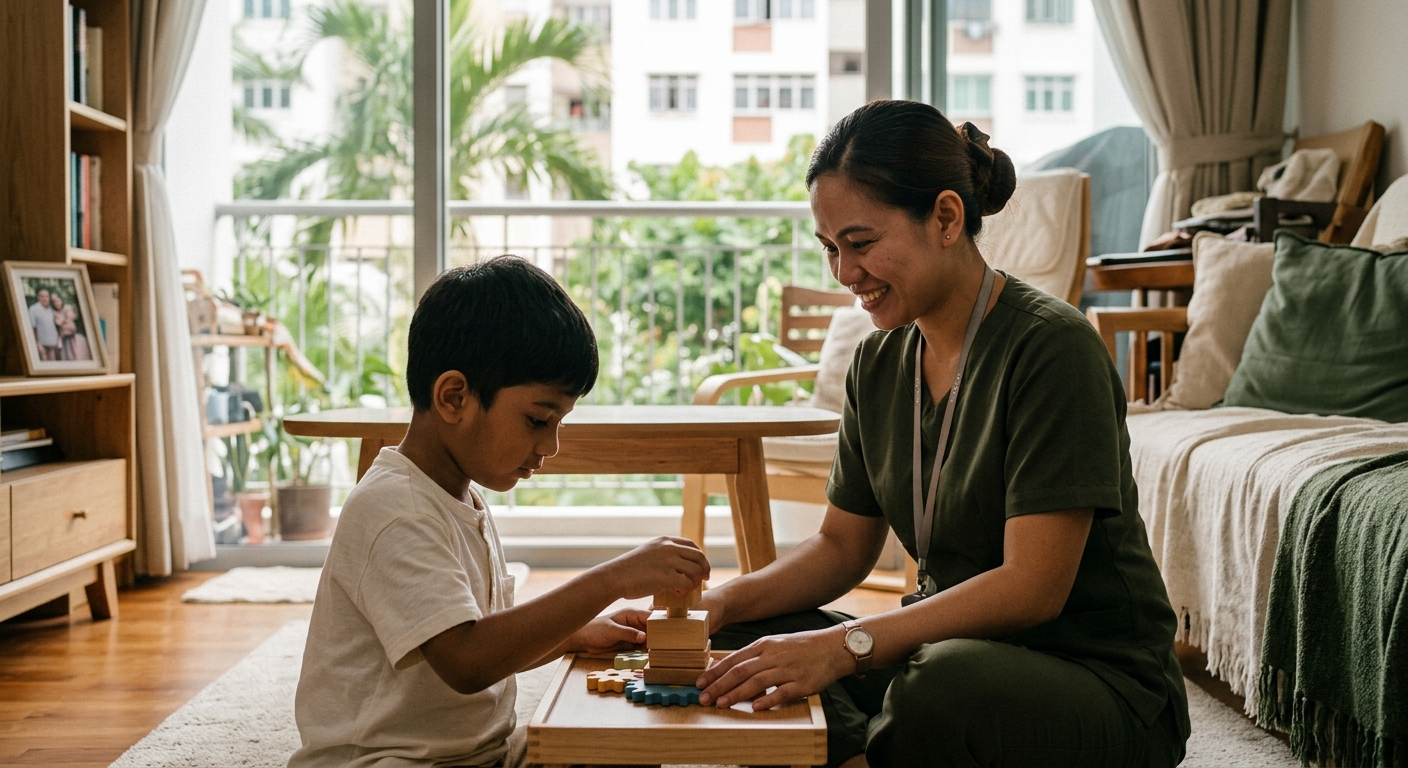
When a child has autism or other special needs, home routines can feel like a full-time care plan—school runs, therapy schedules, meltdowns, sensory needs, and the emotional labour of simply keeping everyone steady. Many families ask us about special needs and autism-trained domestic helpers in Singapore because they want reliable, consistent support at home without taking risks on a poor match. The good news is that with the right expectations, careful screening, and a clear care plan, a foreign domestic worker (FDW) can be a meaningful part of your child’s support system—while still staying within MOM guidelines and realistic job scopes.
This guide walks you through what “autism-trained” can (and cannot) mean, how to assess genuine capability, what MOM requires, what to put in a work plan, and how to build a respectful working relationship that protects your child, your helper, and your family.
What families mean by “autism-trained” (and why definitions matter)
In Singapore, the term “autism-trained” is used very loosely. There is no single national certification that automatically qualifies an FDW as a special needs caregiver. So the first step is to define your family’s needs, then confirm whether a helper’s experience matches those needs.
Common scenarios families are actually hiring for
Most enquiries for special needs and autism-trained domestic helpers in Singapore fall into one (or more) of these practical scenarios:
- Routine-based caregiving: guiding morning routines, meals, hygiene, toileting, and bedtime with structure and patience.
- Safety and supervision: preventing wandering/elopement, managing impulsive behaviour, ensuring safe play.
- Behaviour support at home: helping follow a simple reinforcement plan designed by parents/therapists.
- Therapy carryover: practising basic prompts, visual schedules, or communication routines (not running therapy).
- Sibling and household stability: keeping the home calm so parents can focus on emotional connection and therapy coordination.
A capable helper does not need to be a therapist. What matters is steady temperament, good communication, willingness to learn, and experience with similar care needs.
What a domestic helper is not (and should not be asked to be)
A domestic helper—no matter how experienced—should not be positioned as:
- A clinical therapist (ABA, speech therapy, occupational therapy)
- A school shadow teacher unless properly arranged and agreed
- A medical professional for diagnosis, medication decisions, or restraint techniques
In Singapore, safe care means staying within appropriate job scope, following professional plans set by parents and therapists, and documenting agreed routines. If your child has complex needs, the right plan often involves combining a helper’s home support with professional services.
MOM rules and responsible hiring for special needs caregiving
Hiring a helper in Singapore is regulated by the Ministry of Manpower (MOM). When your household includes a child with special needs, it becomes even more important to follow proper processes—both for safety and for fairness to the helper.
Key MOM considerations to keep in mind
While MOM does not “license” autism-trained helpers specifically, these broad requirements apply:
- Employers must ensure safe working conditions and provide proper rest and accommodation.
- FDWs must only do permitted work under the Work Permit conditions (domestic duties within the household).
- Employers are responsible for medical insurance, bond, salary payments, and repatriation obligations.
If you require a helper to support a child with special needs, be transparent from the first conversation. In our experience, mismatches happen when families “downplay” caregiving intensity during interviews, then expectations expand after arrival.
Clear job scope protects your child and your helper
A written, practical job scope is not just paperwork. For special needs households, it is risk management.
Include:
- Your child’s daily routine (wake, meals, school, therapy, bedtime)
- Safety rules (door gates, balcony, water safety, choking hazards)
- Behaviour support approach (what to do and what not to do)
- Communication style (short instructions, visuals, sign/PECS if relevant)
- Screen-time rules and calming strategies
- Who handles what (parents vs helper)
This reduces stress for everyone—especially in the first 4–8 weeks.
What to look for in special needs and autism-trained domestic helpers in Singapore
Experience matters, but it must be the right kind of experience. A helper may have cared for a child “with autism” previously, but the child’s support needs can vary widely. A thoughtful interview process is more reliable than any single label.
Green flags during screening
Look for helpers who can describe real situations calmly and specifically. Useful green flags include:
- Can explain how they handled meltdowns without shouting or threats
- Understands the difference between tantrum vs overwhelm (even if they don’t use these words)
- Comfortable following a routine chart and documenting incidents
- Speaks about the child with respect (not blaming or mocking)
- Willing to learn from parents and therapists
- Shows patience with hygiene, feeding, toileting, and repetitive prompting
If a helper says, “I can manage any child,” that is often less reliable than someone who says, “I can manage when there is a routine, and I need clear instructions on what works for your child.”
Red flags to take seriously
For special needs caregiving, some red flags are non-negotiable:
- Insists on punishment-based control (e.g., locking a child in a room)
- Uses humiliating language
- Rejects supervision or refuses to follow parent instructions
- Hides mistakes or becomes defensive about safety incidents
- Claims “cure” promises or superstitious explanations that affect care
If you feel uneasy, trust the signal. Your home needs stability, not repeated crisis management.
Matching temperament to your child’s profile
“Best helper” is not a universal thing. The best match depends on:
- Sensory profile (noise sensitivity, touch sensitivity)
- Communication level (non-verbal, limited speech, fluent speech)
- Risk profile (bolting, self-injury, aggression)
- Structure needs (strict routines vs flexible support)
For example:
- A soft-spoken helper with steady energy may suit a child who escalates with loud voices.
- A helper who is physically agile may suit active children who require close supervision outdoors.
- A helper with prior experience in toileting routines may be important if continence is a current goal.
This is where precise matching matters more than generic “trained” labels.
Interview questions that reveal real capability (not rehearsed answers)
When families ask about special needs and autism-trained domestic helpers in Singapore, we usually recommend an interview that combines scenario questions with practical “teach-back” checks.
Scenario questions (use 3–5, not 20)
Pick a few scenarios that resemble your actual household:
- “If my child refuses to shower and starts screaming, what would you do first?”
- “If my child runs to the lift lobby, how would you prevent it and what safety steps would you take?”
- “If my child hits when frustrated, what will you do with your hands and your voice?”
- “If my child only eats a few foods, how would you support meals without forcing?”
Listen for calm sequencing: safety first, then reduce demands, then inform parents, then record.
Teach-back check (simple but powerful)
After you explain one routine (e.g., bedtime), ask: “Can you repeat the steps back to me?”
A helper who can summarise clearly is more likely to follow plans reliably.
Values alignment questions
Special needs care is long-term. Ask:
- “What do you do when you feel stressed?”
- “How do you prefer to receive feedback?”
- “Are you comfortable if I correct you kindly in the moment?”
You are looking for openness, not perfection.
Training, documents, and verification: what you can (and can’t) rely on
Families often ask for “certificates.” Some are useful, but the most reliable proof remains real experience and references.
Types of training you may encounter
Depending on the helper’s background, you may see:
- Basic caregiving courses (eldercare/childcare)
- First aid or CPR exposure (varies widely)
- Special needs workshops (often short modules)
- Experience-based “training” from previous employers or schools
A certificate can be a good sign of learning attitude, but it does not guarantee competence with your child.
Reference checks and employment history
Where possible, request:
- Employment history details (ages of children, duties, length of employment)
- A reference from a previous employer (even a short call can help)
- Clarity on why the previous contract ended
Be respectful: not all situations allow contact with previous employers, and not all helpers have perfect histories. The goal is to reduce uncertainty.
Filipino helpers: practical notes (Embassy, OEC, and process realities)
Many Singapore families specifically prefer Filipino helpers for communication and caregiving culture. For Filipino FDWs, documentation and deployment involve the Philippine system (such as the OEC, depending on prevailing requirements and entry routes). Rules can change, and timelines can vary.
If your helper is Filipino, it is normal to hear about:
- The Philippine Embassy and related administrative steps
- Documentation and verification standards
- Common meeting points and community services around Lucky Plaza (Orchard) for remittances, groceries, and rest-day errands
What matters for you as an employer is to work with a licensed agency that keeps paperwork compliant and timelines realistic, so you can focus on care planning.
Setting your helper up for success: a home-based support plan that works
Even an experienced candidate needs orientation in your specific home. A structured onboarding period can prevent misunderstandings and reduce meltdowns for your child.
The first 30 days: keep the plan simple and consistent
A practical approach:
- Week 1: Observe and bond
- Helper shadows parents
- Learns safety rules and house layout
- Focus on calm presence, not performance
- Week 2: Take over fixed routines
- Meals, bathing, school prep (as applicable)
- Simple visual schedules introduced
- Week 3: Add community routines
- Park play, simple errands, lift and traffic safety
- Practise transitions (home to outside and back)
- Week 4: Stabilise and document
- Keep a brief daily log
- Review what triggers escalations and what helps
Avoid changing too many variables at once—especially if your child relies on predictability.
Tools that many families find helpful
You don’t need fancy systems. Start with:
- A one-page care profile (likes, dislikes, triggers, calming strategies)
- Visual routine cards (morning, after-school, bedtime)
- A short “Do / Don’t” list on behaviour support
- A safety checklist (doors, windows, kitchen, water)
If you already have therapist input, ask for a simple home plan that your helper can follow. The helper’s job is to implement consistently, not to design the clinical strategy.
Communication and boundaries at home
Special needs caregiving can blur lines quickly. Set boundaries kindly:
- Agree on when the helper should call you immediately (safety risk) vs message (minor incidents)
- Decide what information is private (child’s diagnosis details should not be shared outside)
- Agree on phone use during supervision (usually limited)
- Establish respectful language rules in the home
A helper who feels supported is more likely to stay calm during hard moments.
Costs, expectations, and sustainability for the whole family
It’s understandable to hope that the “right” helper will solve everything. In reality, sustainable care comes from a realistic workload and shared responsibility.
What affects total cost (beyond salary)
In Singapore, the overall cost of hiring a helper can include:
- Monthly salary and any agreed increments based on experience
- FDW levy (and whether your household qualifies for concessions)
- Insurance, medical check-ups, and related administrative fees
- Placement/service fees depending on hiring pathway
Rather than focusing only on salary, consider value: stability, reduced disruptions, and a safer home routine can be worth far more than a small monthly difference.
Preventing burnout for helpers in special needs households
Special needs homes can be intense. Practical ways to prevent burnout:
- Ensure proper rest and clear off-duty periods
- Rotate heavy tasks (e.g., if toileting is demanding, balance with lighter housework)
- Encourage the helper to take rest days meaningfully
- Provide clear feedback and appreciation for specific behaviours (e.g., “Thank you for staying calm during the transition”) rather than vague praise
Burnout often shows up as irritability, shortcuts, or emotional withdrawal—signals to adjust workload and support.
When you may need additional support beyond a helper
Consider outside support if:
- Your child has high-risk behaviours that require trained clinical handling
- Sleep is severely disrupted for long periods
- There are safeguarding concerns or repeated safety incidents
- Parents are overwhelmed and need case coordination
A helper is one pillar. Therapy teams, respite arrangements, and school partnerships are other pillars.
How Happy Home Agency matches special needs households more safely
Many families come to us after a difficult first hire, especially when the job scope involves special needs caregiving. Our role is to reduce guesswork and build a stable arrangement.
Precision Match™ for special needs and autism-trained domestic helpers in Singapore
With Precision Match™, we focus on fit, not just availability. For special needs households, we screen for:
- Relevant caregiving experience (not just “childcare” in general)
- Temperament and patience indicators
- Communication ability (to follow routines and report accurately)
- Willingness to learn and accept feedback
You can browse profiles through our helper directory, and we will advise honestly if a candidate’s experience seems mismatched for your child’s needs.
365-Day Employer Care™ (because support shouldn’t end on Day 1)
Even with a good match, questions come up: how to adjust routines, how to handle rest day arrangements, how to respond to new school schedules, and how to manage boundaries kindly. Our 365-Day Employer Care™ framework is designed to support employers throughout the year—especially during transition periods.
If you’d like to understand what’s included, see our services or speak with us directly via contact our consultants.
Helpful resources when you’re comparing options
If you’re still exploring the hiring process, our other guides cover timelines, interviews, and common MOM compliance questions in plain language.
Making the Right Choice
Choosing special needs and autism-trained domestic helpers in Singapore is less about finding a perfect resume and more about building a safe, consistent home system with the right person in it. Prioritise temperament, honesty, teachability, and a clear work plan. Be transparent about your child’s needs, commit to structured onboarding, and keep communication respectful and specific.
If you’d like a careful recommendation based on your child’s routine, school schedule, and the kind of support you truly need at home, you can start a hiring application and share your requirements, or message us via WhatsApp through our contact page. We’ll guide you on MOM-compliant hiring steps and help you shortlist suitable profiles from our helper directory.
Questions & answers
Let Happy Home Agency match your family with someone you can trust.
Since 2006, we've helped Singapore families find the right helper — not just any helper. EA Licence 06C4290.
Related articles
Hiring a Filipino helper in Singapore involves clear MOM rules, Philippine Embassy processes, and practical fit checks at home. Here’s a complete, family-first guide.
Considering a Filipino helper in Singapore? Learn the step-by-step hiring process, expected costs, MOM rules, OEC basics, and practical tips to match your household well.
Hiring a helper starts with the right MOM steps. Learn how the MOM work permit for domestic helper works, what you must prepare, and common pitfalls to avoid.